How Much Tapioca Flour to Thicken Pie Filling
Calculate tapioca flour for fruit pie filling using fruit weight, loose juice, sugar, acidity, frozen or fresh fruit, crust style, bake time, rest time, and your slice thickness target.
Pick a pie style to load realistic fruit, juice, sugar, and bake settings. Then fine tune the filling before baking.
Formula Breakdown
| Fruit Filling | Juice Behavior | Base Tapioca Per 4 Cups Fruit | Best Thickness Target | Pie Note |
|---|---|---|---|---|
| Apple slices | Low free juice, high structure | 2 to 2.5 tbsp | Classic sliceable | Thin slices need less than chunky apples. |
| Blueberries | Very juicy after bursting | 3.5 to 4.5 tbsp | Clean bakery slice | Wait for bubbling in the center before timing. |
| Sweet cherries | Moderate juice, round pieces | 3 to 3.5 tbsp | Classic sliceable | Pitted cherries release juice while cooling. |
| Sour cherries | High juice and high acid | 3.5 to 4.5 tbsp | Clean bakery slice | Drain canned fruit and count syrup separately. |
| Peaches | Moderate to high seasonal juice | 3 to 4 tbsp | Soft or classic slice | Very ripe peaches need extra support. |
| Blackberries | Juicy seeds and pulp | 3.5 to 4 tbsp | Classic sliceable | Best with lattice or vents to reduce steam. |
| Strawberry rhubarb | Watery, tart, low pectin | 4 to 5 tbsp | Deep dish support | Macerate and measure the juice if possible. |
| Pears or plums | Soft flesh with medium juice | 2.5 to 3.5 tbsp | Classic sliceable | Acid and ripeness change the final set. |
| Target | Base Rate | Texture Cue | Best For | Cooling Need |
|---|---|---|---|---|
| Soft spoonable slice | 0.52% of filling weight | Glossy sauce that moves slowly | Warm dessert plates | At least 2 hours |
| Classic sliceable pie | 0.64% of filling weight | Holds a wedge with gentle flow | Home fruit pies | 3 to 4 hours |
| Clean bakery slice | 0.76% of filling weight | Neat edges with minimal seepage | Display slices | 4 hours or longer |
| Deep dish support | 0.82% of filling weight | Thicker center for tall pies | Deep pie plates | 4 to 5 hours |
| Slab pie squares | 0.88% of filling weight | Firm enough for cut squares | Sheet pans and picnics | Cool completely |
| Adjustment | Lower Tapioca | Standard | Higher Tapioca | Why It Changes |
|---|---|---|---|---|
| Fruit state | Fresh, firm fruit | Fresh macerated | Frozen unthawed | Ice crystals break fruit cells and release more juice. |
| Added sugar | Light sugar | Half to three quarter cup | Very high sugar | Sugar pulls liquid from fruit before starch fully gels. |
| Acidity | Mild apple or pear | Balanced berry pie | Lemon-heavy or rhubarb | Sharp acid can make the gel taste looser. |
| Bake time | Long bubbly bake | 45 minutes after bubbling | Shorter bake | Tapioca needs heat and time to hydrate. |
| Venting | Open tart or lattice | Double crust vents | Tight decorative crust | Less steam escape leaves more liquid in the filling. |
| Rest time | Overnight rest | 3 to 4 hours | Warm slicing | Tapioca thickens more as the pie cools. |
| Filling Size | Apple | Blueberry | Cherry | Peach |
|---|---|---|---|---|
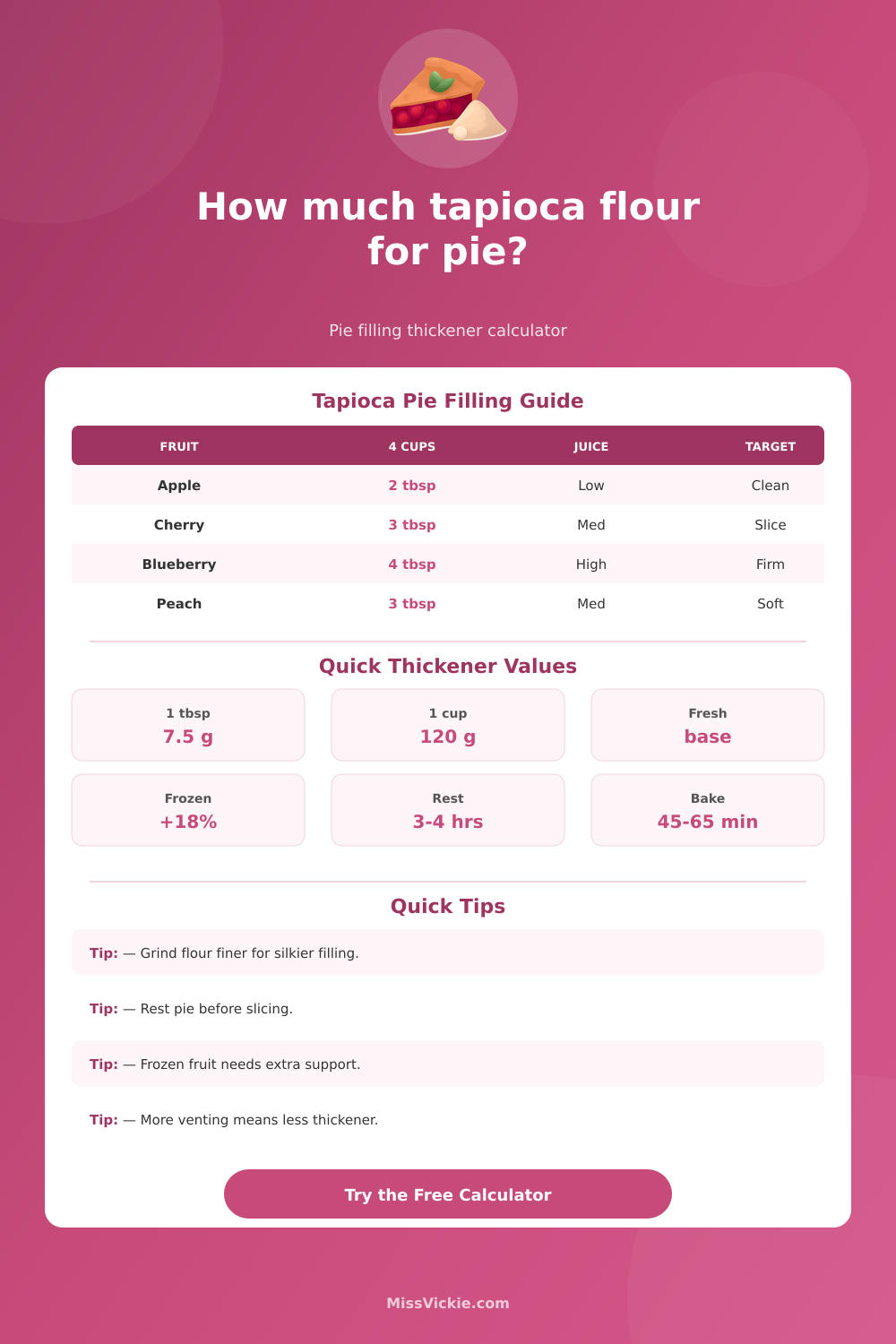
| 4 cups fruit | 2 tbsp | 4 tbsp | 3 tbsp | 3 tbsp |
| 5 cups fruit | 2.5 tbsp | 5 tbsp | 4 tbsp | 4 tbsp |
| 6 cups fruit | 3 tbsp | 6 tbsp | 4.5 tbsp | 4.5 tbsp |
| 8 cups fruit | 4 tbsp | 8 tbsp | 6 tbsp | 6 tbsp |
| 10 cups fruit | 5 tbsp | 10 tbsp | 7.5 tbsp | 7.5 tbsp |
Clear, elastic, freezer-friendly set for juicy berry, cherry, and peach pies.
Easy to find, but the set can look cloudy and may thin after freezing.
Works in apple pies, but needs more volume and can taste pasty if underbaked.
Similar thickening power when ground, but whole pearls can leave visible beads.
Tapioca flour are another thickening agent that can be used in fruit pies. The amount of tapioca flour that is used will determine if the slice of pie hold its shape or collapses into a liquid when cut. Even if a person follow the recipe perfectly, if the amount of tapioca flour does not match the amount of juices in the pie, the slice of pie will become liquid.
The amount of juice in the pie is dependent upon the type of fruit that is use, the amount of sugar that is used, and the amount of liquid that is already present in the fruit that are prepared for the pie. The amount of tapioca flour that is used in the pie must be adjusted according to these factor. The type of fruit that is use in the pie can impact the amount of liquid that the fruit release, which impacts the amount of tapioca flour that is required.
How Much Tapioca Flour to Use in Fruit Pies
Apples, for instance, release a modest amount of liquid when baked therefore they do not require as much tapioca flour as other fruit. Berries, however, burst when baked and release a large amount of juice therefore they requires more tapioca flour. Stone fruits such as cherries and peaches tend to release a medium amount of liquid however, if the stone fruits are very ripe they will release a large amount of liquid.
A calculator can be used to determine the amount of tapioca flour that is required because the calculator use the type of fruit and the weight of the fruit to calculate the amount of tapioca flour. The amount of liquid that is already present in the bowl of prepared fruit will impact the thickness of the pie that results from baking the pie. The amount of liquid that is already present in the fruit must be account for in the recipe.
For instance, if berries are used that have been thawed from being frozen, the berries will contain extra liquid. If fresh fruit is use in the pie and it has been macerated in sugar it will contain extra liquid. Finally, if fruit that is canned and contains syrup is used, there will be extra liquid in the pie.
These liquids will not dissapear when baking the pie so the amount of visible juice in the prepared fruit must be entered into the calculator so that the amount of tapioca flour can be adjusted to account for this liquid. For example, a dry apple pie and a syrupy cherry pie may both weigh four cup however because of the liquids in the cherries the amount of tapioca flour that is needed will be different for each pie. Finally, the amount of sugar and acidity in the pie can change the amount of liquid that is present in the pie.
Additionally, sugar and acidity can impact the way that tapioca flour function within the pie. Sugar tends to pull the water out of the fruit prior to baking so the more sugar that is used, the more liquid that will be present in the pie. The more liquid that is present in the pie the more tapioca flour will be require.
Acid can make the pie filling feel loose so any pie that contains acid, such as rhubarb or lemon based fillings will require more tapioca flour to balance the effect of the acid on the pie. Additionally, any frozen fruit will contain more liquid then fresh fruit because the ice crystals that are within the frozen fruit can damage the cell walls of the fruit. The tapioca flour calculator account for this variable because the calculator accounts for the fact that frozen fruit will release more liquid than fresh fruit of the same weight.
The baking time and type of crust can also impact the amount of liquid that the tapioca flour will have to manage within the baked pie. For instance, if the pie is baked for a short period of time the tapioca flour may not be fully cooked and will not have time to release any of the liquid that is within the fruit. A long baking time will allow the steam within the pie to escape.
An open crust will allow the steam within the pie to escape as compared to a double crust pie. A tight decorative crust will trap the steam within the pie so a tight decorative crust will result in a wetter pie filling. The amount of time that the pie needs to cool will also impact the amount of tapioca flour that will be required.
Tapioca flour continues to set after the pie has been baked and while it is cooling to room temperature. A pie that appears to have a loose filling after two hours may be setting to form a firm filling after four hour. Therefore, the time that the pie will cool should of be entered into the tapioca flour calculator so that the amount of tapioca flour can be adjusted to account for the setting of the tapioca flour.
Reference tables can be used that indicate the amount of tapioca flour that should be used in various type of fruit to achieve a desired thickness of the pie. For instance, reference tables can be used to determine the amount of tapioca flour that is required if one desires soft filling pieces for plates or firm pieces for display. These tables provide an indication of the amount of tapioca flour that is required if different amounts of sugar, acidity and baking times is used.
However, the more detailed tapioca flour calculator can take into account any of these different variable so that the most accurate amount of tapioca flour can be provided to the baker. The recipe for tapioca flour could be adjusted if any of these factor changed from year to year for example. For example, the recipe for a pie that use blueberries may work for blueberries last year but not for blueberries this year due to the change in the amount of water that could be released by the blueberries.
The tapioca flour calculator will eliminate the need for guessing at the amount of tapioca flour that is required for the fruit pie recipe. Additionally, the reference tables can also indicate the type of texture that is required for the pie filling. For instance, some people desire a glossy pie filling and others would like a firm pie filling.
Tapioca flour is useful in creating a glistening pie filling and holding up to freezing. Because tapioca flour is clear it allows the color of the fruit within the pie to be visible. Finally, the goal is for the finished pie to contain the correct amount of tapioca flour to ensure the texture and flavor of the pie is correct.
Thus, if a person understands how each of these variables can impact the liquid in the pie, that person can select the correct amount of tapioca flour to add to the pie.