Xanthan gum is an binding agent that you must use in the correct amount when making gluten-free cookie dough. Using too little xanthan gum will cause the gluten-free cookie dough to fall apart before it reach the oven. Using too much xanthan gum will result in a rubbery texture of the cookie after it is baked.
Xanthan gum work in gluten-free cookie dough as a replacement for the elasticity and structure gluten provides to cookie dough. The xanthan gum in the dough creates a flexible network that control the spread of the cookie and the holding of the shape of the edges of the cookie. Additionally, the network of xanthan gum give the crumb of the cookie enough cohesion so that the cookies do not crack while cooling.
How much xanthan gum to use in gluten-free cookies
The type of gluten-free flour blend that you use is another variable as some gluten-free cookie dough blends contains gums while others do not contain gums. Using rice and starch-based flour blends will require the full calculated dose of xanthan gum as these flour blends do not contain the structural component of gluten. Using an almond-heavy gluten-free flour blend will require less xanthan gum as the fats and proteins in these flours binds the dough together.
The xanthan gum calculator accounts for the type of gluten-free flour blend that you are using so that you do not add too much xanthan gum to the recipe. The chewiness of the cookie that you prefer and how wide you would like the edges of the cookies to spread are two variables that you must consider together in the cookie recipe. Dough that is intended to produce chewy cookies will require more xanthan gum to retain the moisture within the center of the cookie.
However, too much xanthan gum will make the cookie fight the spread of the dough that create wide edges of the cookie. The xanthan gum calculator allow for separate factors for chewiness and spread so that if you adjust the chew setting of the cookie, the amount of xanthan gum will change even with all other settings remaining the same. The moisture level of the cookie dough, the type of fat used in the dough, and the type of sugar used in the dough will impact the amount of water that xanthan gum will absorb.
Using more brown sugar and butter will increase the amount of liquid that the dough will contain as compared to a batch of dough that contains powdered sugar and minimal fat. The xanthan gum calculator will read these setting for your recipe so that the final calculated amount of xanthan gum is adjusted accordingly. These adjustment are necessary to ensure that the cookies do not become dry and sandy or dense and gummy.
The presence or absence of egg and other secondary binders will impact the amount of xanthan gum needed in your recipe. Using a whole egg will allow for a modest amount of xanthan gum since the proteins and fats in the egg will help the dough to cohere. Using no eggs will require more xanthan gum as there will be no support for the dough structure as provided by the egg.
Using alternatives to eggs such as flax gel or psyllium will require a reduction of xanthan gum so that there is not an excess of binder in the dough. An excess of binder will result in cookies with bouncy center and shiny surfaces. The batch size and the rest time for the dough will impact the amount of xanthan gum needed.
Using larger batch sizes will make it easier to measure the small amount of xanthan gum that is calculated for the recipe. Using small batch sizes will require the use of a gram scale to measure the xanthan gum. Allowing the dough to rest allow the starch and xanthan gum to fully hydrate.
This will allow for better spread of the cookies and will reduce the chance of the cookies cracking while cooling. The xanthan gum calculator accounts for batch size and rest time to determine the proper amount of xanthan gum. Many people make mistake in the amount of xanthan gum that they use in their cookie dough.
Many people use the same amount of xanthan gum in all of their gluten-free cookie recipes regardless of the weight of the gluten-free flour that is used or the type of cookie that they are baking. Xanthan gum is a tool that you must adjust in accordance with the problem caused by the absence of gluten in the cookie dough. Each of the variables in the recipe can create a different problem for the dough.
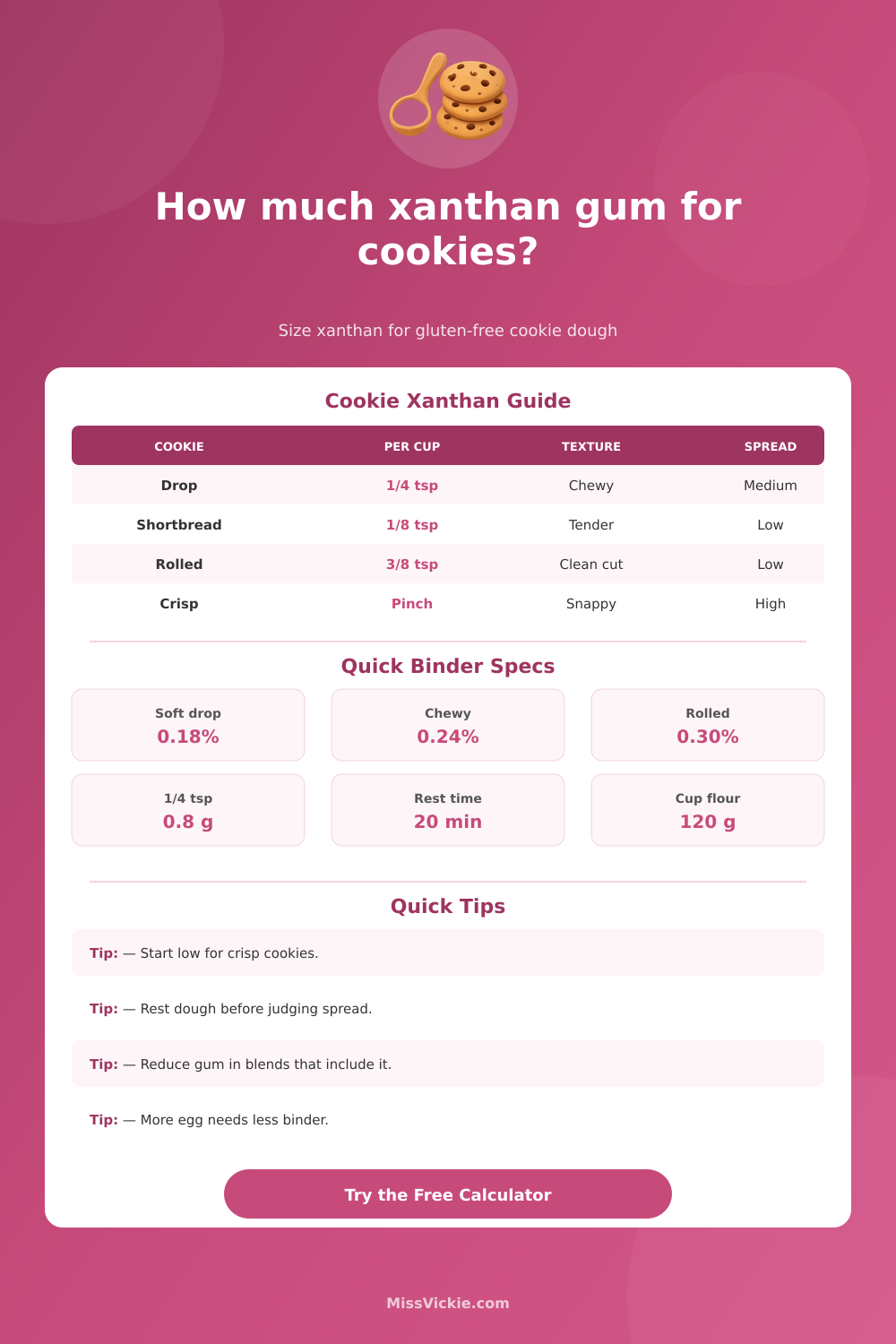
The reference table provide the percentages of xanthan gum for different style of cookies. Drop cookies require the middle percentage of xanthan gum as these cookies need structure to hold their cookies. Rolled cutouts will require more xanthan gum to allow for clean edges.
Thin crisp wafers will require less xanthan gum so that the cookies do not fail to snap when they are removed from the baking sheet. Once you have mixed your cookie dough, you can bake a tester cookie to determine if the amount of xanthan gum that you have added to the dough is correct. While the tester cookie is cooling, observe the cookie.
If the center of the cookie collapse or the edges of the cookie crack, you will need to adjust the amount of xanthan gum for the next batch of cookies. Although the xanthan gum calculator will give you a starting point for the amount of xanthan gum to use in your cookies, you will need to use a process of trial and error to determine the exact amount of xanthan gum that will work for your batch of cookies.