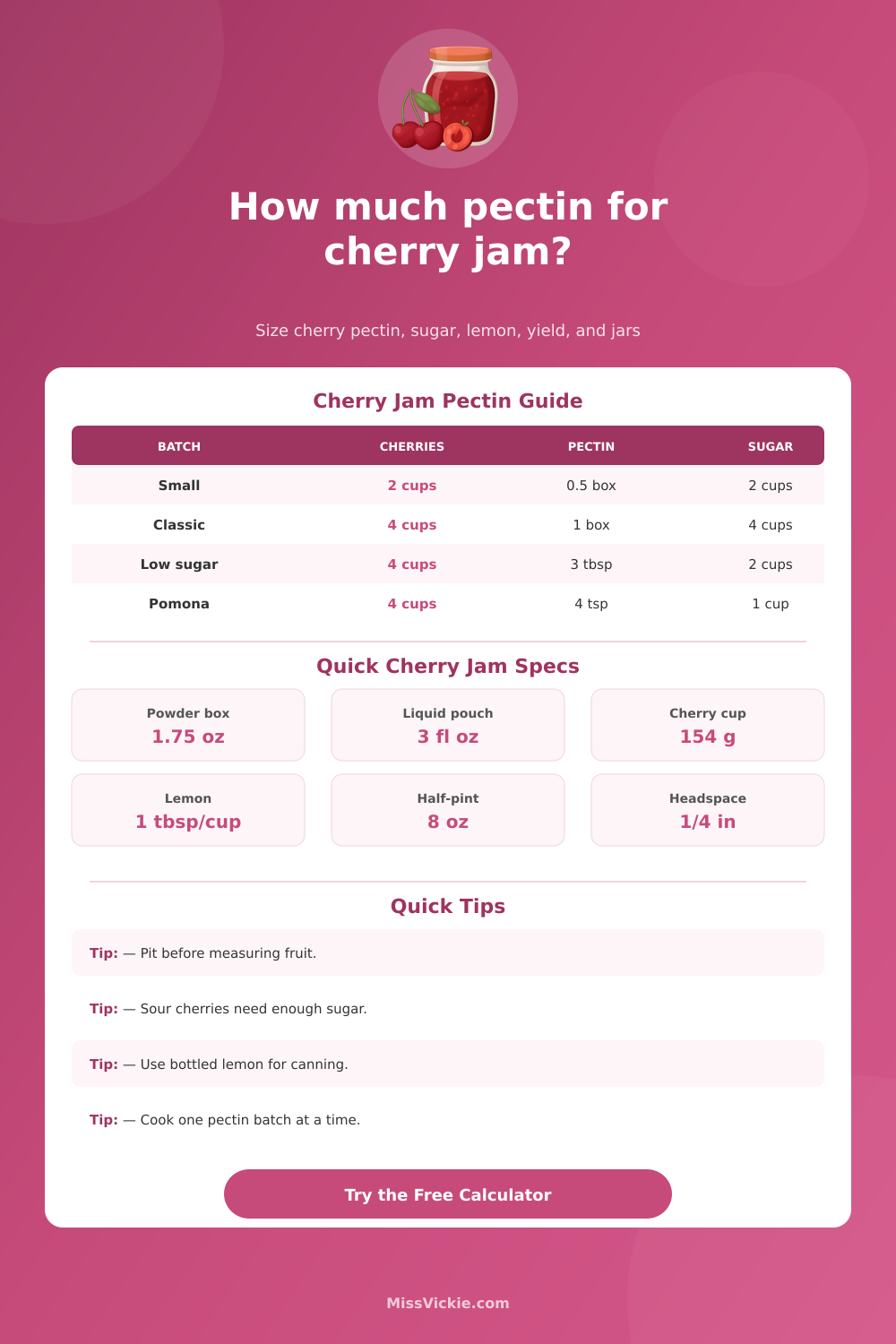
Cherry pectin, sugar ratio, lemon, pitting loss, calcium, yield, and jars
How Much Pectin for Cherry Jam Calculator
Estimate cherry jam pectin from pitted cherries, whole fruit weight, cherry type, pectin style, sugar plan, lemon juice, cook loss, jar size, and altitude.
Load a cherry jam scenario, then adjust the fruit form, pectin type, sugar level, lemon juice, jar size, and batch scale.
Cherry Jam Breakdown
| Pectin style | Typical dose for 4 cups cherries | Sugar pattern | Best cherry use |
|---|---|---|---|
| Regular powdered pectin | 1 box, about 1.75 oz or 49 g | High sugar, often near equal fruit weight | Classic sweet or tart cherry jam |
| Regular liquid pectin | 1 pouch, about 3 fl oz | High sugar and full rolling boil | Glossy soft-set cherry jam |
| Low or no sugar pectin | 3 tablespoons per 4 cups fruit | Flexible, often 25% to 70% sugar | Fruit-forward sweet cherry spread |
| Pomona-style pectin | 4 teaspoons pectin plus calcium water | Very low sugar or honey friendly | Sour cherry and honey batches |
| Freezer jam pectin | 4 tablespoons per 4 cups fruit | Fresh sugar blend, no canning shelf set | Bright uncooked cherry freezer jam |
| Cherry form | Working weight | Cup estimate | Calculator note |
|---|---|---|---|
| 1 cup pitted crushed cherries | About 154 g | 1 cup | Primary base for pectin math |
| 1 lb whole cherries | About 390 g after pitting | About 2.5 cups | Depends on pit and stem loss |
| Frozen thawed cherries | Keep drained juice with fruit | Measure after thawing | Juicier batches may cook down more |
| Cherry juice and pulp | Lower natural body | Use pectin generously | Closer to jelly than chunky jam |
| Mostly whole cherries | Loose cup packing | More air gaps | Use weight when possible |
| Cherry style | Lemon guidance | Sugar range | Set behavior |
|---|---|---|---|
| Sweet dark cherries | About 1 tbsp per cup fruit | 85% to 115% of fruit weight | Needs acid support for a reliable set |
| Rainier cherries | About 1.1 tbsp per cup fruit | 90% to 120% of fruit weight | Mild flavor benefits from lemon |
| Sour pie cherries | About 0.5 tbsp per cup fruit | 75% to 110% of fruit weight | Sets brighter with less added acid |
| Morello cherries | About 0.4 tbsp per cup fruit | 70% to 105% of fruit weight | Tart batches can taste sharp if over-acidified |
| Mixed cherries | About 0.8 tbsp per cup fruit | 80% to 115% of fruit weight | Blend sweetness and acid before cooking |
| Prepared cherries | Regular pectin | Low sugar pectin | Likely half-pints |
|---|---|---|---|
| 2 cups | 0.5 box or 24 g | 1.5 tablespoons | 2 to 3 jars |
| 4 cups | 1 box or 49 g | 3 tablespoons | 4 to 6 jars |
| 6 cups | 1.5 boxes or 74 g | 4.5 tablespoons | 6 to 8 jars |
| 8 cups | 2 boxes or 98 g | 6 tablespoons | 8 to 11 jars |
| 12 cups | 3 boxes or 147 g | 9 tablespoons | 12 to 16 jars |
Use tested canning instructions for processing time and food safety. This calculator sizes ingredients and jars; it does not replace an approved recipe.
Making cherry jam require a specific balance of ingredient. The success of the cherry jam depend on an amount of pectin you add to the cherry jam. The amount of pectin that you will need to add to the cherry jam will depend on the type of cherry that you use in the recipe, the amount of sugar that you use in the cherry jam, and the way in which you will prepare the cherries.
Cherries contains different amounts of natural pectin and acid. Therefore, the amount of pectin that you must add will change depending on the type of cherries that you use. Sweet dark cherry contain relatively little natural pectin.
How to Make Cherry Jam Set Right
Therefore, you will need to add more pectin to sweet dark cherries to make cherry jam that set correctly. Sour pie cherries contain more natural acid and more natural pectin then sweet dark cherries. Therefore, if you use sour pie cherries in your cherry jam, you will need to use the same amount of added pectin as you would for a batch of sweet dark cherries.
You must make sure that you correctly measure the cherries that you use for your cherry jam. A batch of sweet dark cherries measured after pitting will behave differently than a batch of sour pie cherries measured after pitting. The type of pectin that you use will change the amount of sugar and acid that is required to make your cherry jam.
Regular powdered pectin require a high amount of sugar to create a gel. Alternatively, using low-sugar pectin or calcium-based pectin will allow the jam to create a gel with less sugar. If you use a different type of pectin to the type recommended for cherry jam, you will have to change the amount of sugar that you use in the jam.
A calculator can show you the difference between pectin types and how they alter the amount of sugar and lemon juice that must be used in the cherry jam. The texture of the cherries will also impact the way in which the jam set. Crushed cherries will release their natural juice quick, and they will expose more of the cherries surface area to the pectin to set the jam.
Whole cherries or cherries that are halved will contain larger piece of cherries that could potentially interfere with the pectin creating the gel that sets the jam. Sugar is used in the making of cherry jam. Sugar will assist in the setting of the pectin, as well as help preserve the color and flavor of the jam.
Most recipe will state that the amount of sugar should be roughly equal in weight to the weight of the cherries. However, if you are utilizing low-sugar pectin, you can reduce the amount of sugar. If you reduce the amount of sugar used in the jam, the texture of the jam will change, as will the shelf life of the jam.
Cherry jam recipes will require the addition of lemon juice. The citric acid in the lemon juice will lower the pH level of the jam, which will allow the pectin to create a gel. Additionally, the lemon juice will help prevent the growth of spoilage organism in the jam.
Because sweet dark cherries contain less natural acid than sour pie cherries, you will need to add more lemon juice to sweet dark cherries than sour pie cherries. Using bottled lemon juice can make this process easier, as bottled lemon juice will ensure that you add the necessary amount of acidity to every batch of cherry jam. The cherries will lose volume during the cooking process of making jam.
Cherries contain alot of water, so they will lose even more volume during the jam-making process as the water evaporate. When preparing to make jam, you may not fill as many jars as you would expect with your batch of cherries. To account for this, you should use a tool to estimate the volume loss that the cherries will undergo so that you can correctly prepare the necessary number of jars for your batch of cherries.
Many people will make a mistake in the preparation of the cherries. For example, they will weigh the cherries while the pits are still inside the cherries. This will result in incorrect measurement of the amount of cherries.
Furthermore, people may use a cherry jam recipe that is made for one brand of pectin but purchase a different brand. Using a different brand of pectin will alter the amount of sugar that is required for the jam to set correctly. The amount of sugar will change, and the jam may not set correctly if you use a different brand of pectin than the recipe suggest.
Do not double or triple the recipe if using regular pectin. If you prepare a large batch of jam, it will take a long time to reach the boiling point required for the pectin to set. The pectin can break down if the jam takes too long to reach the boiling point.
It is better to prepare two batches of the jam that is half the size of the batch you would prepare if you follow the recipe as written. Freezer jam is not prepared in the same way as cherry jam that is boiled to set the pectin. Freezer jam will use a different type of pectin that set at room temperature.
Freezer jam will require less sugar than cherry jam. Furthermore, because the jam is not boiled, it will have to be stored in the refrigerator or frozen after it has been made.