Butter ratio, water risk, shine, softness, and melting temperature
How Much Butter to Melt Chocolate Calculator
Estimate how much butter to add to melted chocolate by chocolate weight, chocolate style, butter type, final use, desired flow, temperature, and whether you need a firmer set or a softer dessert glaze.
Pick a kitchen situation to load a butter ratio built around dairy fat, milk solids, and water content rather than neutral oil thinning.
Butter Chocolate Breakdown
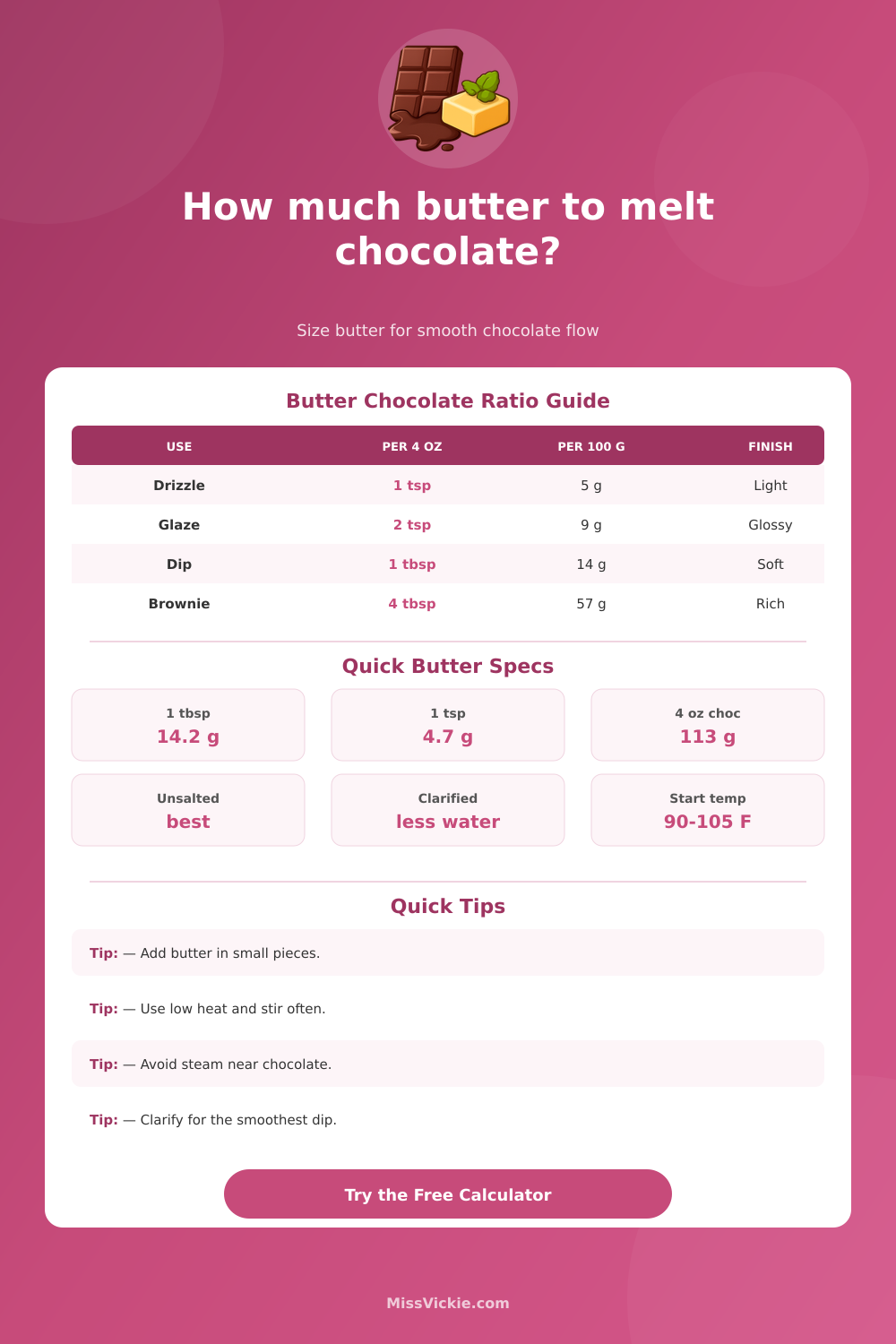
| Use | Butter Per 4 Oz Chocolate | Butter Per 100 G Chocolate | Best Result |
|---|---|---|---|
| Fine drizzle lines | 1 teaspoon / 4.7 g | 4 to 5 g | Light shine, firmer set, and less dairy flavor. |
| Glossy loaf or bundt glaze | 2 teaspoons / 9.5 g | 8 to 9 g | Smooth pour with a soft bite after cooling. |
| Cookie, fruit, or pastry dip | 1 tablespoon / 14.2 g | 12 to 13 g | Noticeably softer coating that does not set as crisp. |
| Brownie, batter, or sauce melt | 3 to 4 tablespoons / 43 to 57 g | 38 to 50 g | Rich melted chocolate mixture for baking or spooning. |
| Chocolate Style | Butter Adjustment | Why It Changes | Kitchen Cue |
|---|---|---|---|
| Dark baking bar | Use base ratio | Usually melts cleanly when chopped small. | Keep heat gentle and stop while a few pieces remain. |
| Milk chocolate | Reduce 5 percent | Milk fat and sugar make it softer. | Use less butter for coating that must sit out. |
| White chocolate | Add 10 percent | Cocoa butter and milk solids thicken quickly. | Stir patiently and avoid hot bowls. |
| Chocolate chips | Add 10 to 16 percent | Stabilizers can hold a thicker shape. | Butter helps flow but will not make chips temper like bars. |
| Butter Type | Approx Fat | Approx Water | Best Use |
|---|---|---|---|
| Unsalted standard butter | 80 to 82 percent | 16 to 18 percent | Best all-purpose choice for glazes and brownie melts. |
| European-style butter | 82 to 86 percent | 12 to 16 percent | Richer taste and slightly smoother chocolate flow. |
| Clarified butter or ghee | 99 percent | Very low | Lowest water risk for dipping and candy-style coating. |
| Browned butter | Higher fat concentration | Reduced water | Nutty flavor for brownies, cookies, and warm sauces. |
| Chocolate Amount | Light Drizzle | Glossy Glaze | Soft Dip |
|---|---|---|---|
| 4 oz / 113 g | 1 tsp butter | 2 tsp butter | 1 tbsp butter |
| 8 oz / 227 g | 2 tsp butter | 1 tbsp plus 1 tsp | 2 tbsp butter |
| 12 oz / 340 g | 1 tbsp butter | 2 tbsp butter | 3 tbsp butter |
| 1 lb / 454 g | 4 tsp butter | 2 tbsp plus 2 tsp | 4 tbsp butter |
Use a very small butter dose when you want lines that firm up after cooling.
A middle butter ratio gives shine and pourability for cakes, bars, and loaf desserts.
More butter makes dipping easier, but the chocolate will set softer than plain chocolate.
Clarified butter keeps the dairy flavor while lowering water and milk-solid risk.
When you mix chocolate and butter, the texture of the chocolate and butter mixture depend on the amount of fat and the amount of water in the mixture. Many people desire the chocolate and butter mixture to have a glossily texture; however, many people find that the texture of the mixture is grainy because those cooks with chocolate and butter dont control the amount of fat and the amount of water within the mixture. The amount of butter that is added to the chocolate will change the texture of the chocolate once it has cooled.
Additionally, the water within the butter will also play a role in the texture of the chocolate once it has been mixed with the butter. Therefore, it is important for cooks to consider in what way the butter will change the chocolate and in what way the water within the butter will behave within the chocolate once the two ingredient are mixed together. Butter is not a neutral oil in that butter contains approximately eighty percent fat and approximately sixteen to eighteen percent water.
How Butter Affects Chocolate Texture
The water content within the butter can lead to the chocolate seizing if the water from the butter is added to the chocolate too quick. European-style butter contains a higher percentage of fat and less water than standard butter. Clarified butter contains almost all of the water that is normaly present in standard butter.
Because clarified butter contains less water than butter, it behaves similar than cocoa butter. Therefore, each type of butter has a role in recipes that utilize both chocolate and butter, and the type of butter that is selected will change the way that the chocolate melt and sets. The type of chocolate that is being used will also change the amount of butter that should be added to the chocolate.
Dark baking chocolate will melt predictable when fat is added to the dark baking chocolate. Milk chocolate contain milk fat and sugar, which makes it necessary to use less butter than is required for dark chocolate. White chocolate lacks the cocoa solids that are contained within dark chocolate; therefore, white chocolate requires the use of more butter.
Lastly, chocolate chips contain stabelizers, which makes it necessary to add more butter to help loosen the chocolate chips. Temperature is another vital component in the churning of chocolate and butter together. The temperature of the chocolate should be kept below one hundred and fifteen degrees.
Adding butter that is cold to chocolate that is warm will require heat to melt the butter; however, adding butter that has already been melted to chocolate will cook the chocolate to too hot of a temperature. Therefore, the cook should add softened butter to chocolate using a gentle heat source to allow for the texture of the chocolate to be monitored. If you choose to use a microwave to melt the chocolate, you will have to stop the microwave frequently and stir the chocolate frequently to ensure that the center of the chocolate do not overheat due to the lack of stirring.
The intended use of the chocolate will determine how much butter should be added to the chocolate. If you are adding a thin drizzle of chocolate to cookies, very little butter is required to allow the chocolate to drizzle over the cookies. For cakes, the chocolate glaze must contain enough butter to allow the glaze to pour out of the container, however once poured it must firm enough to allow it to be cut.
Chocolate dips for fruit will contain more butter so that the chocolate will remain soft. Finally, brownie batter and warm sauces will have the highest amount of butter added to the chocolate because the chocolate does not need to set into a hard shell in these recipe. Each purpose requires a different amount of butter from the chocolate to achieve the desired outcome.
Another factor in the use of chocolate and butter is the storage conditions and the temperature of the room in which the chocolate is prepared. Glazes may become tacky if prepared on a warm countertop. Desserts that are prepared and chilled will tolerate more butter added to the chocolate.
In areas with high humidity, the water in the air may cause the chocolate to bloom on its surface. These factors will play a crucial role in the outcome of the chocolate in various kitchen. Many people make mistake when combining chocolate with butter.
For example, many people add all of the butter at once which creates pockets of water in the melted chocolate. Another mistake is using salted butter instead of unsalted butter or using standard butter instead of European-style butter. Lastly, people heat the chocolate for too long; the longer the chocolate is heated the more the aroma dissipate from the chocolate.
It is best to stop heating the chocolate when the remaining pieces of butter melt. The relationship between chocolate and butter is that of a balance. Adding more butter will make the chocolate more likely to flow and be soft, but it will have less snap when consumed.
Using less butter will retain the structure of the chocolate, but it may be more difficult to pour. Within this recipe you must find the right range of measurement of butter to chocolate for the type of chocolate you would like to make. Understanding the effect of the fat and the water in the chocolate will allow you to prepare the correct amount of butter for the desired texture of your chocolate.