How Much Salt per Cup of Flour for Fried Chicken?
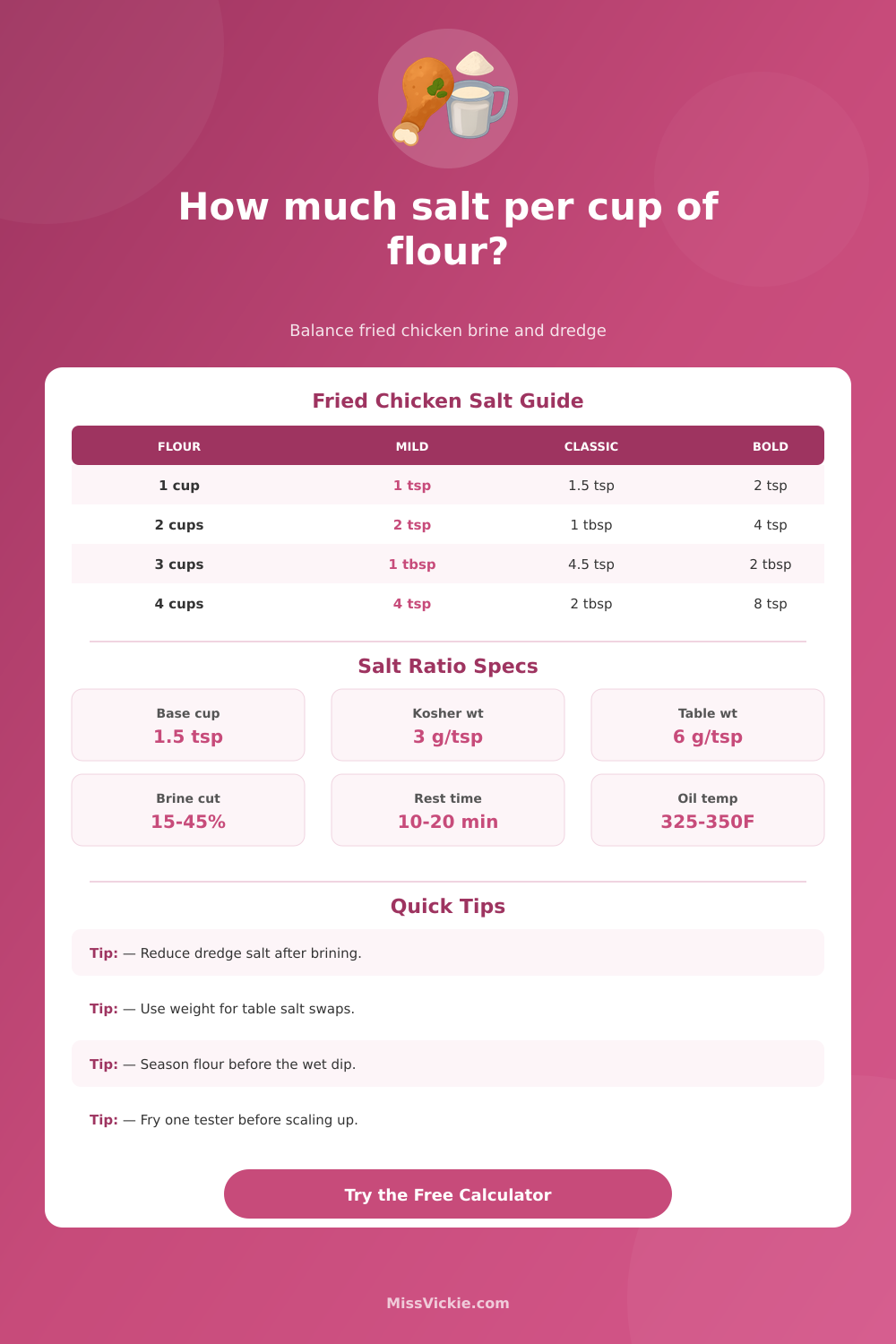
Calculate fried chicken salt by flour cups, chicken cut, brine or buttermilk seasoning, salt type, coating style, and batch size so the crust tastes seasoned without becoming harsh.
Pick a batch style to load realistic flour, chicken weight, cut type, brine strength, and dredge seasoning.
Salt Breakdown
| Dredge Style | Diamond Kosher | Morton Kosher | Table Salt | Best Use |
|---|---|---|---|---|
| Mild family crust | 1 tsp per cup | 2/3 tsp per cup | 1/2 tsp per cup | Brined chicken, kids, salty sides |
| Classic fried chicken | 1 1/2 tsp per cup | 1 tsp per cup | 3/4 tsp per cup | Unbrined or lightly brined pieces |
| Bold picnic crust | 1 3/4 tsp per cup | 1 1/4 tsp per cup | 7/8 tsp per cup | Cold leftovers and thick crust |
| Very savory, no brine | 2 tsp per cup | 1 1/3 tsp per cup | 1 tsp per cup | Large bone-in pieces with bland meat |
| Chicken Situation | Flour Salt Change | Why It Changes | Practical Cue |
|---|---|---|---|
| No brine | Use full dredge salt | The crust carries most of the seasoning | Season flour clearly before dipping |
| Light buttermilk salt | Reduce by 10% to 18% | Some salt is already on the surface | Best for thighs and drumsticks |
| Standard wet brine | Reduce by 20% to 35% | Meat is seasoned below the crust | Drain and pat pieces before flour |
| Pickle juice or soy marinade | Reduce by 35% to 50% | The marinade is already salty and acidic | Use a tester before frying the batch |
| Small wings or tenders | Reduce by 5% to 15% | More surface area makes salt hit faster | Keep dips short and coating even |
| Batch | Chicken | Flour Blend | Classic Diamond Salt | After Standard Brine |
|---|---|---|---|---|
| Small dinner | 2 lb | 2 cups | 3 tsp | 2 to 2 1/2 tsp |
| Family skillet | 3 lb | 2 1/2 cups | 3 3/4 tsp | 2 3/4 to 3 tsp |
| Game day wings | 5 lb | 4 cups | 2 tbsp | 4 to 5 tsp |
| Party bucket | 8 lb | 6 cups | 3 tbsp | 6 1/2 to 7 tsp |
Cleaner crust, slightly less flour pickup, good for cutlets.
Classic craggy crust with more seasoned coating per bite.
Thick flakes need a modest salt trim if brined.
Less flour stays on the chicken, so heavy salt tastes sharper.
Salt added to a flour dredge perform several essential functions. Salt added to a flour dredge can affect both the flavors of the crust and the moisture level of the meat. If the amount of salt in the flour dredge are too low, the crust wont contain the desired amount of seasoning.
However, if the amount of salt is too higher, the meat will end up too dry. Salt will interact with the hot fat in the dredge differently. Additionally, the salt may interact with the seasoning that is alredy on the chicken prior to dusting with a flour.
How Much Salt to Put in Flour for Fried Chicken
The total amount of flour that is use in the dredge will impact the total amount of salt that can be used in the dredge. The salt must be added to the entire amount of flour. If you add the salt to only part of the flour, then the salt level will vary between pieces of chicken that is dusted with seasoned flour and flour that dont contain salt.
The amount of salt that will be required is also impacted by the size of the pieces of chicken that will be fried. Small pieces of chicken will have more surface area then large pieces of chicken. Therefore, small pieces of chicken may require more salt than large pieces of chicken.
Brining the chicken will alter the amount of salt that is needed in the flour dredge. Brines will season the chicken while it is wet. Thus, the chicken will have salt in it prior to being place into the flour dredge.
Using a full amount of salt in the flour dredge on chicken that is already brined may make it too salty. Additionally, any marinade that contain salt will impact the amount of salt that is added to the flour dredge. The type of salt that is used will also impact the amount of salt that can be weighed for the recipe.
For instance, Diamond Crystal kosher salt is less dense than table salt. Using these two salt in the same recipe will require adjustments to the amount of salt used. Using each type of salt will change the saltiness of the dredge.
Weighing the salt will ensure that each batch of salt have the same amount. Using the same brand of salt is another method that will guarantee accuracy in the amount of salt added. The choice of method for coating the chicken will also impact the amount of salt that is used in the flour dredge.
Using a double dredge will create a thicker crust. A thicker crust can contain more of the seasoning that is included in the flour. A single, thin dusting of flour will create a thinner crust.
Additionally, the wet hand method will create a craggy texture that will trap more flour. This method will also spread the salt across a larger volume of flour. Each of these methods can be used to either make the salt the primary flavor of the fried chicken or to make the chicken the primary flavor of the dish.
Many individual will make a mistake when adding the seasoning to the flour dredge without considering the preparation of the chicken. For example, the flour may be prepared with the same seasoning for chicken that has been brined with salt as chicken that has not been brined prior to dredging. The temperature of the oil and the timing of the frying will also impact the flavor of the salt.
Using oil that is too cool will allow the crust to absorb more salt. Using oil that is too hot will make the salt taste too sharply in the chicken. In both cases, the coated chicken can be rested for ten or fifteen minutes prior to frying.
During this resting period, the salt will dissolve into the surface of the chicken. Additionally, resting the chicken will allow the salt to adhere to the chicken and to flavor the crust. The variable of salt in the flour dredge can be manipulated depending upon the cut of the chicken that is to be fried.
Understanding how each of these variables will impact the amount of salt needed will allow an individual to adjust the amount of salt without the use of a calculator. The salt can be tasted prior to frying the chicken. By tasting the first piece of fried chicken, the chef will be able to determine if the level of salt in the flour is correct for the batch of chicken that is being prepared.