How Much Tomato Sauce For Pasta Calculator
Estimate tomato sauce for pasta by servings, dry pasta weight, pasta shape, sauce thickness, add-ins, simmer loss, and leftovers for weeknight dinners or trays.
Choose a real serving situation, then fine-tune sauce texture, pasta shape, add-ins, and leftover buffer.
Calculation Breakdown
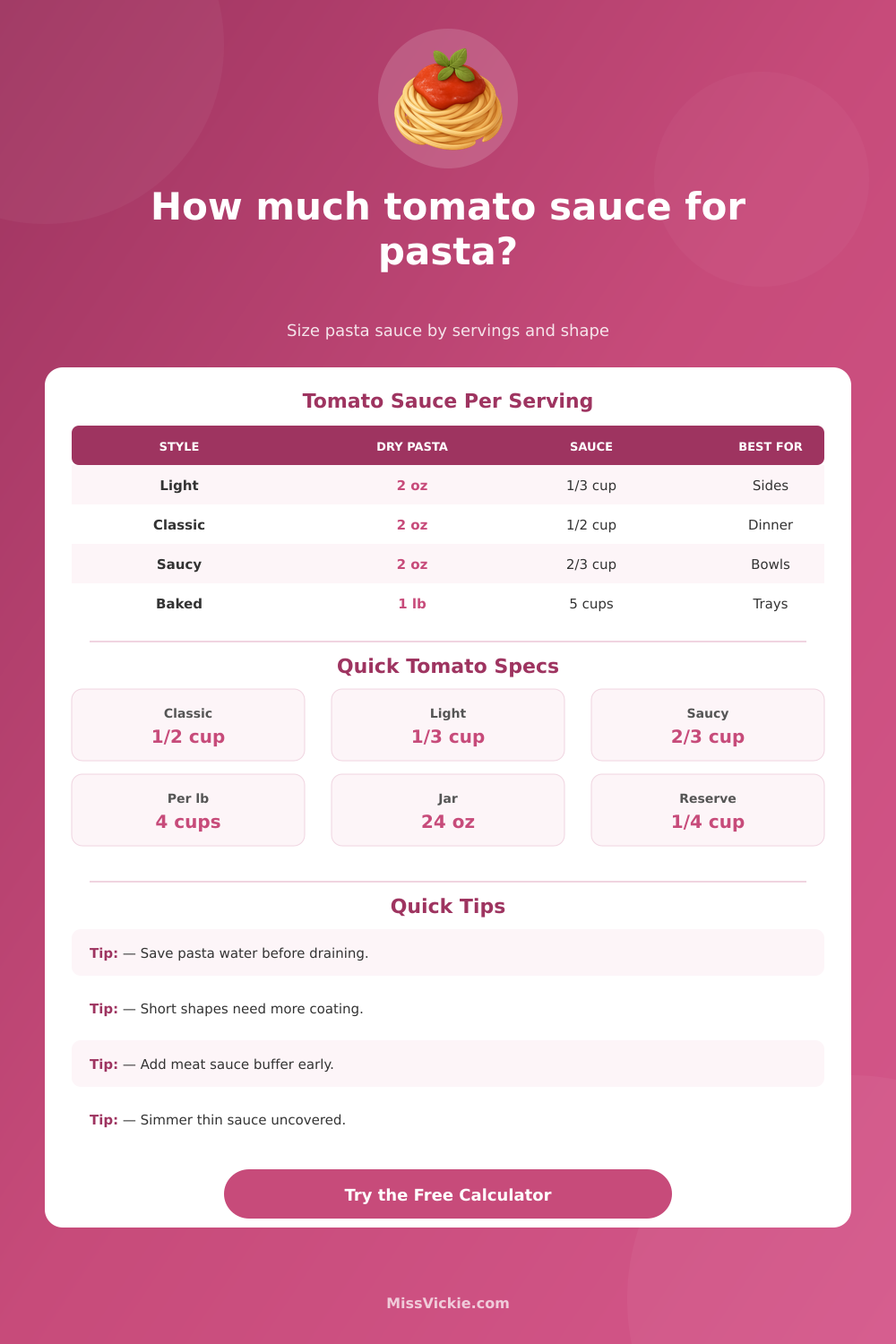
| Serving Style | Dry Pasta Per Person | Tomato Sauce Per Person | Good Use |
|---|---|---|---|
| Kids or small side | 1.25-1.5 oz / 35-43 g | 1/4-1/3 cup / 60-80 ml | Lunch plates, mixed menu sides |
| Standard dinner | 2 oz / 56 g | 1/2 cup / 120 ml | Spaghetti, penne, family dinners |
| Hearty bowl | 2.5 oz / 71 g | 2/3 cup / 160 ml | Big portions, short shapes, extra bread |
| Baked pasta tray | 2 oz / 56 g | 5/8-3/4 cup / 150-180 ml | Ziti, shells, casseroles that absorb sauce |
| Pasta Shape | Sauce Adjustment | Why It Changes | Best Sauce Texture |
|---|---|---|---|
| Spaghetti or thin noodles | Baseline | Long strands coat evenly after tossing | Smooth marinara or pomodoro |
| Penne, ziti, fusilli | Add 6-10% | Hollows and ridges hold more sauce | Medium body with small tomato pieces |
| Rigatoni or shells | Add 10-14% | Large pockets trap sauce and cheese | Chunky or meat sauce |
| Fresh or filled pasta | Use 8-12% less | Delicate pasta needs gentler coating | Loose, glossy sauce |
| Group Size | Light Sauce | Classic Sauce | Saucy Or Baked |
|---|---|---|---|
| 4 servings | 1 1/3 cups | 2 cups | 2 2/3-3 cups |
| 8 servings | 2 2/3 cups | 4 cups | 5 1/3-6 cups |
| 12 servings | 4 cups | 6 cups | 8-9 cups |
| 24 servings | 8 cups | 12 cups | 16-18 cups |
| Container | Volume | Approx Cups | Typical Servings |
|---|---|---|---|
| Small can tomato sauce | 8 oz / 237 ml | 1 cup | 2 classic servings |
| Standard jar pasta sauce | 24 oz / 710 ml | 3 cups | 6 classic servings |
| Large jar pasta sauce | 32 oz / 946 ml | 4 cups | 8 classic servings |
| Restaurant pan batch | 1 gallon / 3.8 L | 16 cups | 30-32 classic servings |
Best default for spaghetti, penne, and family pasta nights.
Chunky sauce needs extra volume so every portion gets enough tomato base.
A glossy light sauce works best when tossed with pasta water.
Oven time and cheese absorb sauce, so trays need a bigger buffer.
Determining the correct amount of tomato sauce for pasta are an important part of the meal preparation process. By determining the correct amount of tomato sauce to add to the pasta, the pasta will neither become too dry from insufficient sauce, nor will it become too wet from adding too much sauce to the pasta. The amount of sauce can be determined prior to the pasta is cook.
The amount of sauce that is required to cook the pasta is dependent upon the amount of peoples that are to be fed with the pasta, the hunger levels of those people, and the desired amount of the sauce that should coat the pasta. For instance, the general rule of thumb is that you should provide two ounces of dry pasta to each person who will eat the pasta. This amount may change depending upon whether the people who will eat the pasta are children or guests.
How Much Tomato Sauce to Use for Pasta
Additionally, more sauce may be provided for those who would like more sauce then others. The shape of the pasta may also change the amount of sauce that should be provided. For instance, pasta shapes that are long in shape, such as spaghetti, will hold a thin layer of sauce, while pasta shapes that are short in shape, such as penne or fusilli, will trap some of the sauce within there ridges or hollow centers, indicating a need for more sauce.
Lastly, pasta shapes that contain an added filling, such as ravioli, will have a delicate surface, and thus, require less sauce to coat the pasta. The style of the sauce may impact the amount of sauce that should be provided. For instance, sauces that are chunky may require more sauce than smooth sauces, as the chunkier sauce will cover the pasta but may require additional sauce to ensure that each portion of pasta contain the same level of sauce.
Additionally, sauces that are thick and contain more solids than thinner sauces may require more sauce to provide the same level of moisture to the pasta. Cream sauces may spread more easily along the pasta than jarred tomato sauces, which are often thicker than those made at home. The number of add-ins to the pasta may also change the amount of sauce that should be provided.
For instance, ingredients like meatballs or vegetables will take up some of the space within which the sauce coats the pasta. Additionally, the meat will absorb some of the liquid from the sauce. Thus, if these ingredient are to be included in the pasta, there will need to be additional sauce provided.
Furthermore, the sauce will reduce as it simmers on the stove. Pasta water can be used if the sauce becomes too thick. The starchy water will loosen the sauce, and will allow the sauce to adhere to the pasta without needing to add more sauce.
Additionally, if pasta is to be cooked and leftovers taken from the pasta dinner to provide for lunch the next day, an extra portion of sauce may be added to ensure that there is enough sauce for the pasta and for any extra serving. Lastly, if the sauce is to be baked into a baked pasta dish, even more sauce will be required, as both the pasta and the cheese will absorb the sauce while the pasta is baking. A base amount of sauce can be measured into the pasta, with an additional small portion of sauce being measure separately.
The amount of sauce that is measured in can become thick when mixed with the pasta. Thus, sauce should be measured into the pasta to allow for adjustments to the thickness of the sauce and to the preference of the individuals who will eat the pasta. By measuring the sauce in advance, the cook can ensure that there is enough sauce for the pasta and for any additional servings.
Determining the correct amount of tomato sauce for pasta are an important part of the meal preparation process. By determining the correct amount of tomato sauce to add to the pasta, the pasta will neither become too dry from insufficient sauce, nor will it become too wet from adding too much sauce to the pasta. The amount of sauce can be determined prior to the pasta is cook.
The amount of sauce that is required to cook the pasta is dependent upon the amount of peoples that are to be fed with the pasta, the hunger levels of those people, and the desired amount of the sauce that should coat the pasta. For instance, the general rule of thumb is that you should provide two ounces of dry pasta to each person who will eat the pasta. This amount may change depending upon whether the people who will eat the pasta are children or guests.
Additionally, more sauce may be provided for those who would like more sauce then others. The shape of the pasta may also change the amount of sauce that should be provided. For instance, pasta shapes that are long in shape, such as spaghetti, will hold a thin layer of sauce, while pasta shapes that are short in shape, such as penne or fusilli, will trap some of the sauce within there ridges or hollow centers, indicating a need for more sauce.
Lastly, pasta shapes that contain an added filling, such as ravioli, will have a delicate surface, and thus, require less sauce to coat the pasta. The style of the sauce may impact the amount of sauce that should be provided. For instance, sauces that are chunky may require more sauce than smooth sauces, as the chunkier sauce will cover the pasta but may require additional sauce to ensure that each portion of pasta contain the same level of sauce.
Additionally, sauces that are thick and contain more solids than thinner sauces may require more sauce to provide the same level of moisture to the pasta. Cream sauces may spread more easily along the pasta than jarred tomato sauces, which are often thicker than those made at home. The number of add-ins to the pasta may also change the amount of sauce that should be provided.
For instance, ingredients like meatballs or vegetables will take up some of the space within which the sauce coats the pasta. Additionally, the meat will absorb some of the liquid from the sauce. Thus, if these ingredient are to be included in the pasta, there will need to be additional sauce provided.
Furthermore, the sauce will reduce as it simmers on the stove. Pasta water can be used if the sauce becomes too thick. The starchy water will loosen the sauce, and will allow the sauce to adhere to the pasta without needing to add more sauce.
Additionally, if pasta is to be cooked and leftovers taken from the pasta dinner to provide for lunch the next day, an extra portion of sauce may be added to ensure that there is enough sauce for the pasta and for any extra serving. Lastly, if the sauce is to be baked into a baked pasta dish, even more sauce will be required, as both the pasta and the cheese will absorb the sauce while the pasta is baking. A base amount of sauce can be measured into the pasta, with an additional small portion of sauce being measure separately.
The amount of sauce that is measured in can become thick when mixed with the pasta. Thus, sauce should be measured into the pasta to allow for adjustments to the thickness of the sauce and to the preference of the individuals who will eat the pasta. By measuring the sauce in advance, the cook can ensure that there is enough sauce for the pasta and for any additional servings.
Determining the correct amount of tomato sauce for pasta are an important part of the meal preparation process. By determining the correct amount of tomato sauce to add to the pasta, the pasta will neither become too dry from insufficient sauce, nor will it become too wet from adding too much sauce to the pasta. The amount of sauce can be determined prior to the pasta is cook.
The amount of sauce that is required to cook the pasta is dependent upon the amount of peoples that are to be fed with the pasta, the hunger levels of those people, and the desired amount of the sauce that should coat the pasta. For instance, the general rule of thumb is that you should provide two ounces of dry pasta to each person who will eat the pasta. This amount may change depending upon whether the people who will eat the pasta are children or guests.
Additionally, more sauce may be provided for those who would like more sauce then others. The shape of the pasta may also change the amount of sauce that should be provided. For instance, pasta shapes that are long in shape, such as spaghetti, will hold a thin layer of sauce, while pasta shapes that are short in shape, such as penne or fusilli, will trap some of the sauce within there ridges or hollow centers, indicating a need for more sauce.
Lastly, pasta shapes that contain an added filling, such as ravioli, will have a delicate surface, and thus, require less sauce to coat the pasta. The style of the sauce may impact the amount of sauce that should be provided. For instance, sauces that are chunky may require more sauce than smooth sauces, as the chunkier sauce will cover the pasta but may require additional sauce to ensure that each portion of pasta contain the same level of sauce.
Additionally, sauces that are thick and contain more solids than thinner sauces may require more sauce to provide the same level of moisture to the pasta. Cream sauces may spread more easily along the pasta than jarred tomato sauces, which are often thicker than those made at home. The number of add-ins to the pasta may also change the amount of sauce that should be provided.
For instance, ingredients like meatballs or vegetables will take up some of the space within which the sauce coats the pasta. Additionally, the meat will absorb some of the liquid from the sauce. Thus, if these ingredient are to be included in the pasta, there will need to be additional sauce provided.
Furthermore, the sauce will reduce as it simmers on the stove. Pasta water can be used if the sauce becomes too thick. The starchy water will loosen the sauce, and will allow the sauce to adhere to the pasta without needing to add more sauce.
Additionally, if pasta is to be cooked and leftovers taken from the pasta dinner to provide for lunch the next day, an extra portion of sauce may be added to ensure that there is enough sauce for the pasta and for any extra serving. Lastly, if the sauce is to be baked into a baked pasta dish, even more sauce will be required, as both the pasta and the cheese will absorb the sauce while the pasta is baking. A base amount of sauce can be measured into the pasta, with an additional small portion of sauce being measure separately.
The amount of sauce that is measured in can become thick when mixed with the pasta. Thus, sauce should be measured into the pasta to allow for adjustments to the thickness of the sauce and to the preference of the individuals who will eat the pasta. By measuring the sauce in advance, the cook can ensure that there is enough sauce for the pasta and for any additional servings.
Determining the correct amount of tomato sauce for pasta are an important part of the meal preparation process. By determining the correct amount of tomato sauce to add to the pasta, the pasta will neither become too dry from insufficient sauce, nor will it become too wet from adding too much sauce to the pasta. The amount of sauce can be determined prior to the pasta is cook.
The amount of sauce that is required to cook the pasta is dependent upon the amount of peoples that are to be fed with the pasta, the hunger levels of those people, and the desired amount of the sauce that should coat the pasta. For instance, the general rule of thumb is that you should provide two ounces of dry pasta to each person who will eat the pasta. This amount may change depending upon whether the people who will eat the pasta are children or guests.
Additionally, more sauce may be provided for those who would like more sauce then others. The shape of the pasta may also change the amount of sauce that should be provided. For instance, pasta shapes that are long in shape, such as spaghetti, will hold a thin layer of sauce, while pasta shapes that are short in shape, such as penne or fusilli, will trap some of the sauce within there ridges or hollow centers, indicating a need for more sauce.
Lastly, pasta shapes that contain an added filling, such as ravioli, will have a delicate surface, and thus, require less sauce to coat the pasta. The style of the sauce may impact the amount of sauce that should be provided. For instance, sauces that are chunky may require more sauce than smooth sauces, as the chunkier sauce will cover the pasta but may require additional sauce to ensure that each portion of pasta contain the same level of sauce.
Additionally, sauces that are thick and contain more solids than thinner sauces may require more sauce to provide the same level of moisture to the pasta. Cream sauces may spread more easily along the pasta than jarred tomato sauces, which are often thicker than those made at home. The number of add-ins to the pasta may also change the amount of sauce that should be provided.
For instance, ingredients like meatballs or vegetables will take up some of the space within which the sauce coats the pasta. Additionally, the meat will absorb some of the liquid from the sauce. Thus, if these ingredient are to be included in the pasta, there will need to be additional sauce provided.
Furthermore, the sauce will reduce as it simmers on the stove. Pasta water can be used if the sauce becomes too thick. The starchy water will loosen the sauce, and will allow the sauce to adhere to the pasta without needing to add more sauce.
Additionally, if pasta is to be cooked and leftovers taken from the pasta dinner to provide for lunch the next day, an extra portion of sauce may be added to ensure that there is enough sauce for the pasta and for any extra serving. Lastly, if the sauce is to be baked into a baked pasta dish, even more sauce will be required, as both the pasta and the cheese will absorb the sauce while the pasta is baking. A base amount of sauce can be measured into the pasta, with an additional small portion of sauce being measure separately.
The amount of sauce that is measured in can become thick when mixed with the pasta. Thus, sauce should be measured into the pasta to allow for adjustments to the thickness of the sauce and to the preference of the individuals who will eat the pasta. By measuring the sauce in advance, the cook can ensure that there is enough sauce for the pasta and for any additional servings.
Determining the correct amount of tomato sauce for pasta are an important part of the meal preparation process. By determining the correct amount of tomato sauce to add to the pasta, the pasta will neither become too dry from insufficient sauce, nor will it become too wet from adding too much sauce to the pasta. The amount of sauce can be determined prior to the pasta is cook.
The amount of sauce that is required to cook the pasta is dependent upon the amount of peoples that are to be fed with the pasta, the hunger levels of those people, and the desired amount of the sauce that should coat the pasta. For instance, the general rule of thumb is that you should provide two ounces of dry pasta to each person who will eat the pasta. This amount may change depending upon whether the people who will eat the pasta are children or guests.
Additionally, more sauce may be provided for those who would like more sauce then others. The shape of the pasta may also change the amount of sauce that should be provided. For instance, pasta shapes that are long in shape, such as spaghetti, will hold a thin layer of sauce, while pasta shapes that are short in shape, such as penne or fusilli, will trap some of the sauce within there ridges or hollow centers, indicating a need for more sauce.
Lastly, pasta shapes that contain an added filling, such as ravioli, will have a delicate surface, and thus, require less sauce to coat the pasta. The style of the sauce may impact the amount of sauce that should be provided. For instance, sauces that are chunky may require more sauce than smooth sauces, as the chunkier sauce will cover the pasta but may require additional sauce to ensure that each portion of pasta contain the same level of sauce.
Additionally, sauces that are thick and contain more solids than thinner sauces may require more sauce to provide the same level of moisture to the pasta. Cream sauces may spread more easily along the pasta than jarred tomato sauces, which are often thicker than those made at home. The number of add-ins to the pasta may also change the amount of sauce that should be provided.
For instance, ingredients like meatballs or vegetables will take up some of the space within which the sauce coats the pasta. Additionally, the meat will absorb some of the liquid from the sauce. Thus, if these ingredient are to be included in the pasta, there will need to be additional sauce provided.
Furthermore, the sauce will reduce as it simmers on the stove. Pasta water can be used if the sauce becomes too thick. The starchy water will loosen the sauce, and will allow the sauce to adhere to the pasta without needing to add more sauce.
Additionally, if pasta is to be cooked and leftovers taken from the pasta dinner to provide for lunch the next day, an extra portion of sauce may be added to ensure that there is enough sauce for the pasta and for any extra serving. Lastly, if the sauce is to be baked into a baked pasta dish, even more sauce will be required, as both the pasta and the cheese will absorb the sauce while the pasta is baking. A base amount of sauce can be measured into the pasta, with an additional small portion of sauce being measure separately.
The amount of sauce that is measured in can become thick when mixed with the pasta. Thus, sauce should be measured into the pasta to allow for adjustments to the thickness of the sauce and to the preference of the individuals who will eat the pasta. By measuring the sauce in advance, the cook can ensure that there is enough sauce for the pasta and for any additional servings.
Determining the correct amount of tomato sauce for pasta are an important part of the meal preparation process. By determining the correct amount of tomato sauce to add to the pasta, the pasta will neither become too dry from insufficient sauce, nor will it become too wet from adding too much sauce to the pasta. The amount of sauce can be determined prior to the pasta is cook.
The amount of sauce that is required to cook the pasta is dependent upon the amount of peoples that are to be fed with the pasta, the hunger levels of those people, and the desired amount of the sauce that should coat the pasta. For instance, the general rule of thumb is that you should provide two ounces of dry pasta to each person who will eat the pasta. This amount may change depending upon whether the people who will eat the pasta are children or guests.
Additionally, more sauce may be provided for those who would like more sauce then others. The shape of the pasta may also change the amount of sauce that should be provided. For instance, pasta shapes that are long in shape, such as spaghetti, will hold a thin layer of sauce, while pasta shapes that are short in shape, such as penne or fusilli, will trap some of the sauce within there ridges or hollow centers, indicating a need for more sauce.
Lastly, pasta shapes that contain an added filling, such as ravioli, will have a delicate surface, and thus, require less sauce to coat the pasta. The style of the sauce may impact the amount of sauce that should be provided. For instance, sauces that are chunky may require more sauce than smooth sauces, as the chunkier sauce will cover the pasta but may require additional sauce to ensure that each portion of pasta contain the same level of sauce.
Additionally, sauces that are thick and contain more solids than thinner sauces may require more sauce to provide the same level of moisture to the pasta. Cream sauces may spread more easily along the pasta than jarred tomato sauces, which are often thicker than those made at home. The number of add-ins to the pasta may also change the amount of sauce that should be provided.
For instance, ingredients like meatballs or vegetables will take up some of the space within which the sauce coats the pasta. Additionally, the meat will absorb some of the liquid from the sauce. Thus, if these ingredient are to be included in the pasta, there will need to be additional sauce provided.
Furthermore, the sauce will reduce as it simmers on the stove. Pasta water can be used if the sauce becomes too thick. The starchy water will loosen the sauce, and will allow the sauce to adhere to the pasta without needing to add more sauce.
Additionally, if pasta is to be cooked and leftovers taken from the pasta dinner to provide for lunch the next day, an extra portion of sauce may be added to ensure that there is enough sauce for the pasta and for any extra serving. Lastly, if the sauce is to be baked into a baked pasta dish, even more sauce will be required, as both the pasta and the cheese will absorb the sauce while the pasta is baking. A base amount of sauce can be measured into the pasta, with an additional small portion of sauce being measure separately.
The amount of sauce that is measured in can become thick when mixed with the pasta. Thus, sauce should be measured into the pasta to allow for adjustments to the thickness of the sauce and to the preference of the individuals who will eat the pasta. By measuring the sauce in advance, the cook can ensure that there is enough sauce for the pasta and for any additional servings.
Determining the correct amount of tomato sauce for pasta are an important part of the meal preparation process. By determining the correct amount of tomato sauce to add to the pasta, the pasta will neither become too dry from insufficient sauce, nor will it become too wet from adding too much sauce to the pasta. The amount of sauce can be determined prior to the pasta is cook.
The amount of sauce that is required to cook the pasta is dependent upon the amount of peoples that are to be fed with the pasta, the hunger levels of those people, and the desired amount of the sauce that should coat the pasta. For instance, the general rule of thumb is that you should provide two ounces of dry pasta to each person who will eat the pasta. This amount may change depending upon whether the people who will eat the pasta are children or guests.
Additionally, more sauce may be provided for those who would like more sauce then others. The shape of the pasta may also change the amount of sauce that should be provided. For instance, pasta shapes that are long in shape, such as spaghetti, will hold a thin layer of sauce, while pasta shapes that are short in shape, such as penne or fusilli, will trap some of the sauce within there ridges or hollow centers, indicating a need for more sauce.
Lastly, pasta shapes that contain an added filling, such as ravioli, will have a delicate surface, and thus, require less sauce to coat the pasta. The style of the sauce may impact the amount of sauce that should be provided. For instance, sauces that are chunky may require more sauce than smooth sauces, as the chunkier sauce will cover the pasta but may require additional sauce to ensure that each portion of pasta contain the same level of sauce.
Additionally, sauces that are thick and contain more solids than thinner sauces may require more sauce to provide the same level of moisture to the pasta. Cream sauces may spread more easily along the pasta than jarred tomato sauces, which are often thicker than those made at home. The number of add-ins to the pasta may also change the amount of sauce that should be provided.
For instance, ingredients like meatballs or vegetables will take up some of the space within which the sauce coats the pasta. Additionally, the meat will absorb some of the liquid from the sauce. Thus, if these ingredient are to be included in the pasta, there will need to be additional sauce provided.
Furthermore, the sauce will reduce as it simmers on the stove. Pasta water can be used if the sauce becomes too thick. The starchy water will loosen the sauce, and will allow the sauce to adhere to the pasta without needing to add more sauce.
Additionally, if pasta is to be cooked and leftovers taken from the pasta dinner to provide for lunch the next day, an extra portion of sauce may be added to ensure that there is enough sauce for the pasta and for any extra serving. Lastly, if the sauce is to be baked into a baked pasta dish, even more sauce will be required, as both the pasta and the cheese will absorb the sauce while the pasta is baking. A base amount of sauce can be measured into the pasta, with an additional small portion of sauce being measure separately.
The amount of sauce that is measured in can become thick when mixed with the pasta. Thus, sauce should be measured into the pasta to allow for adjustments to the thickness of the sauce and to the preference of the individuals who will eat the pasta. By measuring the sauce in advance, the cook can ensure that there is enough sauce for the pasta and for any additional servings.
Determining the correct amount of tomato sauce for pasta are an important part of the meal preparation process. By determining the correct amount of tomato sauce to add to the pasta, the pasta will neither become too dry from insufficient sauce, nor will it become too wet from adding too much sauce to the pasta. The amount of sauce can be determined prior to the pasta is cook.
The amount of sauce that is required to cook the pasta is dependent upon the amount of peoples that are to be fed with the pasta, the hunger levels of those people, and the desired amount of the sauce that should coat the pasta. For instance, the general rule of thumb is that you should provide two ounces of dry pasta to each person who will eat the pasta. This amount may change depending upon whether the people who will eat the pasta are children or guests.
Additionally, more sauce may be provided for those who would like more sauce then others. The shape of the pasta may also change the amount of sauce that should be provided. For instance, pasta shapes that are long in shape, such as spaghetti, will hold a thin layer of sauce, while pasta shapes that are short in shape, such as penne or fusilli, will trap some of the sauce within there ridges or hollow centers, indicating a need for more sauce.
Lastly, pasta shapes that contain an added filling, such as ravioli, will have a delicate surface, and thus, require less sauce to coat the pasta. The style of the sauce may impact the amount of sauce that should be provided. For instance, sauces that are chunky may require more sauce than smooth sauces, as the chunkier sauce will cover the pasta but may require additional sauce to ensure that each portion of pasta contain the same level of sauce.
Additionally, sauces that are thick and contain more solids than thinner sauces may require more sauce to provide the same level of moisture to the pasta. Cream sauces may spread more easily along the pasta than jarred tomato sauces, which are often thicker than those made at home. The number of add-ins to the pasta may also change the amount of sauce that should be provided.
For instance, ingredients like meatballs or vegetables will take up some of the space within which the sauce coats the pasta. Additionally, the meat will absorb some of the liquid from the sauce. Thus, if these ingredient are to be included in the pasta, there will need to be additional sauce provided.
Furthermore, the sauce will reduce as it simmers on the stove. Pasta water can be used if the sauce becomes too thick. The starchy water will loosen the sauce, and will allow the sauce to adhere to the pasta without needing to add more sauce.
Additionally, if pasta is to be cooked and leftovers taken from the pasta dinner to provide for lunch the next day, an extra portion of sauce may be added to ensure that there is enough sauce for the pasta and for any extra serving. Lastly, if the sauce is to be baked into a baked pasta dish, even more sauce will be required, as both the pasta and the cheese will absorb the sauce while the pasta is baking. A base amount of sauce can be measured into the pasta, with an additional small portion of sauce being measure separately.
The amount of sauce that is measured in can become thick when mixed with the pasta. Thus, sauce should be measured into the pasta to allow for adjustments to the thickness of the sauce and to the preference of the individuals who will eat the pasta. By measuring the sauce in advance, the cook can ensure that there is enough sauce for the pasta and for any additional servings.
Determining the correct amount of tomato sauce for pasta are an important part of the meal preparation process. By determining the correct amount of tomato sauce to add to the pasta, the pasta will neither become too dry from insufficient sauce, nor will it become too wet from adding too much sauce to the pasta. The amount of sauce can be determined prior to the pasta is cook.
The amount of sauce that is required to cook the pasta is dependent upon the amount of peoples that are to be fed with the pasta, the hunger levels of those people, and the desired amount of the sauce that should coat the pasta. For instance, the general rule of thumb is that you should provide two ounces of dry pasta to each person who will eat the pasta. This amount may change depending upon whether the people who will eat the pasta are children or guests.
Additionally, more sauce may be provided for those who would like more sauce then others. The shape of the pasta may also change the amount of sauce that should be provided. For instance, pasta shapes that are long in shape, such as spaghetti, will hold a thin layer of sauce, while pasta shapes that are short in shape, such as penne or fusilli, will trap some of the sauce within there ridges or hollow centers, indicating a need for more sauce.
Lastly, pasta shapes that contain an added filling, such as ravioli, will have a delicate surface, and thus, require less sauce to coat the pasta. The style of the sauce may impact the amount of sauce that should be provided. For instance, sauces that are chunky may require more sauce than smooth sauces, as the chunkier sauce will cover the pasta but may require additional sauce to ensure that each portion of pasta contain the same level of sauce.
Additionally, sauces that are thick and contain more solids than thinner sauces may require more sauce to provide the same level of moisture to the pasta. Cream sauces may spread more easily along the pasta than jarred tomato sauces, which are often thicker than those made at home. The number of add-ins to the pasta may also change the amount of sauce that should be provided.
For instance, ingredients like meatballs or vegetables will take up some of the space within which the sauce coats the pasta. Additionally, the meat will absorb some of the liquid from the sauce. Thus, if these ingredient are to be included in the pasta, there will need to be additional sauce provided.
Furthermore, the sauce will reduce as it simmers on the stove. Pasta water can be used if the sauce becomes too thick. The starchy water will loosen the sauce, and will allow the sauce to adhere to the pasta without needing to add more sauce.
Additionally, if pasta is to be cooked and leftovers taken from the pasta dinner to provide for lunch the next day, an extra portion of sauce may be added to ensure that there is enough sauce for the pasta and for any extra serving. Lastly, if the sauce is to be baked into a baked pasta dish, even more sauce will be required, as both the pasta and the cheese will absorb the sauce while the pasta is baking. A base amount of sauce can be measured into the pasta, with an additional small portion of sauce being measure separately.
The amount of sauce that is measured in can become thick when mixed with the pasta. Thus, sauce should be measured into the pasta to allow for adjustments to the thickness of the sauce and to the preference of the individuals who will eat the pasta. By measuring the sauce in advance, the cook can ensure that there is enough sauce for the pasta and for any additional servings.
Determining the correct amount of tomato sauce for pasta are an important part of the meal preparation process. By determining the correct amount of tomato sauce to add to the pasta, the pasta will neither become too dry from insufficient sauce, nor will it become too wet from adding too much sauce to the pasta. The amount of sauce can be determined prior to the pasta is cook.
The amount of sauce that is required to cook the pasta is dependent upon the amount of peoples that are to be fed with the pasta, the hunger levels of those people, and the desired amount of the sauce that should coat the pasta. For instance, the general rule of thumb is that you should provide two ounces of dry pasta to each person who will eat the pasta. This amount may change depending upon whether the people who will eat the pasta are children or guests.
Additionally, more sauce may be provided for those who would like more sauce then others. The shape of the pasta may also change the amount of sauce that should be provided. For instance, pasta shapes that are long in shape, such as spaghetti, will hold a thin layer of sauce, while pasta shapes that are short in shape, such as penne or fusilli, will trap some of the sauce within there ridges or hollow centers, indicating a need for more sauce.
Lastly, pasta shapes that contain an added filling, such as ravioli, will have a delicate surface, and thus, require less sauce to coat the pasta. The style of the sauce may impact the amount of sauce that should be provided. For instance, sauces that are chunky may require more sauce than smooth sauces, as the chunkier sauce will cover the pasta but may require additional sauce to ensure that each portion of pasta contain the same level of sauce.
Additionally, sauces that are thick and contain more solids than thinner sauces may require more sauce to provide the same level of moisture to the pasta. Cream sauces may spread more easily along the pasta than jarred tomato sauces, which are often thicker than those made at home. The number of add-ins to the pasta may also change the amount of sauce that should be provided.
For instance, ingredients like meatballs or vegetables will take up some of the space within which the sauce coats the pasta. Additionally, the meat will absorb some of the liquid from the sauce. Thus, if these ingredient are to be included in the pasta, there will need to be additional sauce provided.
Furthermore, the sauce will reduce as it simmers on the stove. Pasta water can be used if the sauce becomes too thick. The starchy water will loosen the sauce, and will allow the sauce to adhere to the pasta without needing to add more sauce.
Additionally, if pasta is to be cooked and leftovers taken from the pasta dinner to provide for lunch the next day, an extra portion of sauce may be added to ensure that there is enough sauce for the pasta and for any extra serving. Lastly, if the sauce is to be baked into a baked pasta dish, even more sauce will be required, as both the pasta and the cheese will absorb the sauce while the pasta is baking. A base amount of sauce can be measured into the pasta, with an additional small portion of sauce being measure separately.
The amount of sauce that is measured in can become thick when mixed with the pasta. Thus, sauce should be measured into the pasta to allow for adjustments to the thickness of the sauce and to the preference of the individuals who will eat the pasta. By measuring the sauce in advance, the cook can ensure that there is enough sauce for the pasta and for any additional servings.
Determining the correct amount of tomato sauce for pasta are an important part of the meal preparation process. By determining the correct amount of tomato sauce to add to the pasta, the pasta will neither become too dry from insufficient sauce, nor will it become too wet from adding too much sauce to the pasta. The amount of sauce can be determined prior to the pasta is cook.
The amount of sauce that is required to cook the pasta is dependent upon the amount of peoples that are to be fed with the pasta, the hunger levels of those people, and the desired amount of the sauce that should coat the pasta. For instance, the general rule of thumb is that you should provide two ounces of dry pasta to each person who will eat the pasta. This amount may change depending upon whether the people who will eat the pasta are children or guests.
Additionally, more sauce may be provided for those who would like more sauce then others. The shape of the pasta may also change the amount of sauce that should be provided. For instance, pasta shapes that are long in shape, such as spaghetti, will hold a thin layer of sauce, while pasta shapes that are short in shape, such as penne or fusilli, will trap some of the sauce within there ridges or hollow centers, indicating a need for more sauce.
Lastly, pasta shapes that contain an added filling, such as ravioli, will have a delicate surface, and thus, require less sauce to coat the pasta. The style of the sauce may impact the amount of sauce that should be provided. For instance, sauces that are chunky may require more sauce than smooth sauces, as the chunkier sauce will cover the pasta but may require additional sauce to ensure that each portion of pasta contain the same level of sauce.
Additionally, sauces that are thick and contain more solids than thinner sauces may require more sauce to provide the same level of moisture to the pasta. Cream sauces may spread more easily along the pasta than jarred tomato sauces, which are often thicker than those made at home. The number of add-ins to the pasta may also change the amount of sauce that should be provided.
For instance, ingredients like meatballs or vegetables will take up some of the space within which the sauce coats the pasta. Additionally, the meat will absorb some of the liquid from the sauce. Thus, if these ingredient are to be included in the pasta, there will need to be additional sauce provided.
Furthermore, the sauce will reduce as it simmers on the stove. Pasta water can be used if the sauce becomes too thick. The starchy water will loosen the sauce, and will allow the sauce to adhere to the pasta without needing to add more sauce.
Additionally, if pasta is to be cooked and leftovers taken from the pasta dinner to provide for lunch the next day, an extra portion of sauce may be added to ensure that there is enough sauce for the pasta and for any extra serving. Lastly, if the sauce is to be baked into a baked pasta dish, even more sauce will be required, as both the pasta and the cheese will absorb the sauce while the pasta is baking. A base amount of sauce can be measured into the pasta, with an additional small portion of sauce being measure separately.
The amount of sauce that is measured in can become thick when mixed with the pasta. Thus, sauce should be measured into the pasta to allow for adjustments to the thickness of the sauce and to the preference of the individuals who will eat the pasta. By measuring the sauce in advance, the cook can ensure that there is enough sauce for the pasta and for any additional servings.
Determining the correct amount of tomato sauce for pasta are an important part of the meal preparation process. By determining the correct amount of tomato sauce to add to the pasta, the pasta will neither become too dry from insufficient sauce, nor will it become too wet from adding too much sauce to the pasta. The amount of sauce can be determined prior to the pasta is cook.
The amount of sauce that is required to cook the pasta is dependent upon the amount of peoples that are to be fed with the pasta, the hunger levels of those people, and the desired amount of the sauce that should coat the pasta. For instance, the general rule of thumb is that you should provide two ounces of dry pasta to each person who will eat the pasta. This amount may change depending upon whether the people who will eat the pasta are children or guests.
Additionally, more sauce may be provided for those who would like more sauce then others. The shape of the pasta may also change the amount of sauce that should be provided. For instance, pasta shapes that are long in shape, such as spaghetti, will hold a thin layer of sauce, while pasta shapes that are short in shape, such as penne or fusilli, will trap some of the sauce within there ridges or hollow centers, indicating a need for more sauce.
Lastly, pasta shapes that contain an added filling, such as ravioli, will have a delicate surface, and thus, require less sauce to coat the pasta. The style of the sauce may impact the amount of sauce that should be provided. For instance, sauces that are chunky may require more sauce than smooth sauces, as the chunkier sauce will cover the pasta but may require additional sauce to ensure that each portion of pasta contain the same level of sauce.
Additionally, sauces that are thick and contain more solids than thinner sauces may require more sauce to provide the same level of moisture to the pasta. Cream sauces may spread more easily along the pasta than jarred tomato sauces, which are often thicker than those made at home. The number of add-ins to the pasta may also change the amount of sauce that should be provided.
For instance, ingredients like meatballs or vegetables will take up some of the space within which the sauce coats the pasta. Additionally, the meat will absorb some of the liquid from the sauce. Thus, if these ingredient are to be included in the pasta, there will need to be additional sauce provided.
Furthermore, the sauce will reduce as it simmers on the stove. Pasta water can be used if the sauce becomes too thick. The starchy water will loosen the sauce, and will allow the sauce to adhere to the pasta without needing to add more sauce.
Additionally, if pasta is to be cooked and leftovers taken from the pasta dinner to provide for lunch the next day, an extra portion of sauce may be added to ensure that there is enough sauce for the pasta and for any extra serving. Lastly, if the sauce is to be baked into a baked pasta dish, even more sauce will be required, as both the pasta and the cheese will absorb the sauce while the pasta is baking. A base amount of sauce can be measured into the pasta, with an additional small portion of sauce being measure separately.
The amount of sauce that is measured in can become thick when mixed with the pasta. Thus, sauce should be measured into the pasta to allow for adjustments to the thickness of the sauce and to the preference of the individuals who will eat the pasta. By measuring the sauce in advance, the cook can ensure that there is enough sauce for the pasta and for any additional servings.
Determining the correct amount of tomato sauce for pasta are an important part of the meal preparation process. By determining the correct amount of tomato sauce to add to the pasta, the pasta will neither become too dry from insufficient sauce, nor will it become too wet from adding too much sauce to the pasta. The amount of sauce can be determined prior to the pasta is cook.
The amount of sauce that is required to cook the pasta is dependent upon the amount of peoples that are to be fed with the pasta, the hunger levels of those people, and the desired amount of the sauce that should coat the pasta. For instance, the general rule of thumb is that you should provide two ounces of dry pasta to each person who will eat the pasta. This amount may change depending upon whether the people who will eat the pasta are children or guests.
Additionally, more sauce may be provided for those who would like more sauce then others. The shape of the pasta may also change the amount of sauce that should be provided. For instance, pasta shapes that are long in shape, such as spaghetti, will hold a thin layer of sauce, while pasta shapes that are short in shape, such as penne or fusilli, will trap some of the sauce within there ridges or hollow centers, indicating a need for more sauce.
Lastly, pasta shapes that contain an added filling, such as ravioli, will have a delicate surface, and thus, require less sauce to coat the pasta. The style of the sauce may impact the amount of sauce that should be provided. For instance, sauces that are chunky may require more sauce than smooth sauces, as the chunkier sauce will cover the pasta but may require additional sauce to ensure that each portion of pasta contain the same level of sauce.
Additionally, sauces that are thick and contain more solids than thinner sauces may require more sauce to provide the same level of moisture to the pasta. Cream sauces may spread more easily along the pasta than jarred tomato sauces, which are often thicker than those made at home. The number of add-ins to the pasta may also change the amount of sauce that should be provided.
For instance, ingredients like meatballs or vegetables will take up some of the space within which the sauce coats the pasta. Additionally, the meat will absorb some of the liquid from the sauce. Thus, if these ingredient are to be included in the pasta, there will need to be additional sauce provided.
Furthermore, the sauce will reduce as it simmers on the stove. Pasta water can be used if the sauce becomes too thick. The starchy water will loosen the sauce, and will allow the sauce to adhere to the pasta without needing to add more sauce.
Additionally, if pasta is to be cooked and leftovers taken from the pasta dinner to provide for lunch the next day, an extra portion of sauce may be added to ensure that there is enough sauce for the pasta and for any extra serving. Lastly, if the sauce is to be baked into a baked pasta dish, even more sauce will be required, as both the pasta and the cheese will absorb the sauce while the pasta is baking. A base amount of sauce can be measured into the pasta, with an additional small portion of sauce being measure separately.
The amount of sauce that is measured in can become thick when mixed with the pasta. Thus, sauce should be measured into the pasta to allow for adjustments to the thickness of the sauce and to the preference of the individuals who will eat the pasta. By measuring the sauce in advance, the cook can ensure that there is enough sauce for the pasta and for any additional servings.
Determining the correct amount of tomato sauce for pasta are an important part of the meal preparation process. By determining the correct amount of tomato sauce to add to the pasta, the pasta will neither become too dry from insufficient sauce, nor will it become too wet from adding too much sauce to the pasta. The amount of sauce can be determined prior to the pasta is cook.
The amount of sauce that is required to cook the pasta is dependent upon the amount of peoples that are to be fed with the pasta, the hunger levels of those people, and the desired amount of the sauce that should coat the pasta. For instance, the general rule of thumb is that you should provide two ounces of dry pasta to each person who will eat the pasta. This amount may change depending upon whether the people who will eat the pasta are children or guests.
Additionally, more sauce may be provided for those who would like more sauce then others. The shape of the pasta may also change the amount of sauce that should be provided. For instance, pasta shapes that are long in shape, such as spaghetti, will hold a thin layer of sauce, while pasta shapes that are short in shape, such as penne or fusilli, will trap some of the sauce within there ridges or hollow centers, indicating a need for more sauce.
Lastly, pasta shapes that contain an added filling, such as ravioli, will have a delicate surface, and thus, require less sauce to coat the pasta. The style of the sauce may impact the amount of sauce that should be provided. For instance, sauces that are chunky may require more sauce than smooth sauces, as the chunkier sauce will cover the pasta but may require additional sauce to ensure that each portion of pasta contain the same level of sauce.
Additionally, sauces that are thick and contain more solids than thinner sauces may require more sauce to provide the same level of moisture to the pasta. Cream sauces may spread more easily along the pasta than jarred tomato sauces, which are often thicker than those made at home. The number of add-ins to the pasta may also change the amount of sauce that should be provided.
For instance, ingredients like meatballs or vegetables will take up some of the space within which the sauce coats the pasta. Additionally, the meat will absorb some of the liquid from the sauce. Thus, if these ingredient are to be included in the pasta, there will need to be additional sauce provided.
Furthermore, the sauce will reduce as it simmers on the stove. Pasta water can be used if the sauce becomes too thick. The starchy water will loosen the sauce, and will allow the sauce to adhere to the pasta without needing to add more sauce.
Additionally, if pasta is to be cooked and leftovers taken from the pasta dinner to provide for lunch the next day, an extra portion of sauce may be added to ensure that there is enough sauce for the pasta and for any extra serving. Lastly, if the sauce is to be baked into a baked pasta dish, even more sauce will be required, as both the pasta and the cheese will absorb the sauce while the pasta is baking. A base amount of sauce can be measured into the pasta, with an additional small portion of sauce being measure separately.
The amount of sauce that is measured in can become thick when mixed with the pasta. Thus, sauce should be measured into the pasta to allow for adjustments to the thickness of the sauce and to the preference of the individuals who will eat the pasta. By measuring the sauce in advance, the cook can ensure that there is enough sauce for the pasta and for any additional servings.
Determining the correct amount of tomato sauce for pasta are an important part of the meal preparation process. By determining the correct amount of tomato sauce to add to the pasta, the pasta will neither become too dry from insufficient sauce, nor will it become too wet from adding too much sauce to the pasta. The amount of sauce can be determined prior to the pasta is cook.
The amount of sauce that is required to cook the pasta is dependent upon the amount of peoples that are to be fed with the pasta, the hunger levels of those people, and the desired amount of the sauce that should coat the pasta. For instance, the general rule of thumb is that you should provide two ounces of dry pasta to each person who will eat the pasta. This amount may change depending upon whether the people who will eat the pasta are children or guests.
Additionally, more sauce may be provided for those who would like more sauce then others. The shape of the pasta may also change the amount of sauce that should be provided. For instance, pasta shapes that are long in shape, such as spaghetti, will hold a thin layer of sauce, while pasta shapes that are short in shape, such as penne or fusilli, will trap some of the sauce within there ridges or hollow centers, indicating a need for more sauce.
Lastly, pasta shapes that contain an added filling, such as ravioli, will have a delicate surface, and thus, require less sauce to coat the pasta. The style of the sauce may impact the amount of sauce that should be provided. For instance, sauces that are chunky may require more sauce than smooth sauces, as the chunkier sauce will cover the pasta but may require additional sauce to ensure that each portion of pasta contain the same level of sauce.
Additionally, sauces that are thick and contain more solids than thinner sauces may require more sauce to provide the same level of moisture to the pasta. Cream sauces may spread more easily along the pasta than jarred tomato sauces, which are often thicker than those made at home. The number of add-ins to the pasta may also change the amount of sauce that should be provided.
For instance, ingredients like meatballs or vegetables will take up some of the space within which the sauce coats the pasta. Additionally, the meat will absorb some of the liquid from the sauce. Thus, if these ingredient are to be included in the pasta, there will need to be additional sauce provided.
Furthermore, the sauce will reduce as it simmers on the stove. Pasta water can be used if the sauce becomes too thick. The starchy water will loosen the sauce, and will allow the sauce to adhere to the pasta without needing to add more sauce.
Additionally, if pasta is to be cooked and leftovers taken from the pasta dinner to provide for lunch the next day, an extra portion of sauce may be added to ensure that there is enough sauce for the pasta and for any extra serving. Lastly, if the sauce is to be baked into a baked pasta dish, even more sauce will be required, as both the pasta and the cheese will absorb the sauce while the pasta is baking. A base amount of sauce can be measured into the pasta, with an additional small portion of sauce being measure separately.
The amount of sauce that is measured in can become thick when mixed with the pasta. Thus, sauce should be measured into the pasta to allow for adjustments to the thickness of the sauce and to the preference of the individuals who will eat the pasta. By measuring the sauce in advance, the cook can ensure that there is enough sauce for the pasta and for any additional servings.
Determining the correct amount of tomato sauce for pasta are an important part of the meal preparation process. By determining the correct amount of tomato sauce to add to the pasta, the pasta will neither become too dry from insufficient sauce, nor will it become too wet from adding too much sauce to the pasta. The amount of sauce can be determined prior to the pasta is cook.
The amount of sauce that is required to cook the pasta is dependent upon the amount of peoples that are to be fed with the pasta, the hunger levels of those people, and the desired amount of the sauce that should coat the pasta. For instance, the general rule of thumb is that you should provide two ounces of dry pasta to each person who will eat the pasta. This amount may change depending upon whether the people who will eat the pasta are children or guests.
Additionally, more sauce may be provided for those who would like more sauce then others. The shape of the pasta may also change the amount of sauce that should be provided. For instance, pasta shapes that are long in shape, such as spaghetti, will hold a thin layer of sauce, while pasta shapes that are short in shape, such as penne or fusilli, will trap some of the sauce within there ridges or hollow centers, indicating a need for more sauce.
Lastly, pasta shapes that contain an added filling, such as ravioli, will have a delicate surface, and thus, require less sauce to coat the pasta. The style of the sauce may impact the amount of sauce that should be provided. For instance, sauces that are chunky may require more sauce than smooth sauces, as the chunkier sauce will cover the pasta but may require additional sauce to ensure that each portion of pasta contain the same level of sauce.
Additionally, sauces that are thick and contain more solids than thinner sauces may require more sauce to provide the same level of moisture to the pasta. Cream sauces may spread more easily along the pasta than jarred tomato sauces, which are often thicker than those made at home. The number of add-ins to the pasta may also change the amount of sauce that should be provided.
For instance, ingredients like meatballs or vegetables will take up some of the space within which the sauce coats the pasta. Additionally, the meat will absorb some of the liquid from the sauce. Thus, if these ingredient are to be included in the pasta, there will need to be additional sauce provided.
Furthermore, the sauce will reduce as it simmers on the stove. Pasta water can be used if the sauce becomes too thick. The starchy water will loosen the sauce, and will allow the sauce to adhere to the pasta without needing to add more sauce.
Additionally, if pasta is to be cooked and leftovers taken from the pasta dinner to provide for lunch the next day, an extra portion of sauce may be added to ensure that there is enough sauce for the pasta and for any extra serving. Lastly, if the sauce is to be baked into a baked pasta dish, even more sauce will be required, as both the pasta and the cheese will absorb the sauce while the pasta is baking. A base amount of sauce can be measured into the pasta, with an additional small portion of sauce being measure separately.
The amount of sauce that is measured in can become thick when mixed with the pasta. Thus, sauce should be measured into the pasta to allow for adjustments to the thickness of the sauce and to the preference of the individuals who will eat the pasta. By measuring the sauce in advance, the cook can ensure that there is enough sauce for the pasta and for any additional servings.
Determining the correct amount of tomato sauce for pasta are an important part of the meal preparation process. By determining the correct amount of tomato sauce to add to the pasta, the pasta will neither become too dry from insufficient sauce, nor will it become too wet from adding too much sauce to the pasta. The amount of sauce can be determined prior to the pasta is cook.
The amount of sauce that is required to cook the pasta is dependent upon the amount of peoples that are to be fed with the pasta, the hunger levels of those people, and the desired amount of the sauce that should coat the pasta. For instance, the general rule of thumb is that you should provide two ounces of dry pasta to each person who will eat the pasta. This amount may change depending upon whether the people who will eat the pasta are children or guests.
Additionally, more sauce may be provided for those who would like more sauce then others. The shape of the pasta may also change the amount of sauce that should be provided. For instance, pasta shapes that are long in shape, such as spaghetti, will hold a thin layer of sauce, while pasta shapes that are short in shape, such as penne or fusilli, will trap some of the sauce within there ridges or hollow centers, indicating a need for more sauce.
Lastly, pasta shapes that contain an added filling, such as ravioli, will have a delicate surface, and thus, require less sauce to coat the pasta. The style of the sauce may impact the amount of sauce that should be provided. For instance, sauces that are chunky may require more sauce than smooth sauces, as the chunkier sauce will cover the pasta but may require additional sauce to ensure that each portion of pasta contain the same level of sauce.
Additionally, sauces that are thick and contain more solids than thinner sauces may require more sauce to provide the same level of moisture to the pasta. Cream sauces may spread more easily along the pasta than jarred tomato sauces, which are often thicker than those made at home. The number of add-ins to the pasta may also change the amount of sauce that should be provided.
For instance, ingredients like meatballs or vegetables will take up some of the space within which the sauce coats the pasta. Additionally, the meat will absorb some of the liquid from the sauce. Thus, if these ingredient are to be included in the pasta, there will need to be additional sauce provided.
Furthermore, the sauce will reduce as it simmers on the stove. Pasta water can be used if the sauce becomes too thick. The starchy water will loosen the sauce, and will allow the sauce to adhere to the pasta without needing to add more sauce.
Additionally, if pasta is to be cooked and leftovers taken from the pasta dinner to provide for lunch the next day, an extra portion of sauce may be added to ensure that there is enough sauce for the pasta and for any extra serving. Lastly, if the sauce is to be baked into a baked pasta dish, even more sauce will be required, as both the pasta and the cheese will absorb the sauce while the pasta is baking. A base amount of sauce can be measured into the pasta, with an additional small portion of sauce being measure separately.
The amount of sauce that is measured in can become thick when mixed with the pasta. Thus, sauce should be measured into the pasta to allow for adjustments to the thickness of the sauce and to the preference of the individuals who will eat the pasta. By measuring the sauce in advance, the cook can ensure that there is enough sauce for the pasta and for any additional servings.
Determining the correct amount of tomato sauce for pasta are an important part of the meal preparation process. By determining the correct amount of tomato sauce to add to the pasta, the pasta will neither become too dry from insufficient sauce, nor will it become too wet from adding too much sauce to the pasta. The amount of sauce can be determined prior to the pasta is cook.
The amount of sauce that is required to cook the pasta is dependent upon the amount of peoples that are to be fed with the pasta, the hunger levels of those people, and the desired amount of the sauce that should coat the pasta. For instance, the general rule of thumb is that you should provide two ounces of dry pasta to each person who will eat the pasta. This amount may change depending upon whether the people who will eat the pasta are children or guests.
Additionally, more sauce may be provided for those who would like more sauce then others. The shape of the pasta may also change the amount of sauce that should be provided. For instance, pasta shapes that are long in shape, such as spaghetti, will hold a thin layer of sauce, while pasta shapes that are short in shape, such as penne or fusilli, will trap some of the sauce within there ridges or hollow centers, indicating a need for more sauce.
Lastly, pasta shapes that contain an added filling, such as ravioli, will have a delicate surface, and thus, require less sauce to coat the pasta. The style of the sauce may impact the amount of sauce that should be provided. For instance, sauces that are chunky may require more sauce than smooth sauces, as the chunkier sauce will cover the pasta but may require additional sauce to ensure that each portion of pasta contain the same level of sauce.
Additionally, sauces that are thick and contain more solids than thinner sauces may require more sauce to provide the same level of moisture to the pasta. Cream sauces may spread more easily along the pasta than jarred tomato sauces, which are often thicker than those made at home. The number of add-ins to the pasta may also change the amount of sauce that should be provided.
For instance, ingredients like meatballs or vegetables will take up some of the space within which the sauce coats the pasta. Additionally, the meat will absorb some of the liquid from the sauce. Thus, if these ingredient are to be included in the pasta, there will need to be additional sauce provided.
Furthermore, the sauce will reduce as it simmers on the stove. Pasta water can be used if the sauce becomes too thick. The starchy water will loosen the sauce, and will allow the sauce to adhere to the pasta without needing to add more sauce.
Additionally, if pasta is to be cooked and leftovers taken from the pasta dinner to provide for lunch the next day, an extra portion of sauce may be added to ensure that there is enough sauce for the pasta and for any extra serving. Lastly, if the sauce is to be baked into a baked pasta dish, even more sauce will be required, as both the pasta and the cheese will absorb the sauce while the pasta is baking. A base amount of sauce can be measured into the pasta, with an additional small portion of sauce being measure separately.
The amount of sauce that is measured in can become thick when mixed with the pasta. Thus, sauce should be measured into the pasta to allow for adjustments to the thickness of the sauce and to the preference of the individuals who will eat the pasta. By measuring the sauce in advance, the cook can ensure that there is enough sauce for the pasta and for any additional servings.
Determining the correct amount of tomato sauce for pasta are an important part of the meal preparation process. By determining the correct amount of tomato sauce to add to the pasta, the pasta will neither become too dry from insufficient sauce, nor will it become too wet from adding too much sauce to the pasta. The amount of sauce can be determined prior to the pasta is cook.
The amount of sauce that is required to cook the pasta is dependent upon the amount of peoples that are to be fed with the pasta, the hunger levels of those people, and the desired amount of the sauce that should coat the pasta. For instance, the general rule of thumb is that you should provide two ounces of dry pasta to each person who will eat the pasta. This amount may change depending upon whether the people who will eat the pasta are children or guests.
Additionally, more sauce may be provided for those who would like more sauce then others. The shape of the pasta may also change the amount of sauce that should be provided. For instance, pasta shapes that are long in shape, such as spaghetti, will hold a thin layer of sauce, while pasta shapes that are short in shape, such as penne or fusilli, will trap some of the sauce within there ridges or hollow centers, indicating a need for more sauce.
Lastly, pasta shapes that contain an added filling, such as ravioli, will have a delicate surface, and thus, require less sauce to coat the pasta. The style of the sauce may impact the amount of sauce that should be provided. For instance, sauces that are chunky may require more sauce than smooth sauces, as the chunkier sauce will cover the pasta but may require additional sauce to ensure that each portion of pasta contain the same level of sauce.
Additionally, sauces that are thick and contain more solids than thinner sauces may require more sauce to provide the same level of moisture to the pasta. Cream sauces may spread more easily along the pasta than jarred tomato sauces, which are often thicker than those made at home. The number of add-ins to the pasta may also change the amount of sauce that should be provided.
For instance, ingredients like meatballs or vegetables will take up some of the space within which the sauce coats the pasta. Additionally, the meat will absorb some of the liquid from the sauce. Thus, if these ingredient are to be included in the pasta, there will need to be additional sauce provided.
Furthermore, the sauce will reduce as it simmers on the stove. Pasta water can be used if the sauce becomes too thick. The starchy water will loosen the sauce, and will allow the sauce to adhere to the pasta without needing to add more sauce.
Additionally, if pasta is to be cooked and leftovers taken from the pasta dinner to provide for lunch the next day, an extra portion of sauce may be added to ensure that there is enough sauce for the pasta and for any extra serving. Lastly, if the sauce is to be baked into a baked pasta dish, even more sauce will be required, as both the pasta and the cheese will absorb the sauce while the pasta is baking. A base amount of sauce can be measured into the pasta, with an additional small portion of sauce being measure separately.
The amount of sauce that is measured in can become thick when mixed with the pasta. Thus, sauce should be measured into the pasta to allow for adjustments to the thickness of the sauce and to the preference of the individuals who will eat the pasta. By measuring the sauce in advance, the cook can ensure that there is enough sauce for the pasta and for any additional servings.
Determining the correct amount of tomato sauce for pasta are an important part of the meal preparation process. By determining the correct amount of tomato sauce to add to the pasta, the pasta will neither become too dry from insufficient sauce, nor will it become too wet from adding too much sauce to the pasta. The amount of sauce can be determined prior to the pasta is cook.
The amount of sauce that is required to cook the pasta is dependent upon the amount of peoples that are to be fed with the pasta, the hunger levels of those people, and the desired amount of the sauce that should coat the pasta. For instance, the general rule of thumb is that you should provide two ounces of dry pasta to each person who will eat the pasta. This amount may change depending upon whether the people who will eat the pasta are children or guests.
Additionally, more sauce may be provided for those who would like more sauce then others. The shape of the pasta may also change the amount of sauce that should be provided. For instance, pasta shapes that are long in shape, such as spaghetti, will hold a thin layer of sauce, while pasta shapes that are short in shape, such as penne or fusilli, will trap some of the sauce within there ridges or hollow centers, indicating a need for more sauce.
Lastly, pasta shapes that contain an added filling, such as ravioli, will have a delicate surface, and thus, require less sauce to coat the pasta. The style of the sauce may impact the amount of sauce that should be provided. For instance, sauces that are chunky may require more sauce than smooth sauces, as the chunkier sauce will cover the pasta but may require additional sauce to ensure that each portion of pasta contain the same level of sauce.
Additionally, sauces that are thick and contain more solids than thinner sauces may require more sauce to provide the same level of moisture to the pasta. Cream sauces may spread more easily along the pasta than jarred tomato sauces, which are often thicker than those made at home. The number of add-ins to the pasta may also change the amount of sauce that should be provided.
For instance, ingredients like meatballs or vegetables will take up some of the space within which the sauce coats the pasta. Additionally, the meat will absorb some of the liquid from the sauce. Thus, if these ingredient are to be included in the pasta, there will need to be additional sauce provided.
Furthermore, the sauce will reduce as it simmers on the stove. Pasta water can be used if the sauce becomes too thick. The starchy water will loosen the sauce, and will allow the sauce to adhere to the pasta without needing to add more sauce.
Additionally, if pasta is to be cooked and leftovers taken from the pasta dinner to provide for lunch the next day, an extra portion of sauce may be added to ensure that there is enough sauce for the pasta and for any extra serving. Lastly, if the sauce is to be baked into a baked pasta dish, even more sauce will be required, as both the pasta and the cheese will absorb the sauce while the pasta is baking. A base amount of sauce can be measured into the pasta, with an additional small portion of sauce being measure separately.
The amount of sauce that is measured in can become thick when mixed with the pasta. Thus, sauce should be measured into the pasta to allow for adjustments to the thickness of the sauce and to the preference of the individuals who will eat the pasta. By measuring the sauce in advance, the cook can ensure that there is enough sauce for the pasta and for any additional servings.
Determining the correct amount of tomato sauce for pasta are an important part of the meal preparation process. By determining the correct amount of tomato sauce to add to the pasta, the pasta will neither become too dry from insufficient sauce, nor will it become too wet from adding too much sauce to the pasta. The amount of sauce can be determined prior to the pasta is cook.
The amount of sauce that is required to cook the pasta is dependent upon the amount of peoples that are to be fed with the pasta, the hunger levels of those people, and the desired amount of the sauce that should coat the pasta. For instance, the general rule of thumb is that you should provide two ounces of dry pasta to each person who will eat the pasta. This amount may change depending upon whether the people who will eat the pasta are children or guests.
Additionally, more sauce may be provided for those who would like more sauce then others. The shape of the pasta may also change the amount of sauce that should be provided. For instance, pasta shapes that are long in shape, such as spaghetti, will hold a thin layer of sauce, while pasta shapes that are short in shape, such as penne or fusilli, will trap some of the sauce within there ridges or hollow centers, indicating a need for more sauce.
Lastly, pasta shapes that contain an added filling, such as ravioli, will have a delicate surface, and thus, require less sauce to coat the pasta. The style of the sauce may impact the amount of sauce that should be provided. For instance, sauces that are chunky may require more sauce than smooth sauces, as the chunkier sauce will cover the pasta but may require additional sauce to ensure that each portion of pasta contain the same level of sauce.
Additionally, sauces that are thick and contain more solids than thinner sauces may require more sauce to provide the same level of moisture to the pasta. Cream sauces may spread more easily along the pasta than jarred tomato sauces, which are often thicker than those made at home. The number of add-ins to the pasta may also change the amount of sauce that should be provided.
For instance, ingredients like meatballs or vegetables will take up some of the space within which the sauce coats the pasta. Additionally, the meat will absorb some of the liquid from the sauce. Thus, if these ingredient are to be included in the pasta, there will need to be additional sauce provided.
Furthermore, the sauce will reduce as it simmers on the stove. Pasta water can be used if the sauce becomes too thick. The starchy water will loosen the sauce, and will allow the sauce to adhere to the pasta without needing to add more sauce.
Additionally, if pasta is to be cooked and leftovers taken from the pasta dinner to provide for lunch the next day, an extra portion of sauce may be added to ensure that there is enough sauce for the pasta and for any extra serving. Lastly, if the sauce is to be baked into a baked pasta dish, even more sauce will be required, as both the pasta and the cheese will absorb the sauce while the pasta is baking. A base amount of sauce can be measured into the pasta, with an additional small portion of sauce being measure separately.
The amount of sauce that is measured in can become thick when mixed with the pasta. Thus, sauce should be measured into the pasta to allow for adjustments to the thickness of the sauce and to the preference of the individuals who will eat the pasta. By measuring the sauce in advance, the cook can ensure that there is enough sauce for the pasta and for any additional servings.
Determining the correct amount of tomato sauce for pasta are an important part of the meal preparation process. By determining the correct amount of tomato sauce to add to the pasta, the pasta will neither become too dry from insufficient sauce, nor will it become too wet from adding too much sauce to the pasta. The amount of sauce can be determined prior to the pasta is cook.
The amount of sauce that is required to cook the pasta is dependent upon the amount of peoples that are to be fed with the pasta, the hunger levels of those people, and the desired amount of the sauce that should coat the pasta. For instance, the general rule of thumb is that you should provide two ounces of dry pasta to each person who will eat the pasta. This amount may change depending upon whether the people who will eat the pasta are children or guests.
Additionally, more sauce may be provided for those who would like more sauce then others. The shape of the pasta may also change the amount of sauce that should be provided. For instance, pasta shapes that are long in shape, such as spaghetti, will hold a thin layer of sauce, while pasta shapes that are short in shape, such as penne or fusilli, will trap some of the sauce within there ridges or hollow centers, indicating a need for more sauce.
Lastly, pasta shapes that contain an added filling, such as ravioli, will have a delicate surface, and thus, require less sauce to coat the pasta. The style of the sauce may impact the amount of sauce that should be provided. For instance, sauces that are chunky may require more sauce than smooth sauces, as the chunkier sauce will cover the pasta but may require additional sauce to ensure that each portion of pasta contain the same level of sauce.
Additionally, sauces that are thick and contain more solids than thinner sauces may require more sauce to provide the same level of moisture to the pasta. Cream sauces may spread more easily along the pasta than jarred tomato sauces, which are often thicker than those made at home. The number of add-ins to the pasta may also change the amount of sauce that should be provided.
For instance, ingredients like meatballs or vegetables will take up some of the space within which the sauce coats the pasta. Additionally, the meat will absorb some of the liquid from the sauce. Thus, if these ingredient are to be included in the pasta, there will need to be additional sauce provided.
Furthermore, the sauce will reduce as it simmers on the stove. Pasta water can be used if the sauce becomes too thick. The starchy water will loosen the sauce, and will allow the sauce to adhere to the pasta without needing to add more sauce.
Additionally, if pasta is to be cooked and leftovers taken from the pasta dinner to provide for lunch the next day, an extra portion of sauce may be added to ensure that there is enough sauce for the pasta and for any extra serving. Lastly, if the sauce is to be baked into a baked pasta dish, even more sauce will be required, as both the pasta and the cheese will absorb the sauce while the pasta is baking. A base amount of sauce can be measured into the pasta, with an additional small portion of sauce being measure separately.
The amount of sauce that is measured in can become thick when mixed with the pasta. Thus, sauce should be measured into the pasta to allow for adjustments to the thickness of the sauce and to the preference of the individuals who will eat the pasta. By measuring the sauce in advance, the cook can ensure that there is enough sauce for the pasta and for any additional servings.
Determining the correct amount of tomato sauce for pasta are an important part of the meal preparation process. By determining the correct amount of tomato sauce to add to the pasta, the pasta will neither become too dry from insufficient sauce, nor will it become too wet from adding too much sauce to the pasta. The amount of sauce can be determined prior to the pasta is cook.
The amount of sauce that is required to cook the pasta is dependent upon the amount of peoples that are to be fed with the pasta, the hunger levels of those people, and the desired amount of the sauce that should coat the pasta. For instance, the general rule of thumb is that you should provide two ounces of dry pasta to each person who will eat the pasta. This amount may change depending upon whether the people who will eat the pasta are children or guests.
Additionally, more sauce may be provided for those who would like more sauce then others. The shape of the pasta may also change the amount of sauce that should be provided. For instance, pasta shapes that are long in shape, such as spaghetti, will hold a thin layer of sauce, while pasta shapes that are short in shape, such as penne or fusilli, will trap some of the sauce within there ridges or hollow centers, indicating a need for more sauce.
Lastly, pasta shapes that contain an added filling, such as ravioli, will have a delicate surface, and thus, require less sauce to coat the pasta. The style of the sauce may impact the amount of sauce that should be provided. For instance, sauces that are chunky may require more sauce than smooth sauces, as the chunkier sauce will cover the pasta but may require additional sauce to ensure that each portion of pasta contain the same level of sauce.
Additionally, sauces that are thick and contain more solids than thinner sauces may require more sauce to provide the same level of moisture to the pasta. Cream sauces may spread more easily along