How Much Sourdough Starter To Discard
Calculate how much starter to keep, discard, save for recipes, and feed next based on your jar weight, maintenance style, baking plans, hydration, and storage schedule.
Choose a real starter maintenance scenario, then adjust the jar, keep amount, discard recipe plan, feed ratio, and storage buffer.
Discard Breakdown
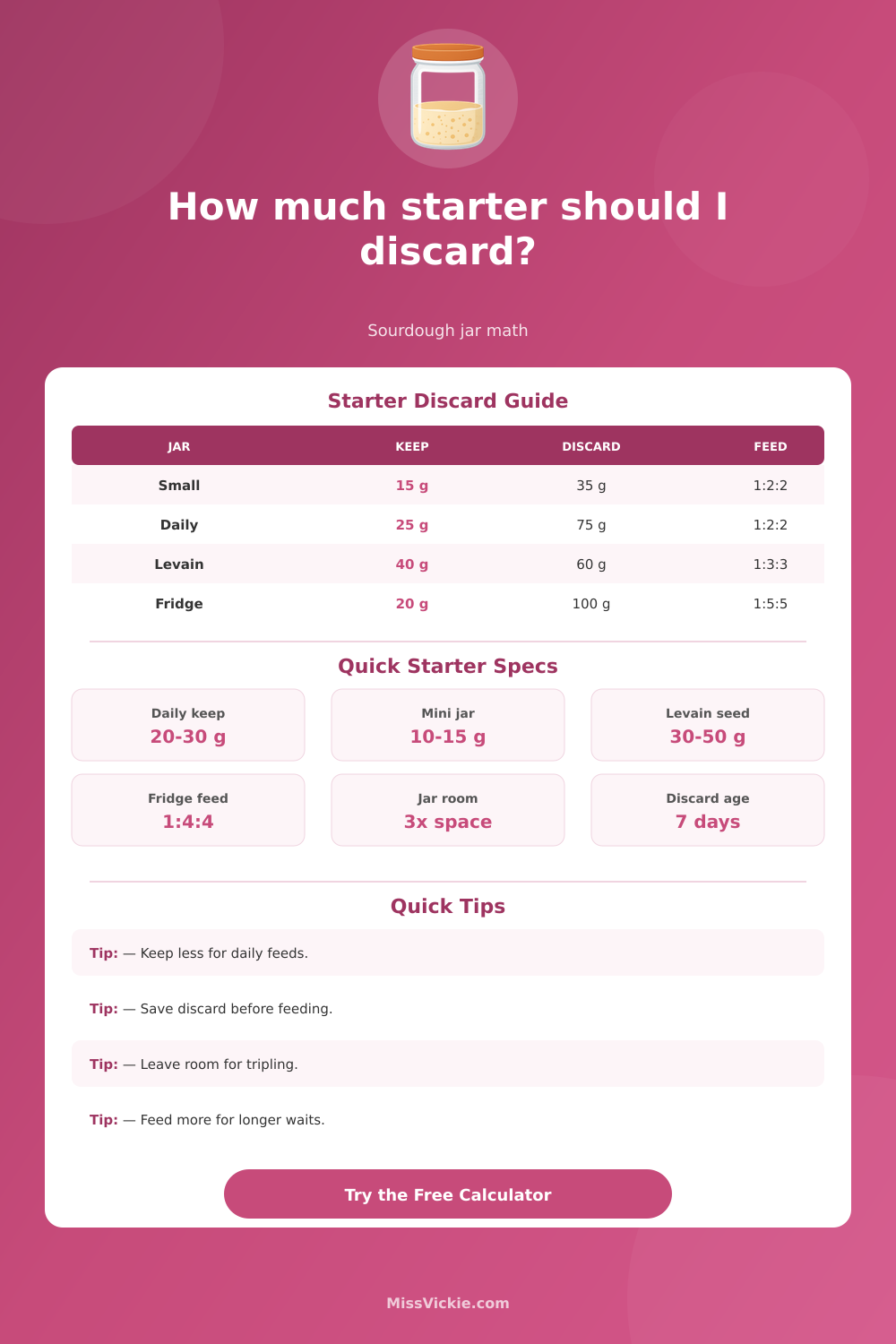
Keep 10 to 15 g and feed only what you need for the next bake.
Keep 20 to 30 g so you have a reliable seed and modest discard.
Remove discard before feeding and chill it for pancakes, crackers, or batter.
Keep a small seed and use a larger ratio for fridge or overnight timing.
| Goal | Keep As Seed | Common Discard | Best Next Feed |
|---|---|---|---|
| Very small counter jar | 10 to 15 g | Everything beyond a recipe save | 1:2:2 for daily use, 1:4:4 for slower timing |
| Everyday home baking | 20 to 30 g | 50 to 100 g from a normal jar | 1:2:2 or 1:3:3 depending on room temperature |
| Levain for one loaf | 30 to 50 g | Only the amount not needed for dough | 1:3:3 to 1:5:5 if building overnight |
| Fridge maintenance | 15 to 25 g | Most of the old jar after saving usable discard | 1:4:4 or 1:5:5 for a cleaner long hold |
| Acidic starter reset | 5 to 15 g | Most of the old starter | Two larger feeds before judging flavor |
| Use For Discard | Typical Amount | Age Preference | Kitchen Note |
|---|---|---|---|
| Pancakes or waffles | 75 to 150 g | Fresh to 7 days chilled | Very sour discard may need a pinch more sweetener. |
| Crackers | 100 to 200 g | Fresh or chilled | Older discard gives more tang and browning. |
| Muffins or quick bread | 80 to 180 g | Fresh to 5 days chilled | Count the flour and water already inside the starter. |
| Flatbread or scallion pancakes | 60 to 120 g | Fresh discard works best | Salt and oil can carry a sharper starter flavor. |
| Compost or bin | Any excess | When neglected or off smelling | Do not use moldy starter in food. |
| Feed Ratio | With 25 g Seed | Approx Final Jar | When To Use It |
|---|---|---|---|
| 1:1:1 | 25 g flour + 25 g water | 75 g starter | Fast refresh when you plan to feed again soon. |
| 1:2:2 | 50 g flour + 50 g water | 125 g starter | Standard daily counter maintenance. |
| 1:3:3 | 75 g flour + 75 g water | 175 g starter | Levain build or a warmer kitchen. |
| 1:4:4 | 100 g flour + 100 g water | 225 g starter | Longer wait, milder aroma, or overnight timing. |
| 1:5:5 | 125 g flour + 125 g water | 275 g starter | Fridge feed, vacation buffer, or acidic starter cleanup. |
| Storage Choice | Best For | Practical Window | Quality Check |
|---|---|---|---|
| Use today | Pancakes, waffles, flatbreads, crackers | Same day | Normal sour smell, no unusual color. |
| Refrigerate | Batching discard until the weekend | About 1 week for best flavor | Stir hooch back in only if the aroma is clean. |
| Freeze | Backup discard for baked goods | 1 to 3 months | Thaw and use in cooked recipes, not as a strength test. |
| Compost | Excess, very old, or questionable discard | Any time | Discard food use if mold appears. |
You may wonder how much sourdough starter to discard if you find yourself with more sourdough starter in your jar than the amounts that you need for your sourdough recipes. Discarding sourdough starter might seem like a waste of resources, but keeping too much sourdough starter can cause problems for your sourdough recipes. Too much sourdough starter require daily feedings of flour and water to the sourdough starter to keep it active, which can take up valuable space in your fridge or on your countertops.
The primary concern with having too much sourdough starter is not with the sourdough starter itself but in the difference between the amount that the sourdough starter culture needs compared to the amount that you want to keep. Because sourdough starter does not require alot of flour and water to remain active, the amount of sourdough starter that you keep depend on the ratio of the seed of the sourdough starter to the amount of fresh flour and water that you feed it. Maintaining the proper ratio of the sourdough starter seed to fresh flour and water, as well as the frequency with which you feed it, is essential to maintaining your sourdough starter.
How Much Sourdough Starter to Keep or Discard
Once you have a good understanding of the ratio of the seed to the fresh flour and water, you can decide how much sourdough starter to keep. Using a sourdough starter calculator allow you to determine the amount of sourdough starter to discard by entering the current weight of the sourdough starter jar, the amount of sourdough starter seed that you would like to maintain, and the amount of sourdough starter that you will use in your recipe. Each of these variable impacts the amount of sourdough starter that you will remove from your jar and the amount of sourdough starter that you will feed to your sourdough recipes.
The style in which you maintain your sourdough starter affects the amount of sourdough starter that you have to discard and the amount of sourdough starter that you have to keep. For example, if you maintain your sourdough starter on the counter and feed it daily for baking, you will need a larger seed of sourdough starter than if you maintained it in the fridge and only bake every few days. The fridge slow the activity of the sourdough starter, so you can use a smaller seed of sourdough starter with a larger ratio of feed to keep your sourdough starter clean.
Additionally, if you are using your sourdough starter to make a levain of sourdough starter for your sourdough bread, you will have to adjust the seed because a levain needs to have some momentum to make it through the lengthy preparation of the sourdough bread. You can adjust the sourdough starter calculator to reflect the different maintenance styles for sourdough starter. The recipe that you plan to bake also impacts the amount of sourdough starter that you will have to discard.
If you bake recipes like pancake or sourdough cracker recipes that contain sourdough starter, you can save the amount of sourdough starter that you would normally have to discard and store it for a few days. This action change the total amount of sourdough starter waste that you produce. The sourdough starter calculator includes an option to plan for the storage of sourdough starter so that you can estimate how much sourdough starter you may use later in recipe preparation and how much you may end up composting.
This information could be helpful for those who want to track the cost of the flour or those who do not want to throw away food. The hydration level and the feed ratio for your sourdough starter are two variable that you can easily ignore when preparing and feeding your sourdough starter. A sourdough starter with 100% hydration will have different results than a sourdough starter with a stiffer hydration level.
A higher feed ratio than usual will make the sourdough starter peak at a faster rate. The higher the feed ratio, the stronger the sourdough starter will be. For most recipes, you use a 1:2:2 feed ratio.
However, you use a 1:5:5 ratio when baking recipes several days later to provide the sourdough starter with a larger buffer before the feeding schedule. The sourdough starter calculator allow you to test a variety of feed ratios to determine the fed weight of your sourdough starter and how much space it will take up. Another consideration that you should include in your calculations is a safety buffer.
Some of the sourdough starter that you scrape out of the jar may stick to the side of the jar. Additionally, the scale may not be perfect in how much sourdough starter you feed. Having a backup jar of sourdough starter allow you to account for any problems with your main sourdough starter.
Including a safety buffer in the amount of sourdough starter that you feed prevents the sourdough starter from becoming too weak. The sourdough starter calculator allow you to include a buffer for safety in the amount of sourdough starter that you calculate to discard. Many people make common mistake when feeding and maintaining there sourdough starter.
For example, most people who maintain sourdough starter will find that they need to keep 100 gram of sourdough starter because that is the amount from which they started their sourdough starter. Another common mistake is feeding all of the sourdough starter in the jar without removing any of the sourdough starter first. By feeding all of the sourdough starter without removing any of the starter, you are encouraging the sourdough starter to grow and develop strong acidity in the sourdough starter.
The sourdough starter calculator can help you understand the consequence of these common mistakes by showing you the amount of sourdough starter that you will keep, the amount of sourdough starter that you will save, and the amount that will become true waste. The temperature at which you maintain your sourdough starter and the rhythm of your kitchen can also affect the sourdough starter. For example, if your kitchen is warm, the sourdough starter will ferment at a faster rate.
Additionally, if your vacation schedule or weekend schedule change, the amount of buffer that you need for sourdough starter will change. These reference tables on this page provide examples of the amount of sourdough starter to keep based off the goal that you want to accomplish with the sourdough starter. Your actual sourdough starter needs may fall somewhere in between the examples provided in these tables.
The goal of the sourdough starter calculator is to ensure that you do not have to constantly discard sourdough starter because you did not plan for it. By calculating and understanding how much sourdough starter to remove, the sourdough starter will not grow to amounts that you can no longer manage. The excess sourdough starter that you do create will not come as a surprise in the morning when you prepare to bake sourdough bread.
By using the sourdough starter calculator, you have a decision you can make each day to prepare your sourdough starter for your baking needs.