Fruit base, sugar level, acid, cook stage, jar yield, and slurry timing
How Much Cornstarch to Thicken Jam Calculator
Estimate how much cornstarch slurry to add when jam, freezer jam, spoon fruit, or pie-style jam filling is too loose and needs a controlled thickening fix.
Load a common jam rescue scenario, then fine-tune the fruit, sugar, cook stage, set goal, slurry ratio, and jar plan for your batch.
Jam Thickening Breakdown
| Jam style | Light glaze | Soft spread | Moundable jam | Pie filling |
|---|---|---|---|---|
| Strawberry or raspberry | 1/4 tsp per cup | 1/2 tsp per cup | 3/4 tsp per cup | 1 tsp per cup |
| Blueberry or blackberry | 1/4 tsp per cup | 1/2 tsp per cup | 2/3 tsp per cup | 1 tsp per cup |
| Peach, nectarine, or mango | 1/3 tsp per cup | 2/3 tsp per cup | 1 tsp per cup | 1 1/4 tsp per cup |
| Apricot or plum | 1/4 tsp per cup | 1/2 tsp per cup | 3/4 tsp per cup | 1 tsp per cup |
| Apple or pear spread | 1/5 tsp per cup | 1/3 tsp per cup | 1/2 tsp per cup | 3/4 tsp per cup |
| Fresh freezer jam | 1/3 tsp per cup | 2/3 tsp per cup | 1 tsp per cup | not ideal for baking |
| Cornstarch | Approx grams | Cold liquid at 1:2 | Total slurry | Best use |
|---|---|---|---|---|
| 1 teaspoon | 2.7 g | 2 teaspoons | 1 tablespoon | One or two cups of slightly loose jam |
| 2 teaspoons | 5.3 g | 4 teaspoons | 2 tablespoons | Small jar rescue or freezer jam cup |
| 1 tablespoon | 8 g | 2 tablespoons | 3 tablespoons | Four to six cups of soft jam |
| 2 tablespoons | 16 g | 1/4 cup | 6 tablespoons | Large pot, add in two stages |
| 1/4 cup | 32 g | 1/2 cup | 3/4 cup | Market batch or pie filling base |
| Loose jam batch | Soft spread fix | Moundable fix | Approx half-pints | Add-in note |
|---|---|---|---|---|
| 2 cups | 1 tsp starch | 1 1/2 tsp starch | 1 jar | Whisk into 2 to 3 tsp cold liquid |
| 4 cups | 2 tsp starch | 1 tbsp starch | 2 jars | Add half first, then retest |
| 8 cups | 1 tbsp plus 1 tsp | 2 tbsp starch | 4 jars | Use a wide pot for even heat |
| 12 cups | 2 tbsp starch | 3 tbsp starch | 6 jars | Split slurry into two additions |
| 20 cups | 3 tbsp plus 1 tsp | 5 tbsp starch | 10 jars | Market batches need careful stirring |
| Condition | What it does | Calculator response | Kitchen move | Best check |
|---|---|---|---|---|
| Brief simmer | Activates starch cleanly | Baseline dose | Simmer 2 minutes after adding | Cold plate drip test |
| Gentle low heat | Thickens more slowly | Small dose increase | Warm longer before adding more | Spoon trail test |
| Long hot hold | Can thin starch gel | Reserve some slurry | Add final portion near service | Retest after holding |
| High acid jam | Can weaken texture | Small support buffer | Use staged additions | Cool 5 minutes and check |
| Freezer jam | Often stays softer | More cautious target | Warm gently, then chill again | Recheck when cold |
For water-bath canned jam, do not treat cornstarch as a substitute for a tested recipe. It changes texture and heat transfer, so use this calculator for practical kitchen thickening estimates.
If the jam you make has a jam that is too runny, you can use cornstarch to thicken it. Cornstarch is one of the best options to help the jam become thicker. However, most people dont know the exact amount of cornstarch to use in the jam-making process.
Using the incorrect amount of cornstarch will produce the jam with incorrect texture. Using too little will result in jam that is too loose and will slide off toast. Using too much will make the jam cloudy and pasty and it will no longer taste like jam.
How Much Cornstarch to Add to Jam
The amount of cornstarch that you need to add to jam depends on several variable. The type of fruit that you use will contain different levels of pectin and will release different amount of juice. The amount of sugar in the jam will also change how much cornstarch you need.
The acidity of the jam and it’s intended use will change the amount of cornstarch that you need. All of these variables will determine the amount of cornstarch you need. The calculator will ask for these variable to determine the amount of cornstarch you need to add to your jam.
For most jam cooks, they dont realize that the jam needs more starch until after the jam has cooled. Jam may appear to thicken while boiling, but it may separate into syrup once it has cooled. Since you already have the jam cooked and finished, you will have to calculate the amount of cornstarch that will create the desired texture of your jam without transforming it into a different jam altogether.
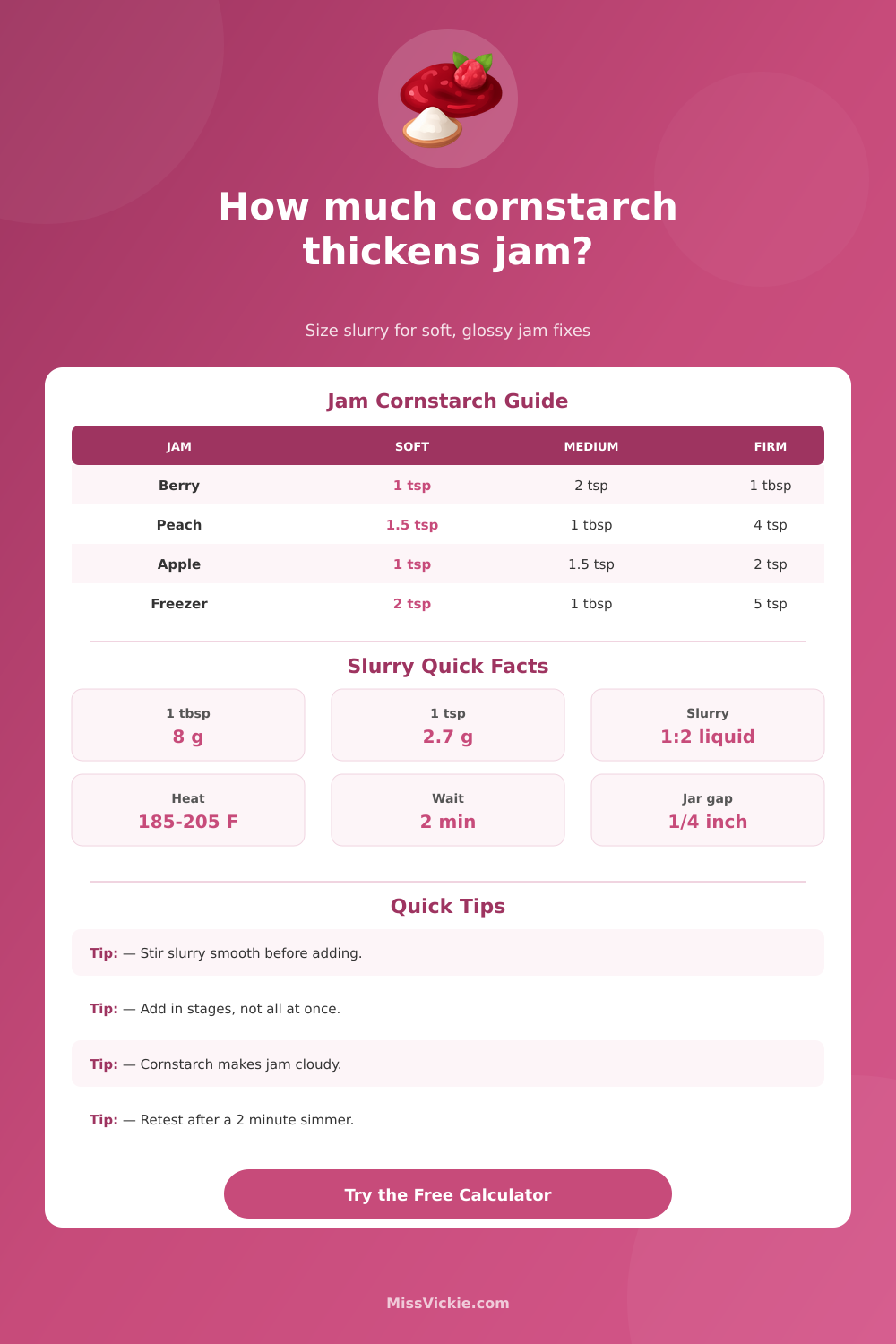
Cornstarch works because it swells when jam is boiling and traps the liquid inside the cornstarch gel. Since cornstarch activates quickly, you will only need to simmer the jam for two minutes once you add the cornstarch. However, boiling jam too much or using a hot water bath will break down the cornstarch.
Therefore, the time you cook the jam after adding the cornstarch is important. Jam that is going to be baked into a pie will require less cornstarch than jam that is going to be kept in a jar and consumed as is. To make cornstarch slurry, you have to mix it with a cold liquid before adding it to the jam.
If you add cornstarch to hot jam, it will clump. To make cornstarch, mix it with twice the volume of cold water or juice. Pour the mixture into the jam pot.
The calculator will provide the suggestion of how much liquid to use for the cornstarch slurry based on the ratio of cornstarch to liquid you choose. The type of fruit that you use in your jam will affect the amount of cornstarch you need. Each fruit contains a different amount of pectin and releases different amount of juice when cooked into jam.
Berries contain less cornstarch than stone fruits. Apples contain a high amount of pectin so require less cornstarch. Jam that is made while the berries are in the freezer will be softer than jam that is cooked to boiling water.
This is because the freezing jam does not boil while making the jam. Therefore, freezer jam requires more cornstarch. Jam that contains more sugar will require less cornstarch than jams with less sugar.
Full-sugar jam will require less cornstarch than low-sugar jams. Jam jams are more acidic than other jams so will break down the cornstarch over time. To combat this, the jam calculator provides a buffer if you jam is very acidic.
Jam will have a current texture and you will need to determine how much cornstarch to add to achieve the desired texture. Jam that stands in mounds on a plate does not require much cornstarch. Jam that runs like syrup requires alot of cornstarch to thicken.
The desired use for the jam will determine the amount of cornstarch you will need to add. Jam that is going to be a glaze requires less cornstarch than jam that is going to be used as pie filling. To prevent over-thickening the jam, add the cornstarch in stages.
Add two-thirds of the required cornstarch and bring the jam to a simmer for two minutes. Remove a spoonful of jam and place it on a chilled plate. If the jam is too runny, add the rest of the cornstarch.
Jam looks thinner when hot. You have to let it cool so you will not add too much cornstarch to the jam. Adding cornstarch will change the jams appearance.
Jam that is very clear will become cloudy after adding cornstarch. Jam with bright color will not stay as bright after the addition of cornstarch. If you want the jam to stay clear, make it a sauce instead of a preserve.
The jam calculator will tell you the texture of the jam will have once you add the cornstarch to the jam, but it will not make decisions about the jams appearance. Cornstarch jam will last in the refrigerator for several weeks. Jam that is going to be frozen will have to be completely cooled before being stored in containers.
Jam that is reheated will have to be done with gentle heat and stirring so the jam will not break down the starch. The most important habit when cooking jam is to measure the volume of the jam before beginning the process. If you guess at the volume of the jam, you will end up with jam that is too runny or too thick.
If you measure the accurate volume of jam that will be made, the jam calculator will calculate the amount of cornstarch you need for that batch of jam. If you follow this vital step, you will have jam that has the texture you desire.