When you give sourdough starter to another person, you must considers the correct amount of sourdough starter to include in the jar. You must consider the amount because sourdough starter is a living culture. If you give your recipient too little sourdough starter, they will have trouble starting there culture.
If you give them too much sourdough starter, excess material will fill the jar and can cause a mess when they attempt to use the sourdough starter. You must consider the following factors when you are preparing to give them some of your sourdough starter. The first factor to consider is how the recipient will use the sourdough starter that you provide for them.
How much sourdough starter to give
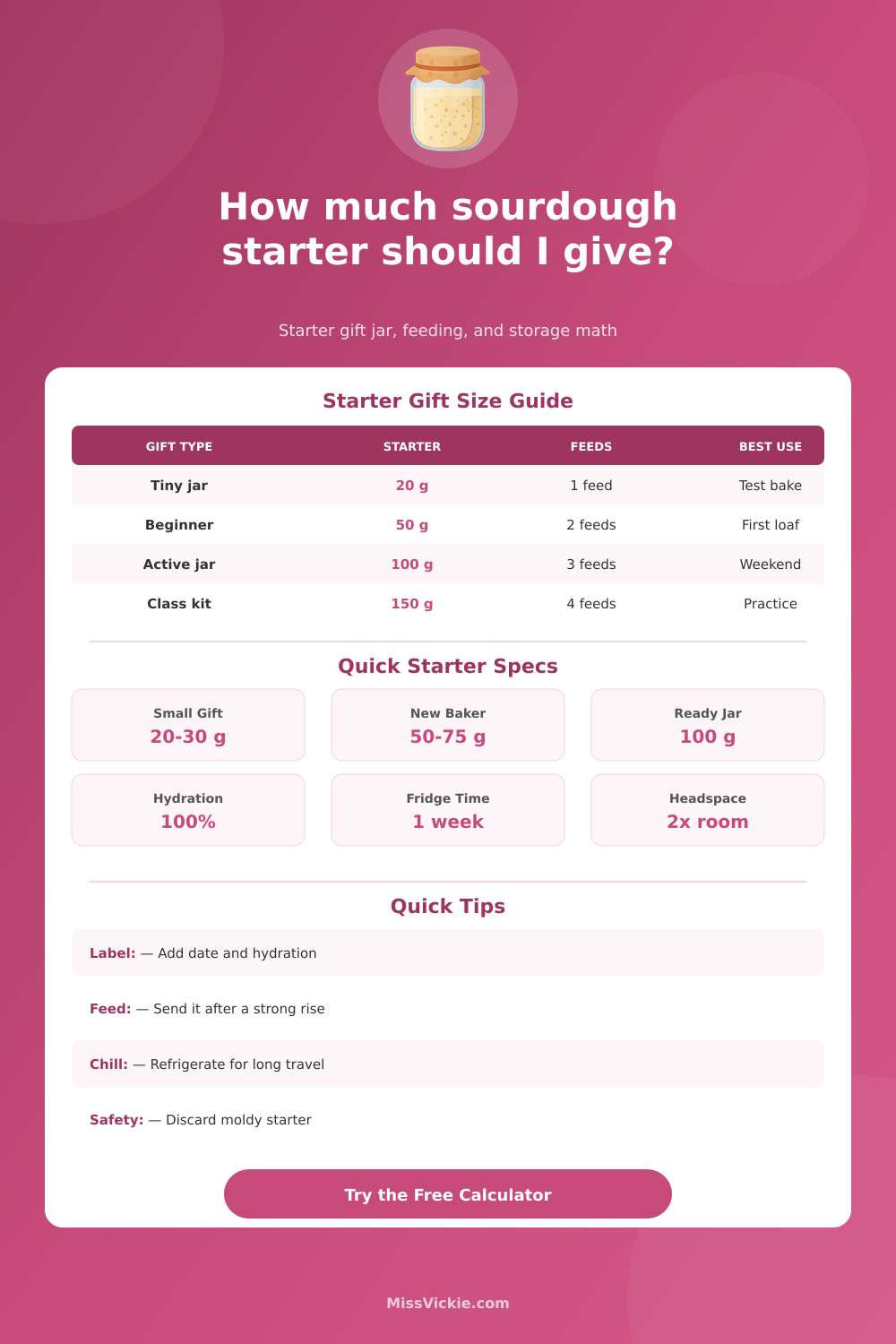
If they will only be using the sourdough starter to revive a weak sourdough culture, they will need to receive only a small amount of sourdough starter from you. If they are new bakers, they will require more sourdough starter so that they doesnt have a chance of running out of sourdough starter while they are learning how to properly care for it. Finally, if they have a recipe that they will use with the sourdough starter, they will require more sourdough starter so they can begin to bake there sourdough bread.
The amount of sourdough starter that you give them should be related to there specific baking goals. The second factor to consider is the conditions under which the sourdough starter will travel to the recipient. Sourdough starter continues to ferment while it is in transit.
Sourdough starter ferments at a faster rate with warmer temperatures. If the sourdough starter travels in warm environments, it will ferment at a faster rate than if it were to travel in cooler environments. The jar that contains the sourdough starter must have enough head space for it to expanding due to the fermentation process.
Additionally, you must include information on the temperature of the sourdough starter while it was traveling to the recipient. The third factor to consider is the hydration level of the sourdough starter. If the sourdough starter is 100 percent hydration, it will contain an equal portion of flour and water by weight.
Additionally, if the sourdough starter is 100 percent hydration, it will behave as a liquid. If the sourdough starter has a lower hydration level, such as 60 or 75 percent, the sourdough starter will behave more like dough. Should the recipient not know the hydration level of the sourdough starter, they may end up using the wrong ratio of ingredients to feed the sourdough starter when they begin to manage it themself.
Sourdough starter is fed with specific ratios to manage the sourdough starter culture. You can use a one-to-one-to-one ratio to feed the sourdough starter quickly. However, a one-to-two-to-two or a one-to-three-to-three ratio is a slower process that is better for new bakers who are still learning how to manage the sourdough starter.
The amount of sourdough starter that you place into a jar will be related to the feeding ratio. Additionally, you should include an extra portion of sourdough starter to act as a buffer. Some sourdough starter may stick to the sides of the jar.
Additionally, should the recipient spill some of the sourdough starter while feeding it for the first time, having an extra amount will ensure they dont run out of sourdough starter before they can complete there baked items. The temperature at which the sourdough starter is stored is another critical factor for the recipient to understand. If you store the sourdough starter in the refrigerator, it may remain in the refrigerator for up to a week before it needs to be fed.
However, if you store the sourdough starter at room temperature, it needs to be fed within one to two days. If the sourdough starter is stored in a warm location, it can expand in volume to the point where it can push the lid off the jar. Many people makes mistakes when they give their sourdough starter to others.
One of the most common is to provide each person with the same amount of sourdough starter without considering there schedule or the temperature of there kitchen. Another most common mistake is to forget that they will consume some of the sourdough starter when they feed it for the first time. Should you make these mistakes, the recipient will not have enough sourdough starter to accomplish there baking goals.
Finally, the type of jar that you provide the sourdough starter in is important. When sourdough starter is active, it can double or triple in volume. Therefore, the jar must have at least twice the volume of the sourdough starter.
Additionally, the lid of the jar is important. The lid should not be too tight so that the pressure from the sourdough starter is not trapped within the jar. However, the lid should not be too loose so that the sourdough starter has a chance to dry out.
A loose fitting lid or a cloth cover is best for transporting sourdough starter. By considering and preparing according to the information discussed, you can ensure that the sourdough starter arrives in good health and that the recipient receives enough sourdough starter to succeed in there baking endeavors.