How Much Cocoa Powder in Brownies Calculator
Estimate cocoa powder for brownies by batch size, flour base, cocoa style, melted chocolate, pan thickness, sweetness, fat level, and target texture.
Choose a starting formula, then adjust cocoa type, chocolate, flour, pan, and texture to tune the batch.
Formula Breakdown
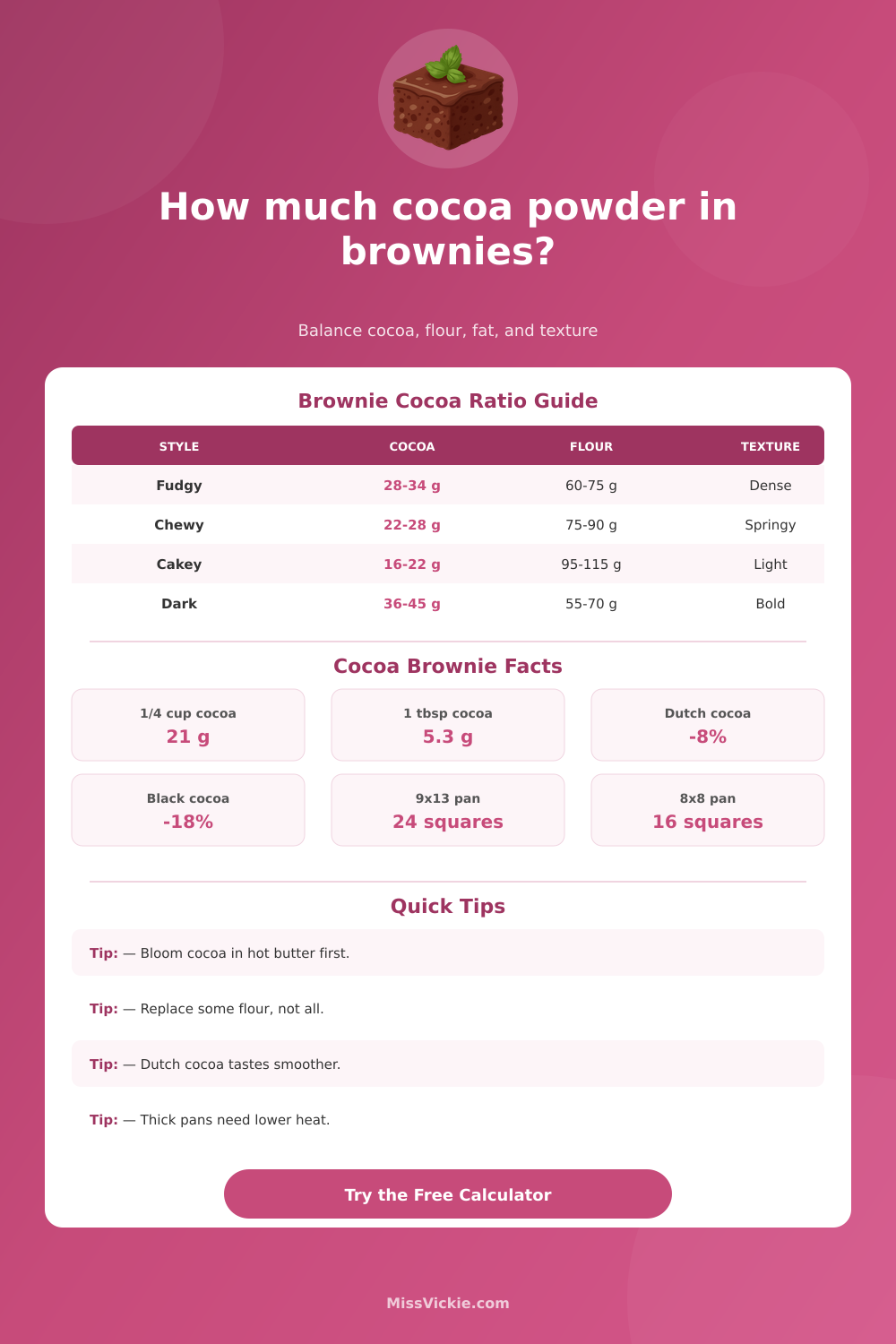
| Brownie style | Cocoa target | Flour base | Best use |
|---|---|---|---|
| Fudgy cocoa brownies | 28% to 38% of flour weight | Lower flour after cocoa | Dense squares, clean chocolate flavor |
| Chewy lunchbox brownies | 22% to 30% of flour weight | Moderate flour kept | Flexible slices with a shiny crust |
| Cakey brownies | 14% to 22% of flour weight | Higher flour, more lift | Lighter crumb and taller pan bakes |
| Extra dark brownies | 38% to 55% of flour weight | Flour reduced carefully | Bittersweet, truffle-like brownies |
| Box mix cocoa boost | 8% to 16% of dry mix weight | No flour reduction known | Small flavor upgrade without drying out |
| Cocoa type | Strength factor | Fat behavior | Formula note |
|---|---|---|---|
| Natural unsweetened cocoa | 1.00x | Medium drying | Bright chocolate flavor; works with baking soda |
| Dutch-process cocoa | 0.92x | Smoother mouthfeel | Less acidic; use powder if lift matters |
| Black cocoa blend | 0.82x | Very drying | Use as part of total cocoa, not all cocoa |
| High-fat cocoa | 0.95x | Richer finish | Can take slightly less added butter |
| Raw cacao powder | 1.08x | Sharper taste | Needs enough sugar and fat to soften bitterness |
| Hot cocoa mix | 1.65x | Sugar-heavy | Weak cocoa; reduce recipe sugar if using much |
| Change | When it appears | Typical adjustment | Result |
|---|---|---|---|
| Batter looks dusty | High cocoa with lean fat | Add 1 to 2 tbsp hot liquid | Cocoa blooms and slices stay moist |
| Flavor tastes flat | Dutch or black cocoa | Add espresso or salt pinch | Chocolate reads darker |
| Too bitter | Raw cacao or extra dark target | Add 1 to 3 tbsp sugar | Bitterness softens |
| Too fragile | Low flour and high cocoa | Keep 10 to 20 g more flour | Squares hold cleaner |
| Too cakey | Powder plus high flour | Lower flour or leavener | Texture turns fudgier |
| Pan | Area | Typical squares | Cocoa planning note |
|---|---|---|---|
| 8x8-inch pan | 64 square inches | 16 squares | Great for thick fudgy batches and high cocoa ratios |
| 9x9-inch pan | 81 square inches | 16 to 20 squares | Same batter bakes thinner and slightly faster |
| 11x7-inch pan | 77 square inches | 18 squares | Balanced middle ground for chewy brownies |
| 9x13-inch pan | 117 square inches | 24 to 32 squares | Needs scaled cocoa so flavor does not taste diluted |
| Half sheet pan | 234 square inches | 48 to 72 squares | Use lower thickness and watch edges closely |
Classic brownie flavor with reliable structure and a strong cocoa aroma.
Lower acidity and deeper color, especially good in rich butter formulas.
Powerful color, but it dries quickly, so blend it with regular cocoa.
More cocoa butter gives a rounder bite and slightly less chalky finish.
Cocoa powder is an ingredient that provide flavor to brownie. Additionally, cocoa powder can affect the physical structure of the brownie batter. Using too little cocoa powder will make the flavor of the cocoa powder weakly.
Using too much cocoa powder can make the texture of the brownies chalky or the structure of the brownie candies will crumble. Cocoa powder is a dry ingredient that absorb moisture from the batter. Adding more cocoa powder to a brownie recipe require adjusting the amount of flour or the amount of liquid in the recipe.
How Cocoa Powder Affects Your Brownies
The specific type of cocoa powder you use will change the flavor of the brownies and how the cocoa powder interact with the other ingredient in the brownie recipe. Using natural cocoa powder will give your brownie a flavor with acidity, which work well with recipes that contain baking soda. Using Dutch-process cocoa powder will change the flavor of your brownie to something different than natural cocoa powder.
Black cocoa powder will darken the color of your brownies but will dry out the brownie batter more quick. Raw cacao will give your brownie a bitter and astringent flavor. Using any type of cocoa powder that is darker or more bitter than natural cocoa powder will require you to adjust the amount of sugar or fat in your brownie recipe.
The ratio of cocoa powder to flour will determine the texture of the brownies. Using a high amount of cocoa powder relative to the amount of flour will result in fudgy brownies. For chewy brownies, use a middle range of cocoa powder and flour.
For cakey brownies, use a lower amount of cocoa powder than a higher amount of flour. Both melted chocolate and cocoa powder will contribute to the flavor of your brownies. However, melted chocolate contain cocoa butter, which will add moisture to the brownie.
Using melted chocolate in your recipe will allow you to use more cocoa powder. You must account for the moisture content of melted chocolate when preparing your brownie recipe. The size of the pan will affect how intense the flavor of cocoa powder is in each bite of the brownie.
Using a large pan will spread the brownie batter thinly. Thus, the flavor of the cocoa powder will be weaker than if you use a small pan in which the batter will remain thick and the flavor of the cocoa powder will be more intense. You should adjust the amount of cocoa powder in your recipe based on the size of the pan in which you will cook the brownies.
Fat and sugar are two other ingredient that will play an important role in your brownie recipe if you use a high amount of cocoa powder. Fat will counteract the drying effect of the cocoa powder and help make your brownie texture more smoothly. Sugar balances the bitterness of cocoa powder and add sweetness to your brownie.
Additionally, sugar compete with cocoa powder for moisture in the brownie. Thus, sugar plays a role in developing the crust of your brownie to become shiny. Some of the most common mistake when using cocoa powder in your brownie recipe include adding cocoa powder to a dry mix without removing an equal amount of flour.
This will make your brownies dry and cakey. Using black cocoa powder without adjusting the amount of flour will result in brownies that taste like cookies. Another mistake when making brownies with cocoa powder is failing to bloom the cocoa powder.
Bloom means to mix the cocoa powder with hot fat or liquid in order to extract more flavor from the cocoa powder. The temperature at which you bake your brownies and the length of time you cook them will also impact the flavor of the cocoa powder in your brownies. Baking your brownies at a lower temperature for a longer period will prevent the edges of your brownies from drying out due to the high amount of cocoa powder.
Overbaking your brownies will remove the moisture from the brownies causing the flavor of cocoa powder to become flat. Finally, letting your brownies rest for ten or fifteen minutes after baking will allow the structure of the brownie to settle. This will prevent the brownie from crumbling when you cut into them.
Cocoa powder, flour, and fat are three ingredient that compete with one another for space in the batter. Thus, if you adjust the amount of cocoa powder, you will need to adjust the amount of flour and fat in your recipe in order to maintain the balance of the brownie recipe.