How Much Cornstarch to Flour for Fried Chicken
Calculate the right flour and cornstarch blend for fried chicken by cut, batch weight, coating style, moisture level, and fry method so the crust turns crisp without turning chalky.
Choose a real frying scenario to load batch weight, cut type, dredge style, moisture level, and overage. Each preset runs the calculator instantly.
Full Dredge Breakdown
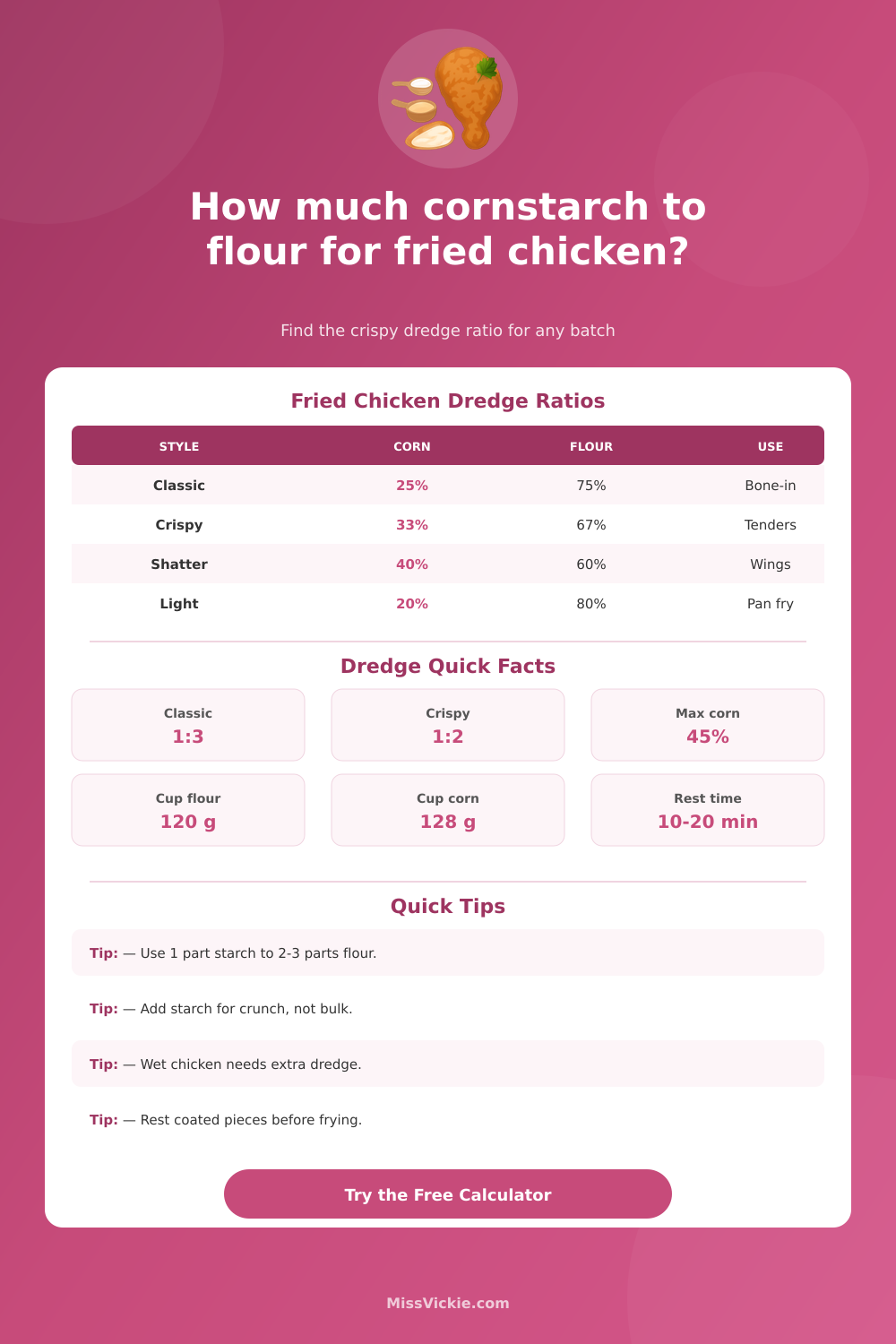
About 20% cornstarch. Soft crunch with a classic flour crust.
About 25% cornstarch. Balanced crispness for bone-in pieces.
About 33% cornstarch. Good for tenders, cutlets, and wings.
About 40% cornstarch. Thin, brittle crunch for quick-frying pieces.
| Crust Goal | Cornstarch Share | Simple Ratio | Best Chicken Cuts |
|---|---|---|---|
| Classic flour-forward crunch | 20% | 1 part cornstarch to 4 parts flour | Pan-fried cutlets, shallow-fried thighs, skillet pieces |
| Balanced Southern crust | 25% | 1 part cornstarch to 3 parts flour | Bone-in mixed chicken, drumsticks, thighs |
| Extra crispy all-purpose dredge | 33% | 1 part cornstarch to 2 parts flour | Tenders, sandwiches, boneless strips, wings |
| Thin shattery coating | 40% | 2 parts cornstarch to 3 parts flour | Small wings, nuggets, quick-fry pieces |
| Very starch-heavy crust | 45% to 50% | Almost equal starch and flour | Use carefully; can taste powdery if thick |
| Raw Chicken | Classic 1:3 Mix | Extra Crispy 1:2 Mix | Approximate Pieces |
|---|---|---|---|
| 2 lb mixed pieces | 68 g cornstarch + 204 g flour | 91 g cornstarch + 181 g flour | 5 to 7 pieces |
| 4 lb mixed pieces | 135 g cornstarch + 405 g flour | 180 g cornstarch + 360 g flour | 10 to 14 pieces |
| 6 lb wings | 219 g cornstarch + 657 g flour | 292 g cornstarch + 584 g flour | 35 to 45 wing pieces |
| 8 lb tenders | 313 g cornstarch + 940 g flour | 418 g cornstarch + 835 g flour | 32 to 42 tenders |
| 12 lb potluck pieces | 405 g cornstarch + 1215 g flour | 540 g cornstarch + 1080 g flour | 30 to 42 pieces |
| Condition | Dredge Adjustment | Ratio Advice | Why It Matters |
|---|---|---|---|
| Patted dry chicken | Use 10% less dry mix | Stay near 1:3 or 1:4 | Dry surfaces hold a thinner, cleaner coat. |
| Buttermilk-drained chicken | Add about 15% dry mix | 1:3 for bone-in, 1:2 for tenders | Residual dairy grabs more flour and starch. |
| Very wet marinade | Add about 28% dry mix | Avoid going above 40% starch | Wet coating can clump and taste pasty if starch is too high. |
| Air fryer finish | Use 10% to 15% less dry mix | 20% to 25% starch works best | Heavy dry flour can stay dusty without enough oil contact. |
| Double dredge | Add 35% to 50% dry mix | 25% to 33% starch is safer | Extra layers need more flour body so the crust does not crack off. |
| Ingredient | 1 Cup Weight | 1/2 Cup Weight | Practical Measuring Note |
|---|---|---|---|
| All-purpose flour | 120 g | 60 g | Spoon and level for a lighter dredge. |
| Cornstarch | 128 g | 64 g | Whisk well because starch packs and clumps easily. |
| Classic 1:3 blend | 488 g per 4 cups | 244 g per 2 cups | Use 1 cup starch with 3 cups flour. |
| Extra crispy 1:2 blend | 488 g per 4 cups | 244 g per 2 cups | Use 1 1/3 cups starch with 2 2/3 cups flour. |
| Seasoned dredge | Varies | Varies | Salt, spices, and leavening count toward the total dry mix. |
The composition of a dredge is important when you prepares fried chicken. Cornstarch is an ingredient that will change the behavior of the dredge when fried. The cornstarch will make the shell of the chicken thinner and more brittle so that it shatters when eaten.
Flour alone may produce a coating that bend when fried rather than shattering. It is important to understand the role of cornstarch in the dredge recipe in determining the correct ratio of the cornstarch to the flour in the recipe. The amount of chicken you are preparing to cook is one of the factors that will impact the amount of dredge that you need to coat your chicken pieces.
How cornstarch affects the fried chicken coating
A small amount of chicken will require less dredge than a large amount of chicken. This is due to the fact that a large amount of chicken has more of a surface area than smaller amounts of chicken. Smaller pieces of chicken will also cook faster than larger pieces of chicken.
If you use a calculator to determine the amount of dredge that is needed for the amount of chicken you will prepare to cook, you can select the different cuts of chicken that you will use and the total weight of the chicken so that the calculator can calculate the amount of dredge that you will need. The next factor that will impact the amount of dredge that you must use is the level of moisture that is present on the surface of the chicken that you will coat. If you soak the chicken pieces that you are using in buttermilk they will hold more moisture than chicken that has been patted dry.
Because the chicken will hold onto the flour and cornstarch, more dredge will be required. If you do not account for the moisture content of the chicken, you may find that you run out of dredge prior to having coated all of the chicken pieces. The third factor that will impact the dredge that you use is the method in which the chicken will be cooked.
Deep frying will allow the dredge to even set on the chicken pieces. Skillet and shallow frying methods may cause the dredge to not properly set on the chicken if the dredge contains too much dredge. Air frying methods require less oil to fry the chicken but using too much cornstarch may cause the dredge to leave a dusty residue on the chicken.
Inputting the cooking method for the chicken into the calculator will allow the calculator to calculate the proper amount of dredge for that cooking method. One more factor that can impact the amount of dredge that is required is the amount of seasoning that is added to the chicken. Any amount of salt, spices or leavening agents will take up some of the space in the bowl for the dredge.
The amount of space that the seasoning takes up changes the ratio of starch to flour in the dredge. Calculators account for the weight of the seasoning that will be used so that the starch-to-flour ratio can remain accurate. The ratio of cornstarch to flour is the main factor in determining the texture of the dredge shell of the chicken.
Using a lower percentage of cornstarch will result in a crust that is closer to traditional fried chicken. A lower percentage of cornstarch creates a crust with more chew to it and will brown more when fried. Using a higher percentage of cornstarch will create a thinner shell of dredge that is brittle which is a better texture for small pieces of chicken.
A better way to determine the percentage of cornstarch and flour needed is to use a table that explains the relationship between the percentages and the ratios in which the ingredients should be mixed. These tables can help you decide what type of texture you would like your fried chicken to have. Many people make the mistake of using too much cornstarch in their dredge.
Using too much cornstarch can cause the dredge to taste chalky when eaten. The best range for the amount of cornstarch to use can be between twenty and forty percent of the total amount of dredge. Using less than twenty percent of cornstarch will provide a subtle difference in the texture of the fried chicken.
Using more than forty percent of cornstarch may cause the crust to taste similar to tempura fried chicken. Using the chicken dredge calculator will allow you to remain within this range of percentages. It is important to allow the chicken to rest for ten or fifteen minutes after you have coated it with dredge but prior to placing it into the oil.
Allowing the chicken to rest allows the dredge to hydrate and adhere to the chicken. It also allows moisture on the chicken to enter the dredge which prevents the formation of steam pockets within the crust that could cause the crust to fall off of the chicken when cooking. The size of the batch of chicken that will be prepared is another factor that will impact the requirements of the dredge calculation.
If you are preparing a large batch of chicken like twelve pounds of chicken, even a small percentage change in the recipe will have a large impact on the total weight of the dredge that will be needed. An extra allowance should of been made for dredge that will stick to the chicken or become contaminated during the dredging process. Making an allowance for extra dredge prevents the need to prepare a second batch of dredge during the frying of the chicken.
The use of the correct amount of dredge will allow you to properly coat the chicken while ensuring that the crust and the meat are cooked at the same time. If the dredge is balanced properly, the fried chicken will remain crisp after frying. If the dredge is unbalanced, the chicken may become soggy after being placed on the plate.
If you understand how each of these factors can impact the cooking of the chicken, you will be able to use the calculator to plan out any batch of fried chicken that you would like to prepare.