How Much Pesto Sauce for Pasta Calculator
Estimate pesto sauce for hot pasta, cold pasta salad, stuffed pasta, or meal prep using pasta weight, diners, sauce intensity, shape cling, add-ins, and reserved pasta water.
Choose a real cooking scenario to load serving size, pasta shape, sauce style, and add-in assumptions, then fine tune any field.
Full Pesto Breakdown
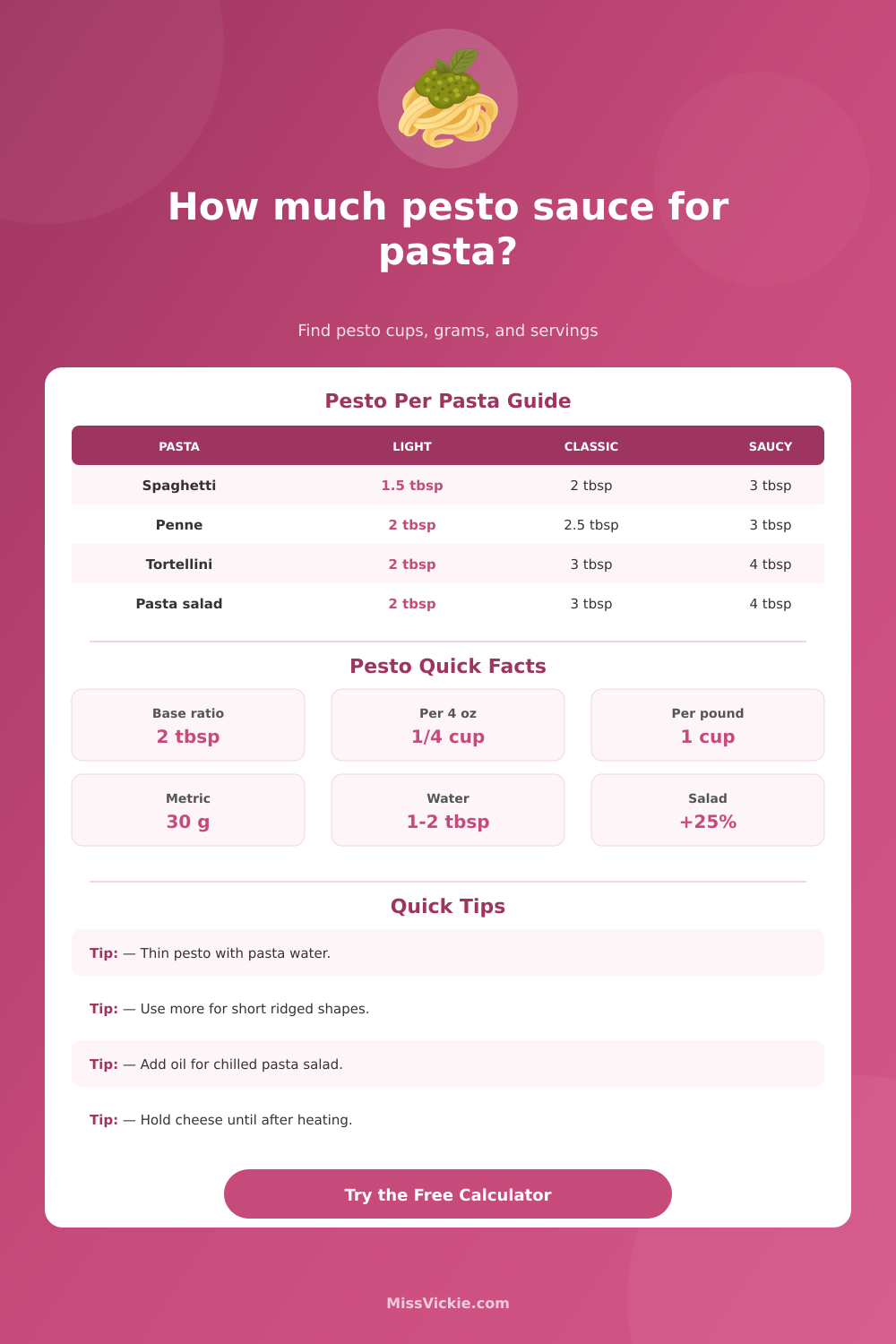
| Pasta or dish | Light coating | Classic coating | Extra saucy |
|---|---|---|---|
| Long strands such as spaghetti or linguine | 1.5 tbsp per 2 oz dry pasta | 2 tbsp per 2 oz dry pasta | 3 tbsp per 2 oz dry pasta |
| Short ridged pasta such as penne or fusilli | 2 tbsp per 2 oz dry pasta | 2.5 tbsp per 2 oz dry pasta | 3.25 tbsp per 2 oz dry pasta |
| Stuffed pasta such as tortellini or ravioli | 2 tbsp per serving | 3 tbsp per serving | 4 tbsp per serving |
| Cold pesto pasta salad | 2 tbsp per 2 oz dry pasta | 3 tbsp per 2 oz dry pasta | 4 tbsp per 2 oz dry pasta |
| Baked pesto pasta with cheese or cream | 1.5 tbsp per 2 oz dry pasta | 2.25 tbsp per 2 oz dry pasta | 3 tbsp per 2 oz dry pasta |
| Pesto measure | Tablespoons | Approx weight | Best use |
|---|---|---|---|
| 2 tablespoons | 2 tbsp | 30 to 32 g / 1.1 oz | One light serving or side dish plate |
| 1/4 cup | 4 tbsp | 60 to 65 g / 2.2 oz | One generous entree or 4 oz dry pasta |
| 1/2 cup | 8 tbsp | 120 to 130 g / 4.5 oz | Two to three servings depending on shape |
| 1 cup | 16 tbsp | 240 to 260 g / 8.5 to 9.2 oz | About 1 lb dry pasta with classic coating |
| 6.7 oz jar | About 12 tbsp | 190 g / 6.7 oz | Usually 10 to 12 oz dry pasta, not a full pound |
| Group size | Dry pasta | Classic pesto | Reserved water |
|---|---|---|---|
| 2 diners | 8 oz / 225 g | 1/2 cup / 120 ml | 2 to 4 tbsp |
| 4 diners | 1 lb / 454 g | 1 cup / 240 ml | 1/4 to 1/2 cup |
| 6 diners | 1.5 lb / 680 g | 1.5 cups / 360 ml | 1/2 to 3/4 cup |
| 10 diners | 2.5 lb / 1.13 kg | 2.5 cups / 590 ml | 3/4 to 1.25 cups |
| 16 diners | 4 lb / 1.8 kg | 4 cups / 950 ml | 1 to 2 cups |
| Pesto style | Calories per 2 tbsp | Fat | Flavor note |
|---|---|---|---|
| Classic basil pesto | 120 to 150 | 12 to 15 g | Balanced basil, garlic, oil, cheese, and nuts |
| Loose restaurant-style pesto | 110 to 140 | 11 to 14 g | More oil, thinner cling, easier tossing |
| Thick homemade pesto | 140 to 170 | 14 to 17 g | Dense herb paste that needs more pasta water |
| Creamy pesto sauce | 150 to 190 | 14 to 19 g | Richer sauce, usually coats with less pesto |
| Sun-dried tomato pesto | 130 to 170 | 11 to 16 g | Stronger flavor, good with sturdy shapes |
Best for delicate strands, side dishes, and pesto with sharp garlic or salt.
The everyday ratio: about 1/4 cup pesto for 4 oz dry pasta.
Good for short ridged shapes that hold sauce inside curls and tubes.
Use for chilled salads, pasta with add-ins, or buffet trays that sit.
Determining the correct amount of pesto for pasta are a difficult task due to various variable that can impact the amount of pesto needed. Using too little pesto will result in pasta that taste like noodles. Using too much pesto will result in a heavy sauce.
The amount of pesto needed depend on the shape of the pasta, the temperature of the pasta, the additional ingredient to the pasta, and the consistency of the pesto itself. Pasta that has a different shape require a different amount of pesto to properly coat the pasta. For instance, long pasta shape like spaghetti allow the pesto to slide along the pasta.
How Much Pesto to Use on Pasta
Short pasta shapes with ridges like penne allow the pesto to getting trapped in the pasta. For this reason, short pasta shapes require more pesto then long pasta shapes of the same weight. The calculator account for this by asking the user for the shape of the pasta.
The temperature of the pasta can also impact the amount of pesto that should be added to the pasta. Hot pasta will allow the oil in the pesto to spread across the pasta. Cold pasta salad will create a pesto that is thin on the pasta.
Additionally, meal prep portion of pasta that will sit overnight will require extra pesto to be added because the pasta will absorb the oil from the pesto while the pasta sits. The serving context provide to the calculator accounts for these variables. The additional ingredients that you add to the pasta, also known as add-ins, will also impact the amount of pesto that should be added to the pasta.
Ingredients like cherry tomato and grilled chicken will take up space in the pasta dish that the pesto would otherwise cover. Additionally, the heavier the add-in, the more space it will take up for the pesto to fill. The add-ins selector will increase the amount of pesto that is calculate because the extra ingredients will require the pesto to stretch itself throughout the pasta dish.
The amount of reserved pasta water that is added to the pesto will also impact the amount of pesto needed. Adding a spoonful or two of reserved pasta water will allow the pesto to emulsify and coat the pasta proper. The calculator will estimate the amount of pasta water needed according to the number of servings of pasta you will make.
The reserved pasta water is part of a total portion of the sauce. Additionally, the type of pesto that is used will impact the amount of pesto needed. Store-bought pesto often have more oil in it than homemade pesto.
Homemade pesto can have a thicker texture if it contain many pine nuts. Additionally, vegan pesto may have a different weight to it due to the ingredients in it, like nutritional yeast or extra nuts to give the sauce body. The style selector on the calculator will allow you to adjust the calculation to account for the type of pesto that will be use.
Some of the most common mistake with adding pesto to pasta is using the same amount of pesto regardless of the type of pasta that is being prepared or the number of plate of pasta that will be served. Another common mistake is forgetting that the pasta will absorb the oil from the pesto if it is a cold pasta salad. Using the pesto calculator will help you to avoid these common mistake.
When the calculator provides you with the number, use that number to prepare your pasta. Put most of the pesto into a bowl. Add the pasta and a splash of reserved pasta water.
Mix until the pasta has a thin film of pesto on each strand. Taste one piece of pasta before adding the rest of the pesto. If needed, add the rest of the pesto because the calculator include a buffer for the amount of pesto.
If the pasta taste good, you have not wasted any pesto. The goal of the pesto calculator is to ensure that each person at the tables has the same amount of pesto and the same experience when dining.