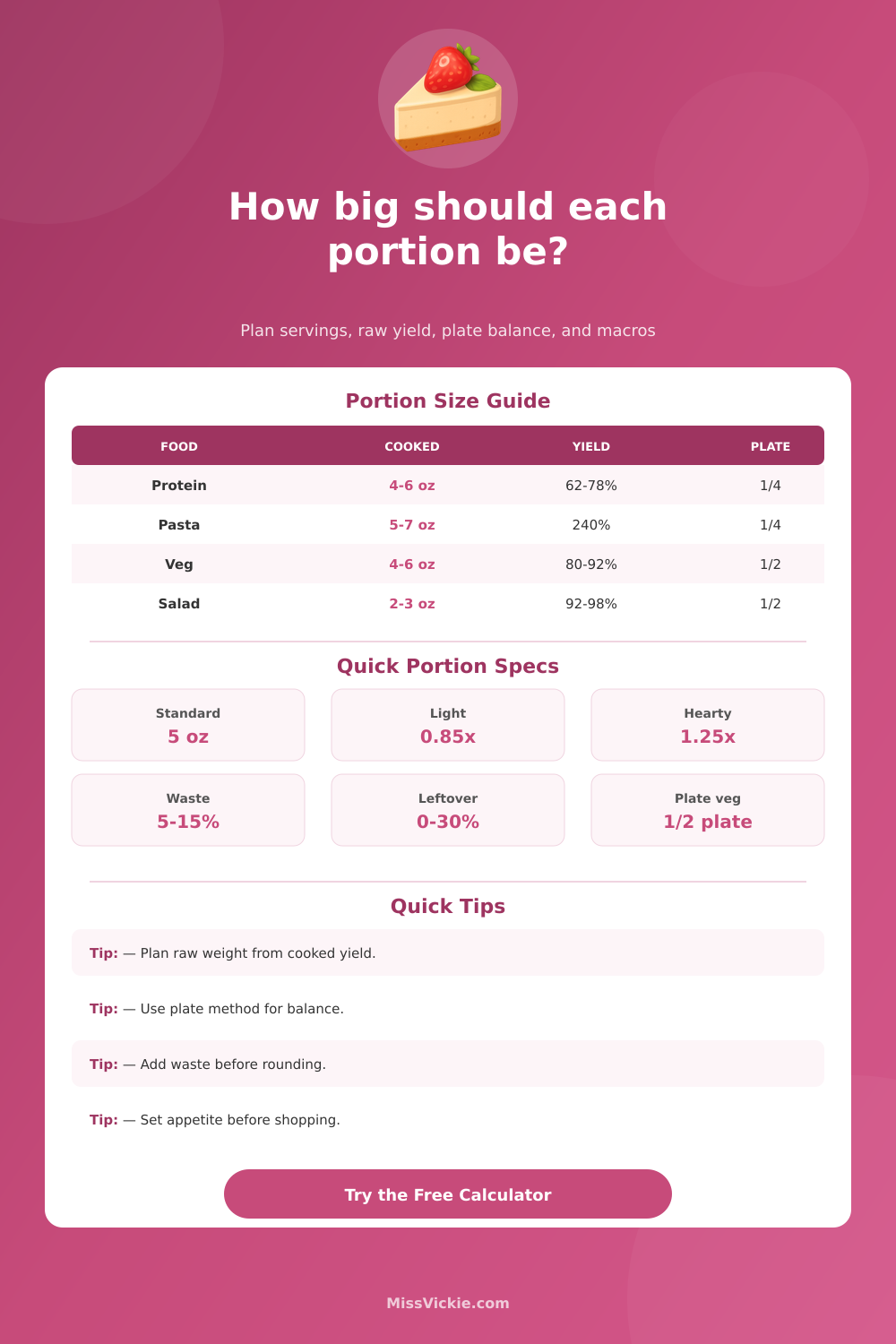
Cooked portions, raw shopping weight, plate method, calories, and macros
Portion Size Calculator
Estimate portion sizes by food category, servings, appetite, plate method, cooking yield, waste factor, leftovers, and nutrition profile.
Start from a common meal or event, then adjust the category, serving style, yield, waste, and leftover settings.
Portion breakdown
Best as the main plate protein; raw buying weight rises because cooked yield is often near two thirds.
Use a moderate cooked portion and allow extra raw weight for bone, skin, and moisture loss.
Higher edible yield than many meats, but delicate items need a service buffer.
Useful as protein or mixed entree; calories stay lower unless oil or sauce is heavy.
Cooked portions are usually planned from a much smaller dry raw weight because pasta expands.
Works as the starch quarter of the plate; cooked grains expand while potatoes shrink slightly.
Plate-method meals often push vegetables to half the plate, especially for roasted or steamed sides.
Light by weight but large by volume, so cups can matter more than pounds for serving bowls.
| Food category | Standard cooked portion | Typical cooked/raw yield | Best plate role |
|---|---|---|---|
| Beef, pork, or lamb | 4 to 6 oz cooked | 58% to 72% | Main protein, usually one quarter of a balanced plate. |
| Poultry pieces | 4.5 to 6 oz cooked | 62% to 78% | Main protein with a little extra raw allowance for bones or skin. |
| Fish or seafood | 4.5 to 6.5 oz cooked | 74% to 88% | Main protein or buffet item with gentle rounding for breakage. |
| Beans, lentils, or tofu | 4 to 6 oz cooked | 90% to 210% | Plant protein, side dish, bowl base, or mixed entree. |
| Pasta, rice, grains, or potatoes | 5 to 7 oz cooked | 85% to 260% | Starch quarter of the plate or larger bowl base. |
| Vegetables, salad, or fruit | 2.5 to 6 oz cooked or ready | 80% to 98% | Half plate, side, salad course, or dessert fruit. |
| Yield situation | How the calculator uses it | Example | Planning note |
|---|---|---|---|
| Meat shrinkage | Cooked edible ounces divided by yield gives raw shopping weight. | 10 lb cooked at 65% yield needs about 15.4 lb raw. | Trim, bones, pan drippings, and doneness change the final yield. |
| Pasta expansion | Cooked edible ounces divided by a yield above 100% estimates dry weight. | 6 oz cooked at 240% yield starts near 2.5 oz dry. | Very soft pasta, rinsing, or sauce absorption can shift cooked weight. |
| Rice expansion | Dry rice turns into a larger cooked edible weight before portioning. | 5.5 oz cooked at 300% yield starts near 1.8 oz dry. | Use the label or cooker notes when exact dry weight matters. |
| Produce trim | Waste factor covers stems, peels, bruising, platter loss, and uneven scoops. | 10 lb edible with 12% waste means buying about 11.2 lb usable food. | Pre-cut produce may need less waste but can still lose water. |
| Plate method | Protein foods | Starch foods | Vegetable or fruit foods |
|---|---|---|---|
| Balanced plate | Keep around one quarter plate. | Keep around one quarter plate. | Keep vegetables near one half plate. |
| Protein-centered plate | Increase protein by about 20%. | Keep starch moderate. | Keep vegetables steady for volume. |
| Plant-forward plate | Use a smaller protein serving. | Keep starch moderate. | Increase vegetables, beans, or salad. |
| Buffet or potluck | Reduce each single item because guests sample several dishes. | Reduce each single item unless it is the main dish. | Add waste because buffet platters do not empty evenly. |
| Food category | Calories per 100 g | Protein | Carbs and fat |
|---|---|---|---|
| Lean poultry | 165 kcal | 31 g | 0 g carbs, 4 g fat |
| Cooked beef or pork | 250 kcal | 26 g | 0 g carbs, 15 g fat |
| Cooked pasta | 158 kcal | 6 g | 31 g carbs, 1 g fat |
| Cooked rice or potato | 130 kcal | 3 g | 28 g carbs, 0 g fat |
| Cooked vegetables | 55 kcal | 3 g | 10 g carbs, 1 g fat |
| Leafy salad | 25 kcal | 2 g | 4 g carbs, 0 g fat before dressing |
Plan the cooked edible portion first, then apply yield and waste. This keeps pasta, meat, salad, and vegetables from being forced into the same raw-weight rule.
If one dish is only a side, reduce its portion before adding leftovers. If it is the main protein or bowl base, give it more room on the plate.
Portion planning is the process of determining how much food to prepare for a meal. Portion planning are necesary because portion planning will affect how much food is purchase and how much food are served. Many factor must be considered when determining portion size.
Factors such as the weight of the food before it is cooked and the weight of the food after it is cooked will play a significant role in the portion size that are prepared. Cooking will change the weight of the food. Meat will lose moisture and fat while it is cooking, so it will weigh more after cooking.
How to Plan Food Portions
Pasta and rice will weigh more after cooking because of the addition of water. Vegetable will shrink if they are steamed but will weigh the same if roasted. A calculator can be used to determine how much of each food category will be cooked to provide accurate measurement of the food that should be purchased for preparation.
Appetite is a variable that can change the amount of food that a person will eat. Every person have a different appetite. A portion size that is enough for a person on an ordinary evening may not be enough for a person who is attending a cookout or a person who has worked all evening.
The tool allows for food portions to be selected as light, standard, hearty, or likely to include seconds. The plate method options will allow the person to determine if the meal is well-balanced. These adjustments will play a significant role in determining the shopping list and the amount of food that is need.
Some food is lost while cooking. Food can stick to the pan or be lost while scooping it out of the container. A small percentage of food can be prepared extra to allow for this loss.
Leftovers can be targeted when preparing food. The amount of food that is prepared will take into account the desire to have food for lunch the following day. There is a difference between a five percent target for leftovers and a twenty percent target for leftovers.
The calculator can calculate both targets to provide an overview of the food that will be purchase. The nutrition information for food will be based on the weight of the cooked food. The nutritional information will change based on the preparation of the food.
For example, a vegetable side dish that has a dressing poured over it will have a different nutritional value than if the vegetable are tossed in oil and cheese. Even if the raw ingredients for the vegetables are the same, the oil and cheese will change the nutritional aspect of the food. The nutritional information will be important to know before food is purchase.
People often make mistakes with food portion planning because they do not treat each category of food the same. A quarter pound of dry pasta is not the same as a quarter pound of raw chicken. These two types of food are often purchased together on the same shopping list.
The reference tables will show the difference between food categories. The reference tables will also show how a food item change its role in the meal based on whether it is the star of the meal or one of the component of the meal. These tables can be used to learn the differences between food categories.
Not all variable in the kitchen can be accounted for in the portion planning calculator. For example, the eating habits of the children and the eating habits of the guest can change the portions of food that are required. The children may eat all of the pasta but none of the vegetable.
The eating habits of the guests may change the amount of protein that is prepared because they may eat the protein but not the starch portion of the meal. The weather may also impact the appetite for food as may the presence of bread in the meal. The best way to determine portions of food is to first plan the edible cooked amount.
The cooking of the food will change its weight, so by planning for the edible cooked amount first, the portion planning will be more accurate. The amount of food that will be prepared for each category should be matched with the type of occasion that is being planned. The occasion should not be change to accommodate the portion planning calculator.
When the portion planning calculator and the meal that is to be prepared match, the shopping for the ingredient will be easier and the cooks will have an easier meal to serve to their guest.