GI, available carbs, portion size, fiber adjustment, and mixed meal weighting
Glycemic Load Calculator
Estimate the glycemic load of a single food or mixed meal from glycemic index, available carbohydrate, portion weight, fiber pattern, serving split, and meal total.
Pick a common plate, then edit the GI, available carbs, fiber, portion sizes, meal servings, and adjustment method to match your food data.
Item GL Breakdown
Calculation Breakdown
| Measure | Low | Medium | High |
|---|---|---|---|
| Glycemic index | 55 or less | 56 to 69 | 70 or more |
| Single-food glycemic load | 10 or less | 11 to 19 | 20 or more |
| Meal total comparison | About 10 or less | About 11 to 19 | About 20 or more |
| Calculator formula | GL = glycemic index x available carbohydrate grams / 100, then summed across foods. | ||
| Food | Typical Portion | Approx GI | Approx GL |
|---|---|---|---|
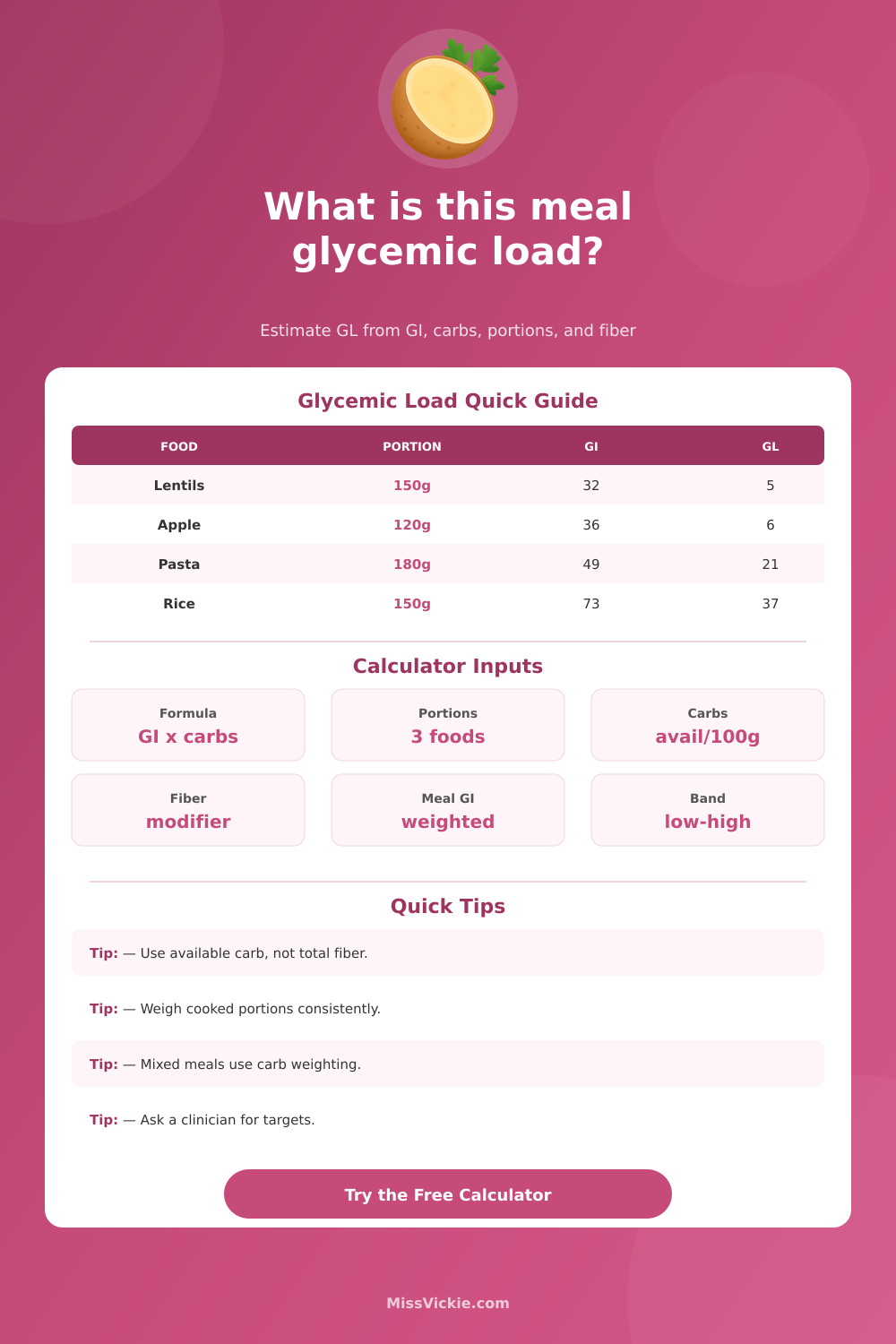
| Cooked lentils | 150 g | 32 | About 5 to 7 depending on variety and cooking. |
| Whole apple | 120 g | 36 | About 5 to 7 for a small to medium apple. |
| Cooked oatmeal | 240 g | 55 | About 13 to 16 before sweet toppings. |
| Cooked pasta | 180 g | 49 | About 18 to 23, lower when portions are smaller. |
| Cooked white rice | 150 g | 73 | About 30 to 37, based mostly on portion size. |
| Input | What To Enter | Calculator Treatment | Practical Note |
|---|---|---|---|
| Available carbs | Digestible carbs per 100 g | Multiplied by portion grams and scale percent | Use label net/digestible carbohydrate when available. |
| Fiber | Fiber grams per 100 g | Used only for the optional fiber modifier | Fiber does not erase carbohydrate; it changes the adjusted estimate. |
| Portion scale | Percent of listed portions | Scales every item before GL is summed | Set 50% for a half plate or 125% for a larger serving. |
| Servings | How many people or portions | Divides meal total into GL per serving | Use 1 when calculating a plate eaten by one person. |
| Meal Pattern | Weighting Driver | Typical Result | Calculator Note |
|---|---|---|---|
| Single food | One GI and one carb source | GL follows the entered portion directly | Most useful for comparing one side dish or snack. |
| Rice bowl | Rice often supplies most available carbs | Weighted GI can stay high even with low-GI sides | Reducing rice portion changes meal GL more than adding greens. |
| Beans and grains | Carbs split across lower and higher GI foods | Weighted GI often lands in the middle | Meal GI is weighted by available carb grams, not food weight. |
| Dairy or fruit snack | Moderate GI with modest available carbs | GL often stays low to medium | Sweet toppings can become the largest contributor. |
Very low available carbs in ordinary servings, so GL is usually small.
Lower GI and higher fiber often keep moderate portions in a lower band.
Portion size and ripeness matter, especially for bananas and dried fruit.
Water absorption, cooking style, and bowl size can shift the total quickly.
Often moderate GI, but large servings can still create a high GL meal.
GI varies by variety, cooking, cooling, and serving size.
Higher GI plus a common large portion can dominate mixed-meal GL.
Sugar and refined flour can add GL even when the portion looks small.
Glycemic load are a measurement of the amount of digestible carbohydrate that will enter the bloodstream at one time. Glycemic load isnt a number that indicates whether a meal are good or bad. Many individual focus on the concept of glycemic index, but glycemic index and glycemic load is two different values.
Glycemic load takes into account the amount of food that an individual eat. For example, a small portion size of a food with a highly glycemic index could have the same glycemic load as a large portion of a food with a low glycemic index. Thus, glycemic load measurements are a more accurate way of measuring the glycemic impact of a meal.
What Is Glycemic Load and How to Calculate It
To calculate the glycemic load of a meal, an individual must take the glycemic index of the food that is consume and multiply that value by grams of available carbohydrates that the individual consume. The individual will divide the total value by 100 to calculate the glycemic load. If there are several different foods in the meal, the person calculates the glycemic load of each food individual and then the value are added together to find the total glycemic load of the meal.
The total glycemic load value indicates how much the carbohydrates in that meal will impact the blood sugar level of the individual who consumed the meal. One of the variables that will alter the glycemic load of the meal is the portion size of the food that is consume. If an individual consume twice the weight of a specific food, they will also consume twice the glycemic load of that food.
The glycemic load can be calculate with a calculator. Using a calculator to calculate the glycemic load is helpful for individuals who wish to calculate the glycemic load while they are consuming food. Using a calculator make it easier for an individual to change the portion size of a food or to remove some of the carbohydrate content from a meal.
Fiber will impact the glycemic load of a meal, but it is not a factor that can be used to completely correct the glycemic load calculation for carbohydrates. The carbohydrate value that is used in the calculation of glycemic load already account for the fiber content of the food. Foods that contain more fiber will reduce the rate at which carbohydrates is absorbed into the body.
Whole grains contain more fiber than refined starch, for instance. While the difference in glycemic load between whole grains and refined starches may be small, there is a difference in the glycemic load of each type of grain. For meals that contains a variety of foods, the glycemic load cannot be simply calculate as if it were a glycemic index value for the meal.
Each food in a mixed meal will contribute to the glycemic load of that meal. The cook will weight each food according to the amount of available carbohydrates that each food provide to the meal. A calculator is useful for meal planning because a meal can be calculated to determine how each side dish will impact the glycemic load of the meal.
One of the most common mistake of glycemic load calculations is treating the glycemic load value as the target that must be achieved for each meal. After a meal, if the glycemic load value is high, it does not necessarily mean that the individual must take step to correct the high glycemic load level. However, a high glycemic load does mean that the individual consume alot of carbohydrates.
By reviewing the glycemic load of each meal that was consumed within a week or two, an individual can gain more information about the glycemic load of their diet than by calculating the glycemic load for a few meal. There are several variables besides glycemic load that will affect how an individual’s body respond to the food that is consume. The way that an individual chew the food will affect the glycemic load of the meal.
Similarly, the length of the meal will impact the glycemic load. Whether the meal contains fat and protein, or whether the individual has been recently physically active will impact the glycemic load that is measured after the meal. The glycemic load calculation assume that an individual chew their food well and that they finish the meal in a timely manner.
The glycemic load calculation is not a complete replacement for noting how an individual’s body respond to the different foods. The table provided in this explanation are provided as reference tables for glycemic load values for foods that do not have labels. These reference tables are not a replacement for the glycemic load numbers that are provided on the food labels of the foods that are consume.
Once an individual begin to input their own glycemic load measurements into the calculator, these reference tables is not required. The glycemic load calculator can be used to determine the impact of removing a specific amount of food from the meal. Similarly, it can also be used to calculate the impact of one food being replace with another food in the meal.
By calculating the glycemic load of a meal before eating, an individual can recognize the foods that contain the most carbohydrates. By changing the amount of carbohydrate in one food, there will be a larger impact on the total glycemic load of the meal then by making several smaller changes to the other foods in the meal. While perfection in calculating glycemic load is not required, there is value in being aware of glycemic load and the foods that will have the most impact on that total glycemic load value.