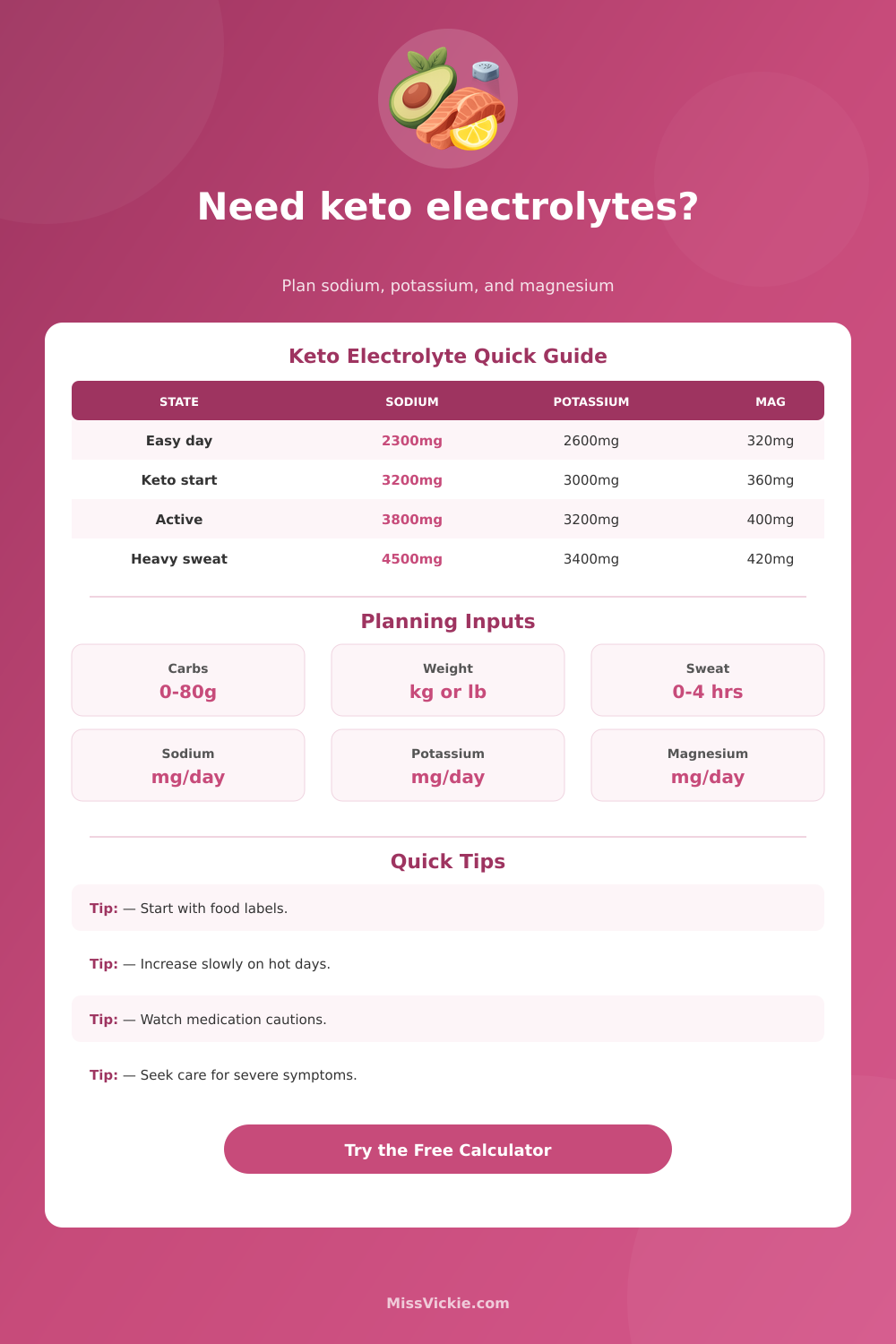
Carb level, body weight, activity, sweat, food intake, supplements, and symptom cautions
Keto Electrolyte Calculator
Estimate general sodium, potassium, and magnesium planning targets for a low-carb or keto day, then compare them with what you already get from food, drinks, and supplements.
Choose a starting pattern, then adjust carb level, body weight, sweat, current food intake, and symptoms. This is general nutrition information only.
Electrolyte Breakdown
The cards combine general public nutrition references with keto-specific planning adjustments for carb restriction and sweat. Personal medical limits can be lower or different.
| Keto Context | Daily Sodium Planning Anchor | Why It Changes | Safety Note |
|---|---|---|---|
| Liberal low carb | About 2300-2800 mg | Less water loss than strict keto, especially after adaptation. | Use medical sodium limits first if you have blood pressure, kidney, or heart guidance. |
| Standard keto | About 3000-3500 mg | Lower insulin and glycogen can increase early sodium and fluid loss. | Increase slowly and track total food sodium, not just added salt. |
| Very low carb start | About 3500-4000 mg | The first 1-2 weeks may feel different from maintenance. | Do not use high sodium planning if you were told to restrict sodium. |
| Heavy sweat day | Add roughly 400-1200 mg | Heat, humidity, long workouts, and salty sweat increase losses. | Replace fluids too; symptoms are not proof of one specific electrolyte need. |
| Low-Carb Food | Typical Serving | Approx Potassium | Planning Use |
|---|---|---|---|
| Avocado | 1 medium | 650-700 mg | Easy keto-friendly potassium anchor with fat and fiber. |
| Cooked spinach | 1/2 cup | 400-450 mg | Helpful when meals are meat-heavy and vegetable intake is low. |
| Salmon | 3 oz cooked | 300-350 mg | Adds potassium with protein and omega-3 fats. |
| Mushrooms | 1 cup cooked | 300-550 mg | Good for omelets, burgers, and skillet meals. |
| Plain Greek yogurt | 3/4 cup | 250-350 mg | Check carbs and choose unsweetened versions. |
| Source | Typical Serving | Approx Magnesium | Planning Note |
|---|---|---|---|
| Pumpkin seeds | 1 oz | 150 mg | High magnesium, but easy to overeat calories. |
| Almonds | 1 oz | 75-80 mg | Useful snack; count carbs if portions grow. |
| Cooked spinach | 1/2 cup | 75-80 mg | Brings both magnesium and potassium. |
| Dark chocolate | 1 oz | 60-65 mg | Choose low-sugar versions if staying keto. |
| Magnesium supplement | 100-200 mg | Label amount | Too much supplemental magnesium can cause digestive side effects. |
| What You Notice | Could Be Related To | Calculator Response | When To Get Help |
|---|---|---|---|
| Mild headache or low energy | Diet change, low fluids, low sodium, low calories, caffeine change. | Shows a conservative food and fluid planning note. | If persistent, worsening, or paired with illness. |
| Muscle cramps | Training load, dehydration, sodium, potassium, magnesium, or fatigue. | Highlights magnesium and potassium food gaps. | If severe, recurring, or paired with weakness. |
| Lightheaded standing | Fluid loss, low food intake, medication effects, or blood pressure changes. | Raises caution and suggests clinician guidance if frequent. | If fainting, chest pain, or irregular heartbeat occurs. |
| Vomiting or diarrhea | Illness and fluid loss can change electrolytes quickly. | Flags the plan as medical-caution, not a self-treatment target. | If ongoing, severe, bloody, or with dehydration signs. |
| Confusion or irregular heartbeat | Potentially serious condition, not a normal keto adjustment. | Shows urgent caution instead of supplement advice. | Seek urgent medical care promptly. |
Calculate to compare your current food and supplement inputs.
Lower sweat assumption with the same carb and food inputs.
Extra sodium planning for heat, humidity, or long activity.
Shows the same target with supplement amounts minimized.
When a person begins a low-carbohydrate or ketogenic diet, a person may experience tiredness, headache, or muscle cramp after three or four days of the diet. The body handle water and minerals in different ways on a ketogenic diet due to the drop in insulin levels and the use of stored glycogen within the body. As the body utilizes its stored glycogen, the body also loses water.
The body loses water that contain sodium, which change the bodys need for minerals like potassium and magnesium. The calculator include on this page can provide an estimate of an individual’s daily mineral need. The variables that will impact the calculation of an individual’s mineral needs include there carbohydrate levels, body weight, sweat levels, and the amount of food that they consume daily.
How a Low-Carb Diet Changes Your Water and Minerals
For instance, an individual who consumes less than 20 gram of carbohydrates daily will lose more sodium than an individual who consumes 50 grams of carbohydrates daily. An individual who weigh more than another individual or who perform more strenuous exercise than another individual will require more minerals due to the increased use of minerals in the muscle that are performing those movements. Sweat is one of the main variable that impacts the mineral needs of an individual.
An individual will lose more sodium in their sweat if they are performing more intense exercise or if they are in a hot environment. For these reason, the calculator asks for the number of hours that an individual sweats and the intensity of those individual’s sweat hour as a means of calculating their sodium target. Additionally, the climate that an individual lives in may impact that individual’s sodium target, as well.
An individual who live in a warm climate will naturaly lose more sodium as a means of sweating than an individual who lives in a cooler climate. An individual’s food intake is another variable that may introduce error when calculating the body’s need for minerals. For instance, many individual will add a mineral supplement to their body prior to accounting for the minerals that they consume in the meals that they eat daily.
To account for this potential error, the mineral calculator will ask for the daily intake of sodium, potassium and magnesium from meals for the individual. Many think the minerals from food are safer than high doses of supplement, especially for individuals who take blood pressure medication or have kidney issue. For instance, foods high in magnesium include seed, greens and dark chocolate.
An individual’s symptom may also change the output of the mineral calculator. For instance, if an individual is experiencing mild headaches, it may be an indication that they need to increase their fluid and sodium intake. If the individual is experiencing muscle cramp, it may be an indication that their potassium or magnesium intake need to be increased.
If an individual is experiencing lightheadedness, it is possible that both their fluid and mineral intake need to be increased. Finally, if an individual is experiencing severe symptom like confusion or an irregular heartbeat, those symptom are not normal ones that the body adapted on a ketogenic diet. In this case, the individual should seek medical attention.
The reference card and tables included on this page may help an individual to understand the various numbers that are produced by the calculator. For instance, the tables include the common planning anchor for sodium intake, the adequate intake range for potassium intake, the daily reference range for magnesium intake, and the supplemental upper reference limit for magnesium. These tables allow an individual to understand if the gap in minerals that the calculator calculates is within normal limit or if their own personal limit regarding there health should modify that calculated gap.
The calculator should not be used as a prescription for each individual. For instance, if the calculator determine that an individual should consume more sodium than the individual’s usual daily intake or if the supplement of potassium is above a few hundred milligrams, those number should be reviewed with the individual’s doctor. Additionally, the individual themselves should monitor any change in an individual’s symptom, as the body’s mineral need can change rapidly due to the factor mentioned in the article.
An individual can manage their bodys mineral by adjusting one variable at a time. For instance, if an individual’s sodium gap is still large after counting the sodium from their broth and cheese intake, they can add more salt to their water or food. If the individual’s potassium gap is small after consuming foods high in potassium like avocado or greens, they can skip their potassium supplement.
Finally, if an individual’s dietary magnesium intake is low but they are suffering from muscle cramp, they can increase their intake of foods high in magnesium like seed or leafy green vegetable. An individual’s mineral gap will change over time. For instance, the mineral gap for an individual may shrink if they consume more vegetable each day or if the weather is cooler.
The individual may notice an increased gap in minerals if they are required to sweat more sodium, or if they consume more restaurant meal. Thus, the calculator allow an individual to track their body’s need and adjust their intake according to what they experience during the day. While the calculator may provide an individual with a good mathematical estimate of their body’s needs for each mineral, the individual must also pay attention to their energy, cramp or lightheadedness.