Age, sex, life stage, heme foods, plant foods, vitamin C, inhibitors, and supplement iron
Iron Intake Calculator
Estimate general daily iron coverage from foods and supplements, then compare heme, non-heme, fortified, and supplemental iron with simple absorption planning factors.
Presets are editable examples. This tool estimates intake only and is not a diagnosis or treatment plan.
Iron Intake Breakdown
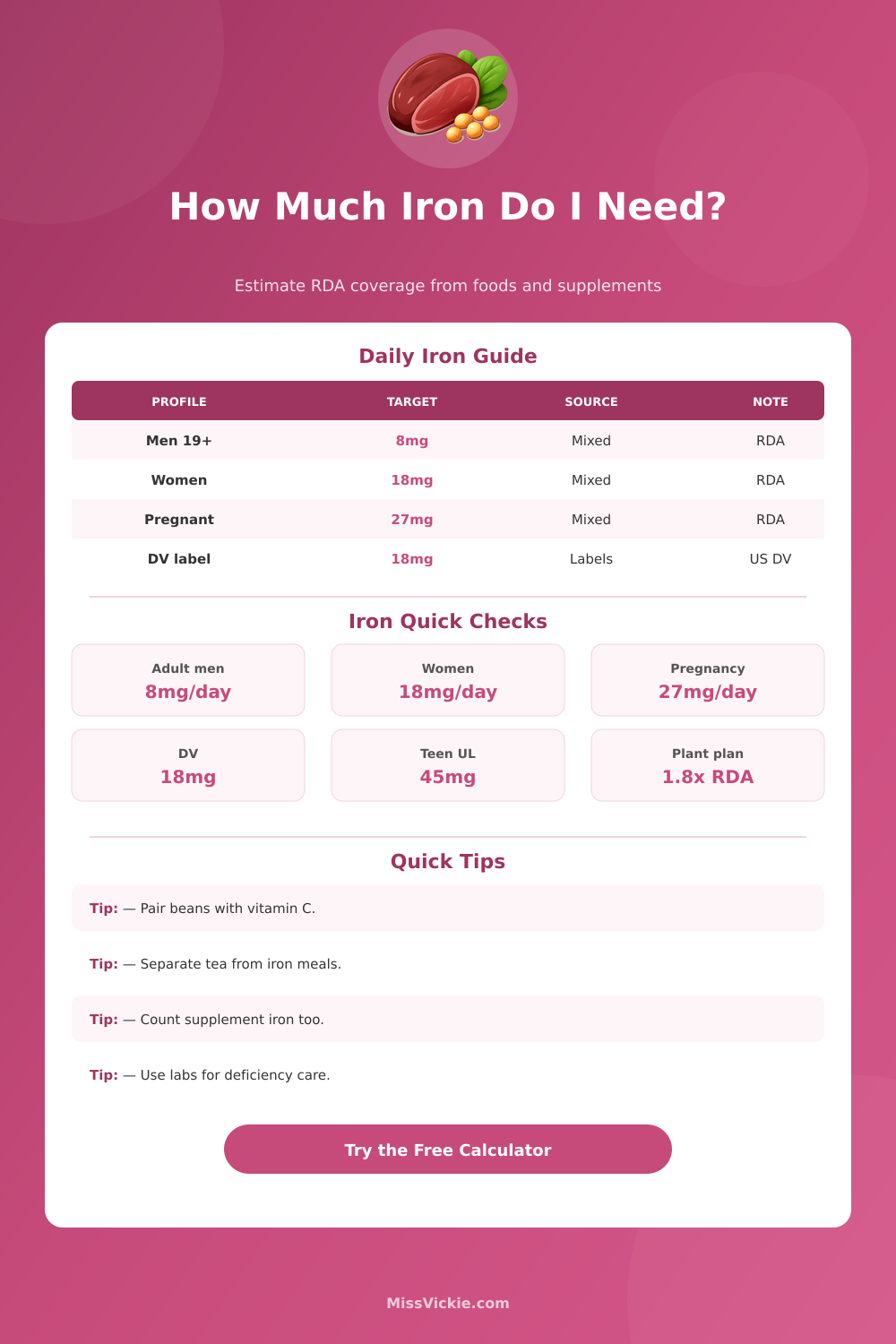
The upper limit check counts food and supplement iron. Medical iron therapy can be different and should be handled by a qualified clinician.
Meat and seafood iron usually absorbs more steadily and is less affected by vitamin C.
Beans, greens, tofu, seeds, and grains respond strongly to vitamin C and inhibitors.
Label iron can be useful, but breakfast tea, coffee, calcium, or bran can lower uptake.
Elemental iron and timing matter. Use supplement iron only as general planning data here.
| Age or life stage | Male target | Female target | Planning note |
|---|---|---|---|
| 1-3 years | 7 mg | 7 mg | General child RDA |
| 4-8 years | 10 mg | 10 mg | Highest child RDA in this table |
| 9-13 years | 8 mg | 8 mg | Pre-teen target |
| 14-18 years | 11 mg | 15 mg | Teen target differs by sex |
| 19-50 years | 8 mg | 18 mg | Adult menstruating-age female target is higher |
| 51+ years | 8 mg | 8 mg | Older adult target |
| Pregnancy | -- | 27 mg | Use clinician guidance for supplement decisions |
| Lactation | -- | 9-10 mg | Adult 9 mg, teen 10 mg |
| Heme source | Serving used | Iron per serving | Calculator role |
|---|---|---|---|
| Beef | 3 oz cooked | 2.4 mg | Everyday mixed meal |
| Turkey dark meat | 3 oz cooked | 1.4 mg | Moderate heme source |
| Chicken dark meat | 3 oz cooked | 1.1 mg | Lower heme source |
| Tuna | 3 oz cooked | 1.3 mg | Seafood option |
| Sardines | 3 oz | 2.5 mg | Seafood option |
| Clams | 3 oz cooked | 5.0 mg | High iron seafood |
| Oysters | 3 oz cooked | 6.0 mg | High iron seafood |
| Non-heme or fortified source | Serving used | Iron per serving | Pairing idea |
|---|---|---|---|
| Lentils | 1/2 cup cooked | 3.3 mg | Lemon, tomato, peppers |
| Firm tofu | 1/2 cup | 3.4 mg | Broccoli or citrus side |
| Cooked spinach | 1/2 cup | 3.2 mg | Vitamin C helps, oxalates still matter |
| Pumpkin seeds | 1 oz | 2.5 mg | Fruit or salad topping |
| Fortified cereal | Label serving | 8.0 mg | Check label, avoid tea at the same meal |
| Fortified oats | 1 packet | 4.5 mg | Add berries or orange slices |
| Enriched pasta | 1 cup cooked | 2.0 mg | Tomato sauce pairing |
| Meal factor | Main effect | Calculator modifier | Best use |
|---|---|---|---|
| Vitamin C food | Raises non-heme absorption | +15% to +60% | Pair fruit or peppers with beans, greens, or cereal |
| Tea or coffee at meal | Lowers non-heme absorption | Light to high inhibitor setting | Move beverage away from iron-heavy meals |
| Calcium at meal | Can reduce iron absorption | Moderate or high inhibitor setting | Separate calcium supplements when advised |
| High phytate bran meal | Lowers non-heme absorption | Moderate or high inhibitor setting | Use vitamin C and vary iron sources |
| 2+ hour spacing | Softens inhibitor penalty | Spacing multiplier near 1.00 | Useful for tea, coffee, calcium, or bran routines |
Iron is a nutrient that the body use to transport oxygen to the muscle and to create the energy that the body require each day. The amount of iron that the body requires change with age, sex, and life stage. The absorption of that iron also change according to the types of food that is consumed.
The planning tool will allow user to test various food and the timing of those foods to see if they come close to or move away from the targets that are established for each individual. The calculator will ask for the age, sex, and life stage of the individual. You must enter the intake of iron from heme and non-heme foods.
How the Iron Calculator Shows What Your Body Absorbs
Iron from heme source includes foods like beef and clams. Non-heme iron come from plant-based source like lentils and spinach. Iron from fortified food, such as cereals and supplements, must also be entered into the calculator.
Iron from heme sources is absorbed more readily by the body than iron from non-heme sources. Vitamin C intake affect the absorption of non-heme iron. If tea, coffee, or calcium is consumed with iron, the absorption of non-heme iron decrease.
These factor can be entered into the calculator to determine the actual iron that is absorbed by the body. Many individuals believes that increasing the amount of iron that is consumed will help those with iron deficiency. The body regulates iron in such a way that the absorption rate is very tight.
If an individual follow a mixed diet as opposed to a plant-based diet, the iron absorption will be different. An adjustment for plant-based diets can be made for those who follow a vegetarian or plant-based diet. The calculator will account for the fact that plant-based diets may require an individual to either consume more iron or to alter the way in which they consume their meal to enhance iron absorption.
The calculator will determine the amount of iron that an individual consumes through their diet and the amount of iron that are absorbed by the body. Iron absorption can change based off the timing of meals. For instance, if an individual drink tea with their breakfast, the non-heme iron will be less absorbed than if they drank the tea two hour before or after their meal.
These factors can be entered into the calculator to determine the amount of iron that is absorbed by the body. Supplements can be used to provide iron to the body. The elemental iron from supplements should be entered into the supplement intake calculator.
The supplement factors that must be entered include the consumption of vitamin C with iron supplements, the consumption of iron supplements with food, and the consumption of iron supplements with calcium. These factor will alter the absorption rate of iron supplements. If the total amount of iron and iron supplements indicated by the calculator approach the upper-limit of iron intake for an average individual, a warning will be indicated.
This does not indicate a diagnosis for iron intake, however, it does indicate the need for an individual to speak to their physician if they are taking iron supplements in high dose. The targets for iron intake change as the life stage and age of an individual changes. For example, young child require less iron than adults do.
Iron requirements are highest during infancy and again during pregnancy. After menopause, the iron requirements for women return to the same levels as men. A meal plan that may be sufficient for a twenty-five-year-old may not be sufficient for a sixty-year-old.
By entering different life stage into the calculator, the individual can determine what changes, if any, should be made to their meals. Iron content on food labels may not be reflective of how much iron is absorbed by the body. For instance, fortified cereals may contain eight milligram of iron per serving, however the body may not be able to absorb all of that iron if the cereal is consumed with milk and coffee.
The absorption of iron from different source changes at different rate. For these different types of iron, different absorption rate should be applied with the calculator to ensure that the total amount of iron that is consumed and the amount that is absorbed by the body is accurately calculated. The iron intake calculator is not meant to be used to track each meal that is consumed each day.
However, by using the calculator for a few different day and meals with varying iron content, an individual can determine which meal to include in their diet. With this information, small adjustments to the diet can be made. An individual’s routine may change when they travel or change there routine.
For instance, if an individual eats hotel breakfasts for a week, their average daily iron intake will change. By using the calculator to determine the absorption of iron from the food that are consumed while on the trip, an individual can determine how their routine changes iron absorption. The goal is not to have each meal contain the percentage of iron that is calculated by the supplement intake calculator; rather the goal is for the individual to understand which factor impact their iron absorption.
Iron is also related to other nutrient and the total calorie that are consumed by an individual. For instance, if an individual follow a very low-calorie diet, their iron consumption will likely decrease even if they consume iron-rich food. Athletes may need higher targets for iron intake due to the amount of iron that is lost through sweat.
The iron intake calculator does not substitute bloodwork and medical advice for iron level in the body. However, it can provide an individual with an understanding of whether the bodys eating pattern can meet demand for iron level beyond the standard diet. The most useful outcome of using the supplement intake calculator is an individual’s gain in knowledge of how the body absorb iron from the food that are consumed.
An individual can understand which meal contain sufficient iron for absorption and which meals must be altered to contain certain food to improve iron absorption. Additionally, an individual can understand which routine or habit regarding meals reduce iron absorption from food. These type of understandings will allow for better future decisions to be made regarding meals and supplements.
Over time, the choice that relate to iron and the timing of meals will add up.