Age, sex, life stage, dairy foods, nondairy foods, supplements, absorption, and meal split
Calcium Intake Calculator
Estimate daily calcium intake from food and supplements, compare it with an age and life-stage target, and see a simple meal split for general planning.
Choose a common eating pattern, then edit the servings and label amounts. This calculator is for general information only and does not set medical targets.
Calcium Intake Breakdown
Meal Split
Milk, yogurt, and cheese are naturally calcium-rich and often provide a large share per serving.
Fortified drinks, juice, cereal, and calcium-set tofu depend heavily on the product label.
Canned sardines and salmon with bones can add calcium without relying on dairy foods.
Kale, bok choy, broccoli, and greens contribute, but oxalate-heavy spinach absorbs poorly.
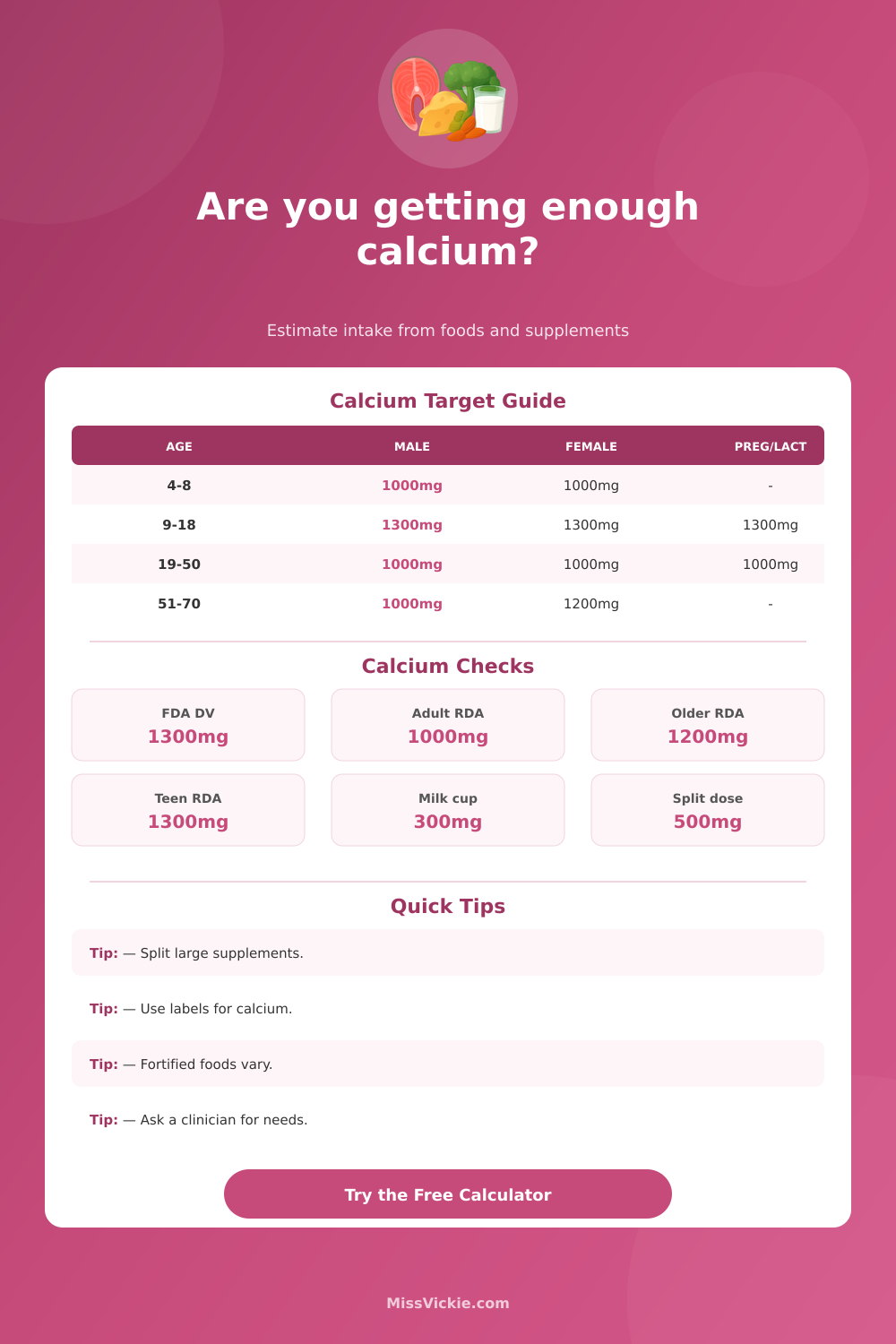
| Age Or Life Stage | Male Target | Female Target | Pregnancy Or Breastfeeding |
|---|---|---|---|
| 1-3 years | 700 mg/day | 700 mg/day | Not applicable |
| 4-8 years | 1000 mg/day | 1000 mg/day | Not applicable |
| 9-13 years | 1300 mg/day | 1300 mg/day | Not applicable |
| 14-18 years | 1300 mg/day | 1300 mg/day | 1300 mg/day |
| 19-50 years | 1000 mg/day | 1000 mg/day | 1000 mg/day |
| 51-70 years | 1000 mg/day | 1200 mg/day | Not listed |
| 71 years and older | 1200 mg/day | 1200 mg/day | Not listed |
| Dairy Or Fortified Food | Serving Used | Calcium | Planning Note |
|---|---|---|---|
| Plain low-fat yogurt | 8 oz | 415 mg | One of the highest common dairy entries. |
| Calcium-fortified orange juice | 1 cup | 349 mg | Use the label because brands vary. |
| Part-skim mozzarella | 1.5 oz | 333 mg | Compact source, also watch sodium and saturated fat. |
| Nonfat milk | 1 cup | 299 mg | Whole milk is slightly lower by calcium per cup. |
| Fortified soymilk | 1 cup | 299 mg | Shake well and verify the Nutrition Facts panel. |
| Fortified cereal | 1 serving | 130 mg | Calculated here as a 10% DV cereal serving. |
| Nondairy Food | Serving Used | Calcium | Absorption Note |
|---|---|---|---|
| Sardines canned with bones | 3 oz | 325 mg | Bone-in fish can be a strong nondairy source. |
| Calcium-set firm tofu | 1/2 cup | 253 mg | Only calcium-set tofu provides this amount. |
| Canned salmon with bones | 3 oz | 181 mg | Calcium comes mainly from edible bones. |
| Cooked soybeans | 1/2 cup | 131 mg | Useful plant source with moderate calcium. |
| Boiled spinach | 1/2 cup | 123 mg | High oxalate means lower absorbed calcium. |
| Cooked kale | 1 cup | 94 mg | Lower calcium per serving but better plant bioavailability. |
| Bok choy | 1 cup raw shredded | 74 mg | Can contribute as part of a mixed diet. |
| Supplement Or Split | Typical Amount | Absorption Planning | Calculator Field |
|---|---|---|---|
| Multivitamin mineral | 200-300 mg | Usually a small add-on rather than the full target. | Supplement calcium |
| Calcium supplement tablet | 500-600 mg | Absorption is generally highest at 500 mg or less per dose. | Doses per day |
| Calcium carbonate | 40% calcium by weight | Often taken with food for better tolerance and absorption. | Supplement form |
| Calcium citrate | 21% calcium by weight | Less dependent on stomach acid than carbonate. | Supplement form |
| Four-meal split from 1000 mg | 250 mg each | Use food and small supplement doses across the day. | Meal split |
Calcium is a nutrient that the body cannot make on its own, yet there are a variety of reasons that calcium is necesary to the body (calcium keeps heartbeats steady), and calcium keeps bones strong. Most individuals dont have a good idea of whether they are getting enough calcium into there bodies each day. However, by using the calculator, the calculator can calculate the number of servings of calcium and supplements that an individual take in to show them how much calcium they consume each day.
Thus, one benefit of the tool is that it turns information about calcium consumption into an estimate of calcium coverage by the body. The first step in utilizing the calculator is to understand that the target levels of calcium that an individual should consume changes with a variety of factors. For instance, teens require more calcium than adults between the ages of 35 and 50, and women after the age of 50 have different calcium requirements than those of teens.
How to Use the Calcium Calculator
Additionally, women who is pregnant or breastfeeding will have different requirements of calcium than those who are not pregnant or breastfeeding. The calculator accounts for each of these variables. The second step in using the calculator is understanding that the amount of calcium that an individual consumes from their diet can have a major impact upon the amount of calcium that their body receives from the foods that they consume.
Foods high in calcium, such as dairy products, will provide much more calcium to the body than foods that contain plant-based sources of calcium. Furthermore, foods like greens and beans contain calcium, but the body absorbs less of the calcium from these food groups than from dairy products. An absorption setting within the calculator can account for these variables.
Supplements add another layer of complexity to the bodys requirements of calcium. For instance, the form in which individuals take calcium supplements can affect the ability of the body to absorb the calcium from those supplements. Furthermore, many supplements contain large doses of calcium, yet the body only absorbs the calcium from supplements if they are taken in small doses throughout the day instead of a large dose at once.
The calculator includes these variables in the supplement portion. Because the body does not absorb 100% of the calcium that is consumed, another variable is the absorption rate of the body. Individuals who consume diets that are high in plants that contain oxalate, such as spinach, have a reduced ability of the body to absorb calcium from the diet as compared to individuals whose diets contains less of these types of plants.
The absorption percentage within the calculator allows individuals to account for these different absorption rates. The data within the calculator will output the total amount of calcium that an individual consumes, the comparison between that consumed calcium to their target levels, and the amount of calcium that the body may absorb. Furthermore, the data can also be broken down into the meals that an individual consumes each day to determine whether each meal contains the same amount of calcium.
Individuals using the calculator will discover that despite their diets containing many sources of calcium, they may still not meet their calcium target. This is true of many individuals whose diets dont contain dairy products. Yet, other individuals may consume more calcium than their target levels due to diets high in yogurt, fortified cereal, and supplements.
Thus, this calculator allows individuals to recognize these differences between their diets. Another factor that may impact calcium levels within the body is the medications that they take, their conditions that affect their ability to absorb the calcium from their diet, their levels of vitamin D, and the amount of exercise that they perform. Thus, although the calculator accounts for most factors that relate to calcium consumption, these additional variables is another reason to use the calculator as a suggested tool rather than a means of making final determinations of an individual’s health.
The tables that are provided along with the calculator allow individuals to determine the amount of calcium that is in various foods, and to understand the calcium targets for each life stage. Individuals can use these tables as a means of understanding the amount of calcium in specific foods without having to utilize the calculator itself. Furthermore, the tables make clear the differences in the amounts of elemental calcium that is in various forms of supplements.
Despite the benefits of the tool, there are some common mistakes that individuals can make when calculating their calcium consumption. For instance, individuals often think that one meal high in calcium will provide the body with the amount of calcium that it needs for the remainder of the day; however, the body doesnt store calcium within the body. The meal-split view within the calculator makes these concepts apparent to the individuals.
Another common mistake that individuals may make is in thinking that the body absorbs all of the calcium from a food group; however, the absorption factor within the calculator makes clear that food like greens and beans will have less calcium absorbed by the body. Thus, individuals need to account for these variables in the bodys ability to utilize calcium from the foods that they consume. Finally, after utilizing the tool for some time, an individual may discover some patterns in their bodies ability to consume the calcium that their body requires.
For instance, an individual whose diet consists of little dairy will likely fall short of their calcium target unless they consume other sources of calcium daily. Furthermore, individuals who take large doses of calcium supplements will likely experience better results if they take the supplement in smaller doses throughout the day. An individual will find these suggestions clear after using this calculator.
Beyond accounting for these variables, the goal in using this calculator is not in achieving perfection in meeting the bodys needs each day. Rather, the goal is to become aware of whether an individual’s body meets its needs throughout a typical week, and which days that it does not. Thus, this calculator does account for that goal in its creation.