Alcohol Calorie Calculator
Estimate drink calories from drink type, ABV, pour size, mixer volume, sugar, servings, dilution, garnish, and meal context using an alcohol-grams formula.
Load a common pour, then adjust ABV, mixer, sugar, servings, and meal context for the actual glass you are planning.
Calorie Breakdown
| Component | Per Serving | Total Batch | How It Was Estimated |
|---|
Most calories come from alcohol because soda water adds none.
A 5 oz glass is usually close to one standard drink.
Volume, ABV, and residual carbs widen the range.
Juice, syrup, cream, and liqueurs can exceed the alcohol calories.
| Alcohol Base | Typical Pour | ABV | Approx Calories |
|---|---|---|---|
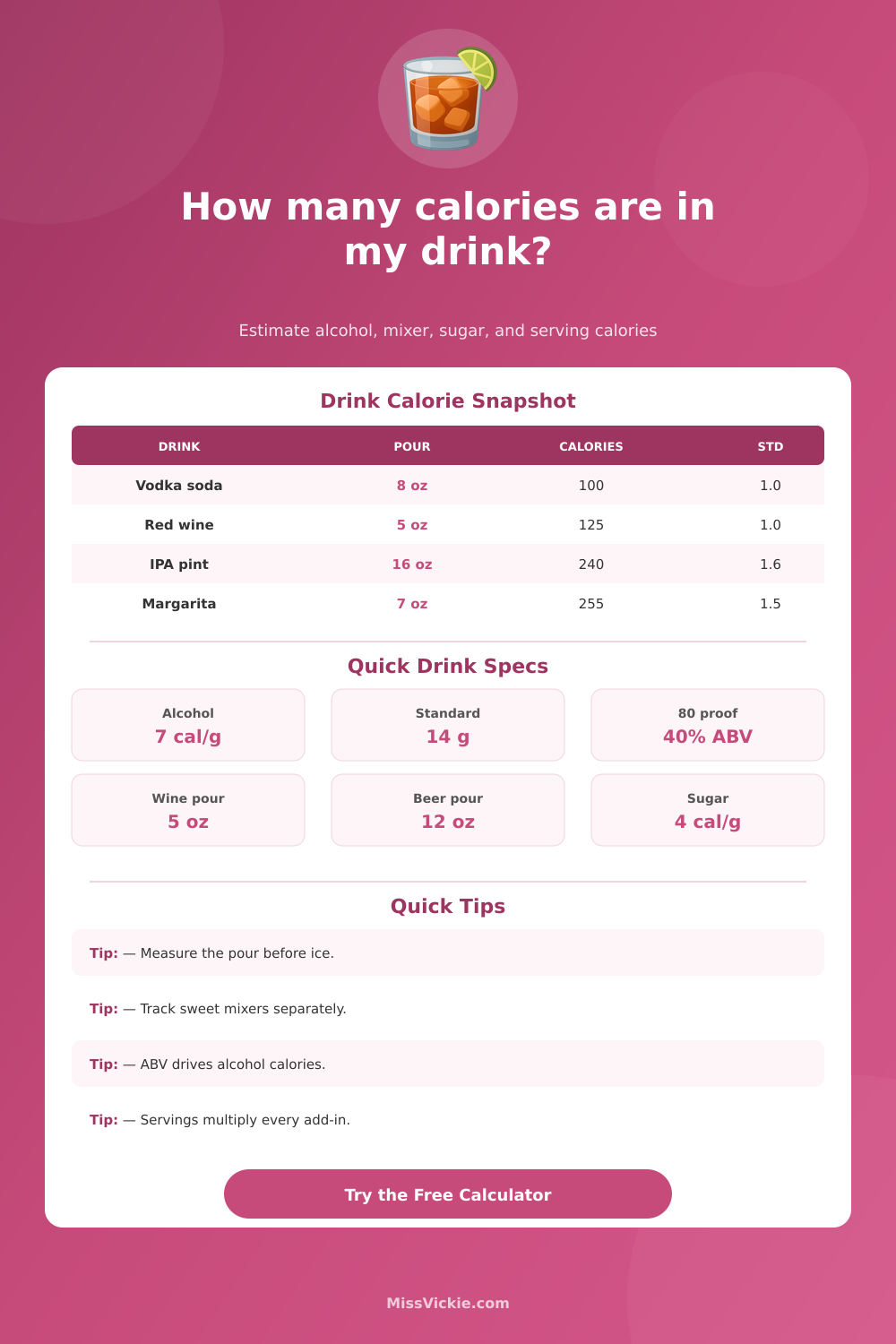
| Vodka, gin, rum, tequila | 1.5 fl oz | 40% | About 97 kcal from alcohol |
| Whiskey or brandy | 1.5 fl oz | 40% | About 97-105 kcal before mixers |
| Red or white wine | 5 fl oz | 12-14% | About 120-130 kcal |
| Regular beer | 12 fl oz | 4.5-5.5% | About 140-170 kcal |
| IPA or strong ale | 16 fl oz | 6-8% | About 220-300 kcal |
| Mixer | Calories per fl oz | Sugar per fl oz | Best Fit |
|---|---|---|---|
| Soda water or club soda | 0 | 0 g | Vodka soda, tequila soda, highballs |
| Tonic water | 10 | 2.5 g | Gin and tonic, vodka tonic |
| Regular cola | 12 | 3.2 g | Rum and cola, whiskey cola |
| Ginger beer | 11 | 2.8 g | Mules and dark rum drinks |
| Sweet and sour mix | 30 | 7 g | Sours, margaritas, party pitchers |
| Cream of coconut | 50 | 5.5 g | Pina coladas and creamy tiki drinks |
| Popular Drink | Serving | Approx Calories | Calorie Driver |
|---|---|---|---|
| Vodka soda | 1.5 oz spirit plus soda | 95-105 kcal | Alcohol almost entirely |
| Gin and tonic | 1.5 oz gin, 4 oz tonic | 135-155 kcal | Tonic sugar plus alcohol |
| Margarita on rocks | 7 oz finished drink | 230-280 kcal | Tequila, liqueur, sweetener |
| Whiskey sour | 4-5 oz finished drink | 170-220 kcal | Whiskey and sour mix |
| Pina colada | 8 oz creamy drink | 400-520 kcal | Coconut cream and juice |
| Sugar Add-In | Common Amount | Added Calories | Counting Note |
|---|---|---|---|
| Simple syrup | 0.5 fl oz | About 45 kcal | Count in mixer or extra sugar |
| Agave or honey | 2 tsp | About 40 kcal | Enter grams for accuracy |
| Sugar rim | 1 tsp used | About 16 kcal | Only count what sticks to glass |
| Fruit juice splash | 1 fl oz | About 10-17 kcal | Depends on juice and sweetness |
| Liqueur | 0.5 fl oz | About 45-70 kcal | Includes alcohol and sugar |
Alcohol contains calorie; the calories in alcohol come from ethanol. Ethanol contains 7 calorie per gram. Thus, the strength of the alcohol will be the primary factor in the total calorie count of the drink.
A person must understands that the amount of ethanol in a drink will determine the amount of energy that that drink provides to the body. For example, a 1.5 ounce shot of spirits at 40% ABV will contain approximately 14 grams of pure alcohol. 14 grams of pure alcohol contains approximately 100 calories.
How Alcohol Adds Calories to Drinks
If a person increases the ABV of the drink or the size of the pour of the alcohol, the total calories in that drink will increase. The type of mixer that is use in the drink can change the total number of calories in that drink. Some mixers contains sugar and calories and others contain 0 calories.
For example, soda water and diet cola contain 0 calories. However, drinks such as tonic water and sweet and sour mix do contains sugar and, therefore, add to the total calories of the drink. The more calories that a mixer contains per ounce the drinker uses, the more the total calories of the drink will be.
Additionally, any drinks that contain sugar or sweetely liquids can increase the total number of calories in that drink. However, any drinks with sugar added to them will also have an increased total calorie count. Finally, any garnishment to the drink, such as cherries or orange slices, will also contain calories.
While the total number of calories from these garnishments may be small for each drink, the more of these garnishments that are consumed, the more calories is taken from the body. Additionally, dilution from ice or shaking the drink will not change the number of calories in the drink. The body will not absorb the calories from the alcohol and sweet liquids if they are dilute.
Thus, although the drink may appear to be larger after the addition of ice or after shaking it, its calories will remain the same. Another factor in determining the total calories in drinks is the number of servings. For instance, if an individual consumes two of the same cocktail or drinks, the body will consume twice the amount of grams of alcohol from those drinks and twice the calories from the mixers in those drinks.
A person can use the context selector to compare the total calories of many drinks to they’re daily calorie budget or the number of calories that should of been consumed during meals. While the calculator will provide a baseline for the number of calories that are in a drink, a person should also consider other variables for the same drink. For example, a heavy pour of a drink in a short glass may contain the same amount of alcohol as a measured pour of that same drink into a tall glass, but the heavy pour will contain more calorie than the measured pour due to the increased grams of alcohol that are present.
Many people will focus upon the mixer in a drink when attempting to reduce the calories that are consumed from the drink. However, the method for reducing the calories in the drink is dependent upon the type of drink that is consumed. For example, if an individual is consuming straight spirits or dry wine, the alcohol will be the largest source of calories; therefore, reducing the number of servings or the ABV will reduce the calories that are consumed from those drinks.
However, if an individual is consuming drinks that contain cream or fruit, the added ingredients will contain more calories then the alcohol; therefore, a person should focus upon the mixers for these types of drink. For individuals that wish to maintain consistency with their calorie intake and expenditure, it is useful to be able to track the number of calories that they consume from the drinks that they consume. For instance, a running estimate of the total calories that are consumed from drinks throughout the evening will be more accurate than simply noting the calories from each individual drink.
Additionally, one extra round of drinks or one extra ounce of liqueur will increase the total number of calories that the individual consumes. Such small increases in total calories will become visible to an individual after entering the data of the drinks that are consumed into the calculator. Additionally, it is also useful to consider how the calories from drinks relate to the food that is consumed by an individual.
For example, a cocktail that is consumed prior to dinner will occupy the same space within the calorie budget of an individual as an appetizer. Thus, by using the calculator to determine the calories of the drink that is consumed, an individual will be able to recognize how that drink impacts the number of calories that are left for food to be consume. Thus, using the calculator ensures that the arithmetic for the total calories that are consumed from a drink is accurate.