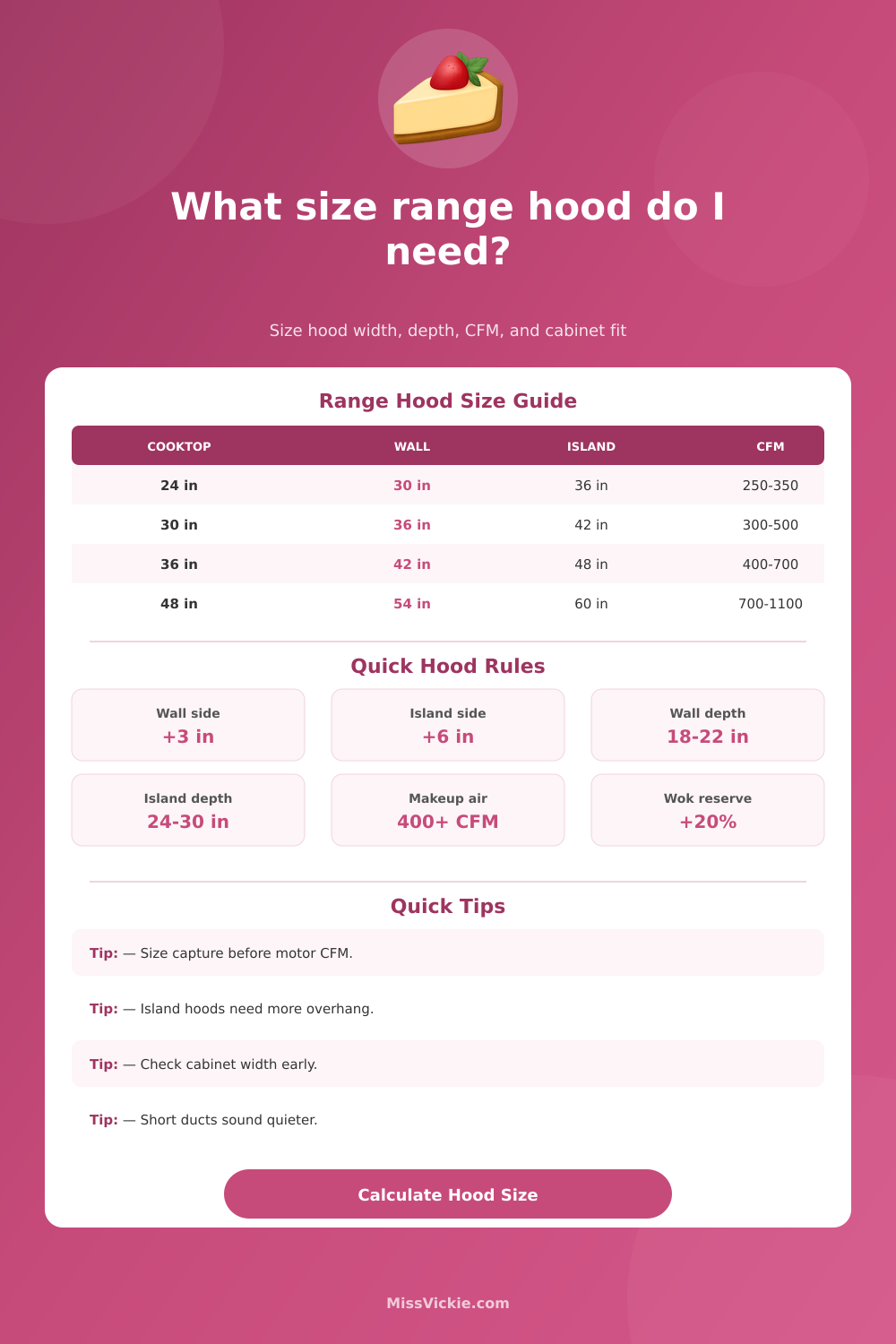
Cooktop width, capture overhang, CFM, duct, and cabinet fit
Range Hood Size Calculator
Estimate the right range hood width, capture depth, airflow, duct diameter, and cabinet fit for wall, island, under-cabinet, insert, and ceiling-style installations.
Load a common kitchen layout, then adjust cooktop size, install type, overhang, ceiling height, cooking intensity, burner load, duct path, and cabinet constraints.
Size and airflow breakdown
Width by cooktop size
| Cooktop | Wall / under | Island | Why |
|---|---|---|---|
| 24 in | 30 in | 36 in | Compact range with basic side capture. |
| 30 in | 36 in | 42 in | Most common residential jump. |
| 36 in | 42 in | 48 in | Wider burners need better edge capture. |
| 42 in | 48 in | 54 in | Often used for larger gas cooktops. |
| 48 in | 54 in | 60 in | Pro-style ranges need more margin. |
Depth and capture reference
| Install | Common depth | Front capture | Best fit |
|---|---|---|---|
| Wall canopy | 18-24 in | 2-4 in | Most perimeter kitchens. |
| Island hood | 24-30 in | 3-6 in | Open kitchens with cross drafts. |
| Under-cabinet | 18-22 in | 1-3 in | Shallow cabinet runs. |
| Insert liner | 20-24 in | 2-4 in | Custom hood surrounds. |
| Ceiling mount | 26-36 in | 4-8 in | Modern rooms with high mounting. |
Airflow planning bands
| Cooking load | Typical CFM | Width rule | Use case |
|---|---|---|---|
| Light electric | 250-350 | 8-9 per in | Simmering, boiling, small kitchens. |
| Daily gas | 300-600 | 10 per in | Regular family meals. |
| Searing | 500-800 | 11-12 per in | Frequent skillet cooking. |
| Island cooking | 600-1000 | 12-13 per in | Open-sided capture. |
| Wok or pro gas | 800-1200+ | 13-15 per in | High heat and greasy plume. |
Duct and code checkpoints
| Target CFM | Round duct | Equivalent | Checkpoint |
|---|---|---|---|
| 250-300 | 6 in | 150 mm | Short compact runs. |
| 301-600 | 7 in | 180 mm | Common residential range. |
| 601-900 | 8 in | 200 mm | Better for long paths. |
| 901-1200 | 10 in | 250 mm | Pro-style airflow. |
| 1200+ | 12 in | 300 mm | Review makeup air and code. |
When you are choosing an range hood, you must consider the width of the cooktop and the amount of airflow that the range hood provides. While many peoples look at the motor rating of a range hood, this isnt the most important measurement to consider when purchasing a range hood. By considering the motor rating of the range hood alone, you may find that the range hood is loud but does not effectively capture the steam and grease that is release from the cooktop.
An important consideration of a range hood is its dimension. The dimensions of the cooktop will determine the amount of cooking range that the range hood has to control. Additionally, another consideration is the installation style and the mounting height of the range hood.
How to Choose the Right Range Hood Size and Height
These two factor will change the efficiency of a range hood in capturing the steam and grease that is released from the cooktop. Range hoods can have different amounts of overhang. Wall-mounted range hoods will have less overhang than other styles of range hoods, such as island range hoods.
This is because the back wall of the cooking area will help to contain the steam and grease that is released from the cooktop. Island range hoods will have more overhang because they are typically situated in an area where there is no surrounding wall to contain the steam and grease. The other reason that island ranges will have more overhang is because the island range cooktop is situated in an area that is exposed to the open air.
The air currents in the cooking area can push the steam and grease past the range hood’s cooking range. Additionally, the steam and grease does not rise in a straight line from the cooktop. If the range hood has too shallow of an overhang, the steam and grease will escape the cooking range of the range hood.
Another important consideration for the range hood is its mounting height. The mounting height will change the capture zone of the range hood. If you mount the range hood higher above the cooktop, there will be more headroom in the cooking area.
However, the range hood will have to work harder to capture the steam and grease that rises from the cooktop. A higher mounting height will require a wider range hood with more powerful airflow to compensate for the range hood’s mounting height. Alternatively, if you mount the range hood at a lower height, it will have a tighter capture zone and will require less CFM (cubic feet per minute) of exhaust fan rate.
However, the range hood will take up less of the cooking area, which is less desirable for individuals who cook in tall pots. For most individuals, a mounting height between 26 and 34 inches is most appropriate for the range hood. The mounting style and the height of the pots that are used in the cooking area will alter this measurement.
Finally, the cooking style that an individual employs will change the amount of airflow that is required for the range hood. If an individual only uses an electric cooktop for simmering, the amount of airflow will be less than an individual who uses a gas range in the kitchen for cooking sear dishes. High heat is required to cook in a wok, which requires the range hood to have an additional amount of airflow due to the way that oil aerosols travel and stick to cooking areas.
Your range hoods airflow requirements should be based on your cooking routine rather than the big meals you cook from time to time. Basing the requirements of a range hood on the cooking routine that you use every day will ensure that the range hood meets your requirements in a realistic way. The length of the duct and the number of turns in the duct will impact the way that your range hood performs.
A straight duct will allow your range hood to perform more efficiently than a duct that makes many turns. Each turn in the duct increases the static pressure of the duct, forcing the fan to work harder to move the air across the range hood. Thus, ducts that are shorter and make fewer turns will allow the range hood to perform in a quiet and efficient manner.
Placing the range hood near an exterior wall of the kitchen will allow the range hood to perform more efficiently. The constraints of the kitchen cabinets may force you to select a range hood of a certain size. For instance, if the cabinet opening is thirty inches in width, you will be unable to place a range hood that is thirty-six inches in width.
In such a situation, you may have to either purchase a range hood that is smaller in size than desired, or you may have to widen the opening in the cabinets to allow for the installation of a larger range hood. Another consideration of the size of the range hood is the makeup air rule. In many local areas, if the range hood will move four hundred cubic feet of air per minute, it is required to supply a supply of outside air to the kitchen.
This requirement is established due to the fact that such a powerful range hood can create a negative air pressure within the house. These building codes should be checked early in the selection of the range hood to determine whether you would prefer to purchase a range hood with high levels of airflow power or a mid-range range hood. The depth of the range hood is another dimension that is often overlooked when purchasing a range hood.
A range hood that is shallow may work within the depth of your cooktop cabinets, but it may not extend far enough forward to capture the steam that emerges from the front burners of the cooktop. Range hoods for islands in the kitchen cooktops may require more depth than range hoods for other areas of the kitchen due to the potential breezes that may move the steam from the cooktop to the side of the cooktop. Finally, the noise level of the range hood is a result of the size of the range hood and in what way it is used.
Range hoods that are of the correct size for the cooktop will allow the range hood to operate at a lower speed. Range hoods that run at a lower speed produce less noise than range hoods that are forced to run at a higher speed to effectively remove the steam and grease from the cooktop. Thus, selecting a range hood that is of the correct physical size will help to reduce the noise and the energy that the range hood uses.
It could of been much simpler if you chose the right one early.