Citrus peel, acid blend, water, juice yield, and batch volume
Super Juice Calculator
Scale lime, lemon, orange, grapefruit, yuzu, Meyer lemon, blood orange, or calamansi super juice with peel weight, fresh juice yield, acid blend, water multiplier, tartness target, batch volume, and reserve.
Choose a starting batch for cocktails, sours, spritzes, punch service, or freezer prep, then adjust the citrus profile and tartness target.
Super Juice Breakdown
| Ingredient | Batch Amount | Per 100 ml | Role |
|---|
High-impact sourness with a strong malic edge for daiquiris, gimlets, and shaken sours.
Cleaner citric bite for whiskey sours, Collins drinks, lemonade bases, and pastry-style citrus syrups.
Lower acid and more aromatic peel oil; works best in long drinks and low-acid punch.
Needs a softer blend and controlled steeping to keep pleasant bitterness under control.
| Citrus Type | Typical Target Tartness | Acid Direction | Use Case |
|---|---|---|---|
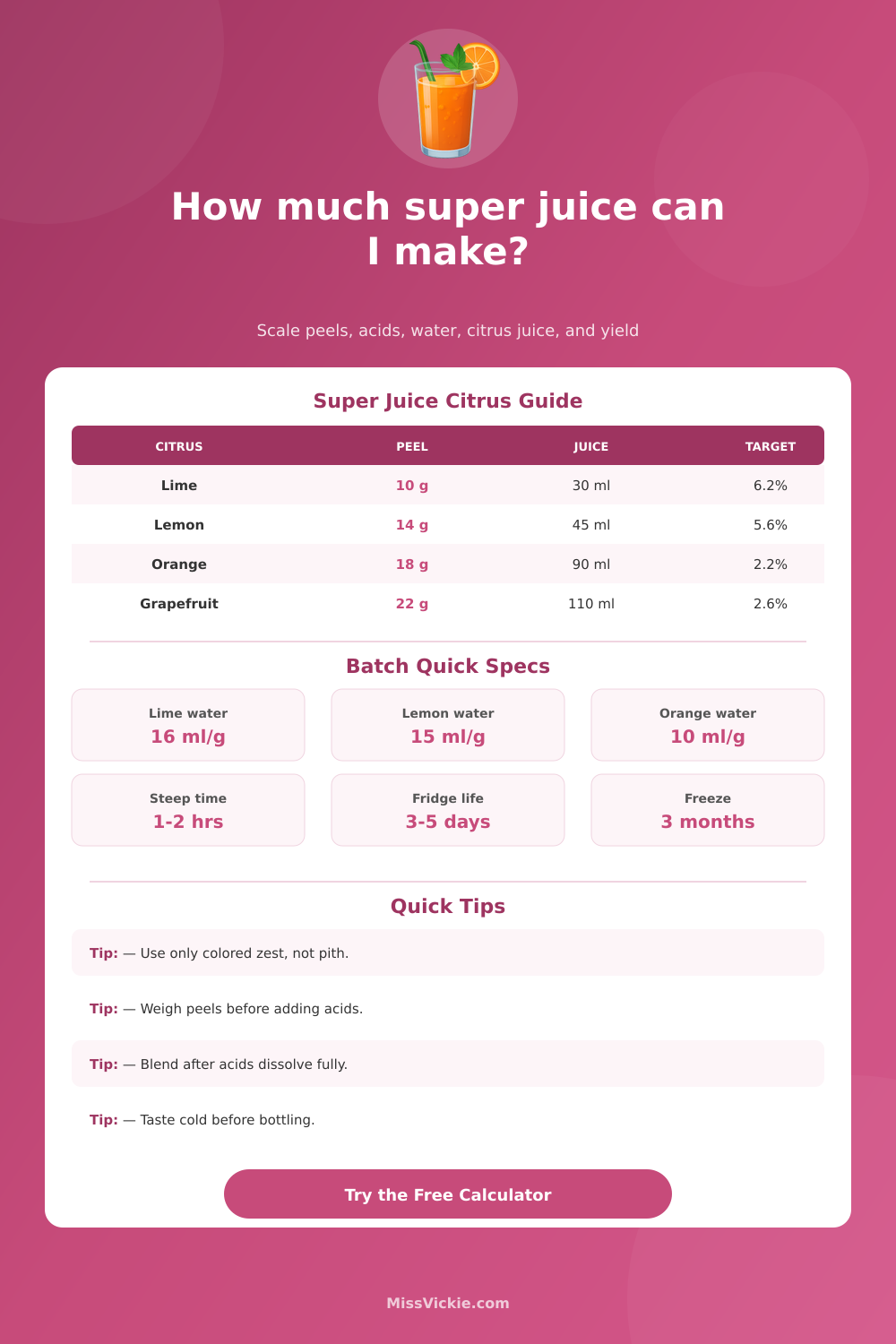
| Lime | 5.8% to 6.5% | Citric with strong malic support | Daiquiri, gimlet, margarita, sour |
| Lemon | 5.2% to 6.0% | Mostly citric with a small malic lift | Whiskey sour, Collins, lemonade base |
| Orange | 1.8% to 2.6% | Gentle citric, low malic, small ascorbic | Highballs, punch, spritzes, cordial |
| Grapefruit | 2.2% to 3.0% | Moderate citric with controlled malic | Paloma, Brown Derby, soda service |
| Yuzu | 4.6% to 5.4% | Bright citric and malic with aroma focus | Highballs, sours, small bottle batches |
| Citrus Type | Avg Peel Per Fruit | Avg Juice Per Fruit | Planning Note |
|---|---|---|---|
| Lime | 8 to 12 g | 25 to 35 ml | Small fruits vary widely; weigh zest after peeling |
| Lemon | 12 to 18 g | 35 to 55 ml | Thick peel gives more aroma but more pith risk |
| Orange | 15 to 24 g | 70 to 110 ml | Juice usually outpaces usable colored peel |
| Grapefruit | 18 to 30 g | 90 to 140 ml | Remove pith carefully to limit bitterness |
| Calamansi | 3 to 6 g | 7 to 12 ml | Often peel-limited for larger batches |
| Water Multiplier | Typical Citrus | Flavor Result | When To Use |
|---|---|---|---|
| 8 to 11 ml/g | Orange, blood orange | Rich peel aroma and fuller body | Low-acid juice and long drinks |
| 12 to 14 ml/g | Grapefruit, Meyer lemon | Balanced aroma with moderate dilution | Spritzes, palomas, brunch batches |
| 15 to 17 ml/g | Lemon, lime | Classic super juice yield and sour structure | Shaken cocktails and sour templates |
| 18 to 22 ml/g | Very aromatic peel | Higher yield with softer peel intensity | Punch bowls, soda service, freezer prep |
| Finished Batch | Cocktail Use | Typical Portions | Storage Plan |
|---|---|---|---|
| 500 ml | Home testing and small bottles | 16 portions at 30 ml | Use within a weekend |
| 1 liter | Dinner party or cocktail prep | 33 portions at 30 ml | Keep cold in two bottles |
| 2 liters | Party sours and margaritas | 66 portions at 30 ml | Batch, label, and chill fast |
| 4 liters | Punch, bar prep, or freezer cubes | 133 portions at 30 ml | Freeze what will not be used soon |
Super juice is an citrus concentrate that maintains acidity and aroma in drinks. People use it because fresh citrus fruits contains varying acidity and aroma contributions. Additionally, fresh citrus fruits can be very expensive to maintain in large quantity.
When citrus fruit is squeezed, the acidity level can fluctuate between batch of citrus juice. The oils in citrus peels will degrade quick if the citrus peels are cut, and the citrus peels can develop a bitter taste if they are expose to air for extended periods. However, super juice eliminates these problem by combining citrus peels and a measured amount of citrus juice.
How to Make Super Juice
Because it is a concentrate, the super juice allow for the achievement of the same level of sourness and aroma without needing to use fresh squeeze juice. The process of brewing super juice begins with collecting the citrus peels. The part of the peel that will be used will contain the colored zest that contain the essential oil that give citrus its aroma.
However, the white part of the peel will contain bitterness that will ruin the flavor of the super juice. Hence, the amount of usable colored zest will matter more than the weight of the citrus fruits. After weighing the citrus zest, a person can use a calculator to determine the amount of water and acid that will best suit the citrus peels.
The weight of the citrus zest will ultimately determine the amount of water and acid. A calculator can provide this information so that a person do not have to guess the amounts needed. The next step is to add water to the citrus peels after a person has weighed the citrus zest.
The ratio of the amount of water in milliliters per gram of citrus peel will determine the strength of the aroma of the super juice. Citrus fruits with a milder aroma will require less water, such as orange peels, so the aroma is not lost when preparing the super juice. Other citrus fruits with a more potent aroma will require more water, such as lime peel.
Additionally, the amount of water that will be used will ultimately depend on the type of drinks to be prepared with the super juice. For shaken cocktails, a higher concentration of super juice is desired. However, for long drinks and punches, the super juice will be diluted with more water so that the citrus flavor dont overpower the other ingredients in the cocktails.
The next step involves adding fresh citrus juice and then acid to the mixture of citrus peels and water. Fresh citrus juice contains some natural acid. However, the amount of natural acid is typically not enough to provide the tartness that is desired in cocktails.
To assist with this, a person can add powdered citric acid, malic acid, or ascorbic acid to the mixture. The tartness level of the citrus juice will determine how much of this powdered acid will be added. The amount of natural acid in the juice will be deducted from the total amount of acid that will be in the final batch of super juice.
Hence, the calculator will show how much powdered acid to add. This calculation ensures that the super juice has the proper taste to enjoy. Other factors that can affect the amount of super juice that can be brewed include the steep time of the citrus peels and the straining of the juice.
If the steep time is short, the bitterness of the super juice will be low. However, if the steep time is long enough to allow the citrus oils to be fully extracted from the citrus peels, the super juice will require more aggressive straining to separate the juice from the peels. However, more aggressive straining will lead to the loss of some of the super juice that get caught in the strainer.
The reserve percentage accounts for this loss, as well as the risk of spills of super juice. The batch size of super juice will be another input into the calculator that will determine the amounts of citrus peels, water, and other ingredient needed for brewing super juice. For batch sizes larger than five hundred milliliter, a person can use the calculator to determine the necessary batch size.
However, the ratio of the ingredients will be the same regardless of how much super juice a person desire to brew. While the calculator will give a start to the brewing process, it cannot determine the taste of the super juice that will result. As the essential oils from the citrus peel will change with other ingredient in the cocktail, a person will have to taste a sample of the super juice to determine how it will taste when mixed with other ingredients.
The best way to do this would be to chill a small portion of the super juice and prepare a test drink of the ingredients that will otherwise be use in the cocktail. Another factor that will affect the brewing of super juice is the storage of super juice. If brewed, super juice can be stored in the refrigerator for several days.
However, after this time, the aroma will fade. To extend the life of the super juice, it can be frozen to last for several month. However, the essential oils from the citrus peel will separate when the super juice is thaw.
Hence, using smaller bottles of super juice would ensure that only the amount required would be allowed to thaw. People often opt for lime and lemons for brewing super juice because these citrus fruits contain higher natural acidity. Other citrus fruits, such as oranges and grapefruits, require slightly different methods of brewing super juice due to their relatively mild taste.
However, a person can program a citrus fruit calculator to ask what type of citrus fruit will be used, and the outcome will change the recipe to accommodate for this change. Aside from the time savings that would otherwise be required to brew citrus juice as needed for cocktails, the main value of brewing super juice is the consistency that it offer to cocktail recipes. Once a person sets up a formula for the amount of ingredient required for a certain type of citrus fruit, that same flavor can be prepared in every cocktail that is brewed.
This allows for consistency in the quality of the cocktail despite the quality of the citrus fruits that is available in the market at the time of brewing. Furthermore, since the calculator has eliminated the need for complex arithmetic to determine the correct ingredients for brewing super juice, the focus can be placed on the flavor of the super juice.