
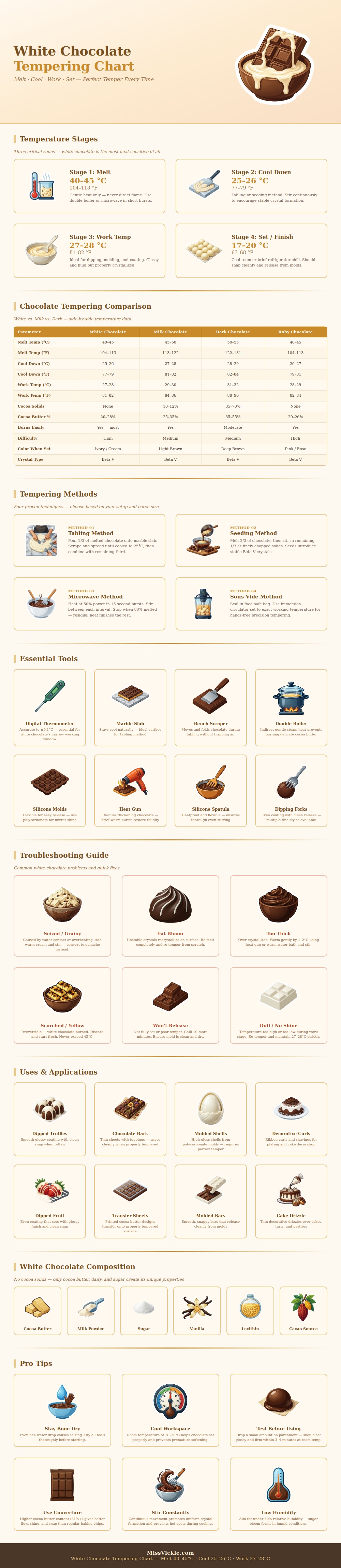
White chocolate contain cocoa butter, milk powder, and sugar, but it dont contain cocoa solids. Because of this ingredient difference between white chocolate and dark chocolate, white chocolate will behave different than when melted and set. Many people makes the mistake of treating white chocolate like dark chocolate.
When people treat white chocolate like dark chocolate, they often overheat the white chocolate, leading to grainy white chocolate. The texture of white chocolate when melted and set depend on the temperature to which the white chocolate is melted. The three temperature stage for white chocolate control the crystal structure of the chocolate.
How to Temper White Chocolate
First, you must melt the white chocolate to break down the existing crystals. Second, the cook must cool the white chocolate to allow the stable crystals to grow. Finally, the white chocolate must be brought to a working temperature for use.
If either of these stages is skipped or rushed, the white chocolate will either stay too soft or set with a chalky finish. Unlike dark and milk chocolate, white chocolate does not contain cocoa solids. Milk chocolate is somewhere in between dark and white chocolate in terms of the required temperature to set the chocolate.
Therefore, white chocolate is the most demanding type of chocolate to handle. White chocolate will scorch more faster than dark chocolate. Additionally, white chocolate will seize if moisture get into the white chocolate.
White chocolate must therefore be handled within specific temperature range. There are several methods that will achieve the correct crystal structure in the white chocolate. One of them is the tabling technique, which involve spreading the white chocolate on a marble slab.
This method works best if you have enough space to allow the white chocolate to cool. The seeding method involves adding finely chopped, unmelted white chocolate to the melted white chocolate. This method will add the necessary crystals to the white chocolate.
The microwave method involves heating the white chocolate in the microwave in short bursts. This method is useful for small batch of white chocolate. The sous vide method requires bringing the white chocolate to a specific temperature in a water bath.
This method requires a sous vide machine. Using the correct tools for tempering white chocolate will assist in setting the white chocolate properly. You can use a digital thermometer to monitor the exact temperature of the white chocolate because the working temperature range is very narrow.
Using a marble slab will assist in the cooling of the chocolate during the tabling stage of tempering white chocolate. Using silicone spatulas will assist in the moving of the white chocolate without creating air bubble in the chocolate. Finally, you must choose the molds in which you will pour the white chocolate carefully.
Polycarbonate molds will produce a glossy finish on the white chocolate. Silicone molds will make it easier to remove the white chocolate from the mold. The most common problems associated with white chocolate are water getting into the chocolate and overheating the chocolate.
A single drop of water will ruin the white chocolate because it will create clumps in the chocolate. These clumps will not dissolve. Overheating the white chocolate will change the flavor of the chocolate and make the texture suffer.
Fat bloom will appear later in the cooling of white chocolate. Fat bloom is when the unstable crystals in the white chocolate move to the surface of the chocolate. If either of these problems appear, start over with fresh white chocolate and pay closer attention to the temperature of the white chocolate.
There are several application for white chocolate if used correctly. Properly tempered white chocolate will coat the truffles nicely and allow them to snap easy. Properly tempered white chocolate will also allow the chocolate to form thin curls.
They can also be used to make mold shells that will have a glossy finish when the white chocolate has set. These molds can also be used to make bark, dipping fruit, or piped drizzles of chocolate on treats. The temper of the white chocolate will determine if the finished chocolate is intentional in its appearance or messy looking.
Well-tempered white chocolate will set at room temperature and maintain it’s shine when handled. The composition of white chocolate will determine how the chocolate behave. Because there are no cocoa solids in white chocolate, the flavor of the white chocolate come from the cocoa butter and the dairy in the chocolate.
The fat in the white chocolate will separate easy if the temperature of the white chocolate fluctuates too much. If couverture white chocolate is used, the process will be easier because couverture white chocolate has a high percentage of cocoa butter. The higher the percentage of cocoa butter, the longer the chocolate will remain fluid and snap well.
Regular baking chips have more additive in them than couverture white chocolate and contain less cocoa butter than couverture white chocolate. To achieve the best results when tempering white chocolate, follow a few specific habit. Always keep the workspace cool and dry.
This will ensure that moisture does not enter the white chocolate. Always make a test portion of white chocolate on parchment paper before using all of the white chocolate. Test portions will help identify any problems before losing all of your chocolate.
Additionally, always stir the white chocolate while it is cooling. This will allow the white chocolate to cool evenly all around the bowl. These habits will help avoid the common problems that will ruin your white chocolate.
By following these guidelines, white chocolate will gain a clean snap and retain its glossy shine when worked with.