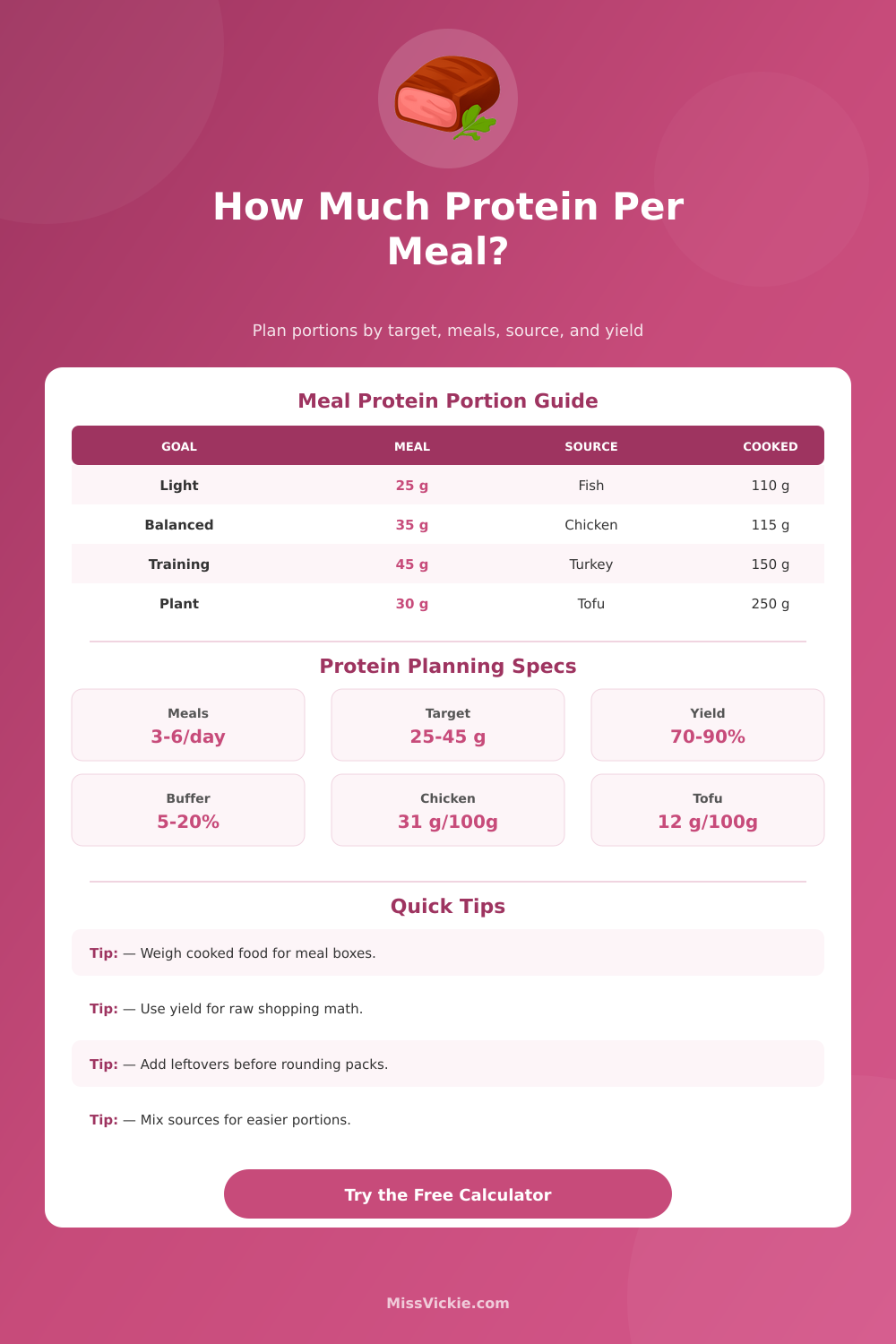
Protein targets, meal counts, cooked portions, yield, and leftovers
Meal Protein Calculator
Plan cooked protein portions for daily meals, batch prep, training goals, appetite, raw shopping weight, cooked yield, serving grams, and leftover meals.
Choose a real meal-prep situation, then adjust the target, source, cooked portion, yield, and leftover buffer.
Meal Protein Breakdown
Very lean cooked protein with a moderate moisture loss from raw to cooked.
Ground turkey portions fit bowls, wraps, and freezer meal prep well.
Rich fish gives slightly larger cooked portions for the same protein target.
Plant meals need larger cooked portions or a second protein source.
Good for hearty bowls, with drained yield usually below lean poultry.
Light portions cook quickly and usually keep a high finished yield.
Cooked lentils work best when paired with yogurt, eggs, tofu, or meat.
Ready-to-eat protein can cover breakfast, snacks, or a secondary share.
| Protein source | Protein per 100 g cooked | Typical cooked yield | Cooked grams for 35 g protein | Meal prep note |
|---|---|---|---|---|
| Chicken breast, roasted or grilled | 31 g | 72% to 78% | 113 g / 4 oz | Best for lean, high-protein boxes with controlled fat. |
| Chicken thigh, boneless cooked | 26 g | 68% to 75% | 135 g / 4.8 oz | More forgiving when reheated, with a little more fat. |
| Lean ground turkey, cooked | 29 g | 74% to 80% | 121 g / 4.3 oz | Works well for bowls, lettuce cups, sauces, and wraps. |
| Lean ground beef, cooked and drained | 26 g | 68% to 75% | 135 g / 4.8 oz | Drain before weighing if the meal box uses cooked drained meat. |
| Salmon fillet, baked | 25 g | 78% to 85% | 140 g / 4.9 oz | Use gentle reheating to avoid drying out the portion. |
| White fish, baked or poached | 24 g | 82% to 88% | 146 g / 5.1 oz | High yield and light texture, but fragile in bulk prep. |
| Firm tofu, cooked | 12 g | 88% to 95% | 292 g / 10.3 oz | Pressing changes water weight, so weigh after cooking. |
| Cooked lentils | 9 g | Ready to eat | 389 g / 13.7 oz | Pair with another protein when targets are higher than 30 g. |
| Whole eggs | 13 g | Ready to eat | 269 g / 9.5 oz | About 6 large eggs are close to 36 g protein. |
| Greek yogurt, plain nonfat | 10 g | Ready to eat | 350 g / 12.3 oz | Useful as a breakfast base or secondary protein share. |
| Prep setup | Meal boxes | Protein target per box | Chicken cooked weight | Leftover strategy |
|---|---|---|---|---|
| 3 days, 3 meals, 1 eater | 9 boxes | 35 g | 1.02 kg / 2.25 lb | Add 1 extra box if lunches are unpredictable. |
| 5 days, 2 meals, 1 eater | 10 boxes | 40 g | 1.29 kg / 2.84 lb | Cook sauce separately so leftovers stay flexible. |
| 5 days, 4 meals, 1 eater | 20 boxes | 35 g | 2.26 kg / 4.98 lb | Split into two flavors to reduce meal fatigue. |
| 4 days, 3 meals, 2 eaters | 24 boxes | 30 g | 2.32 kg / 5.12 lb | Label higher-protein boxes before chilling. |
| 7 days, 2 meals, 2 eaters | 28 boxes | 35 g | 3.16 kg / 6.97 lb | Freeze part of the cooked protein by day three. |
| Training week, 5 meals, 1 eater | 35 boxes | 42 g | 4.74 kg / 10.45 lb | Batch-cook in two rounds for better texture. |
| Food type | Usual raw start | Cooked yield | Cooked result | Why it changes |
|---|---|---|---|---|
| Boneless chicken breast | 1 lb / 454 g raw | 72% to 78% | 11.5 to 12.5 oz cooked | Water loss rises with high heat and thin pieces. |
| Chicken thigh, trimmed | 1 lb / 454 g raw | 68% to 75% | 10.9 to 12 oz cooked | Fat rendering and trimming lower the finished weight. |
| Ground turkey | 1 lb / 454 g raw | 74% to 80% | 11.8 to 12.8 oz cooked | Leaner grinds usually retain more cooked weight. |
| Lean ground beef | 1 lb / 454 g raw | 68% to 75% | 10.9 to 12 oz cooked | Rendered fat and draining reduce the usable portion. |
| Salmon fillet | 1 lb / 454 g raw | 78% to 85% | 12.5 to 13.6 oz cooked | Gentle baking keeps more moisture in the fillet. |
| Firm tofu | 1 lb / 454 g raw | 88% to 95% | 14.1 to 15.2 oz cooked | Pressing, roasting, and crisping remove water. |
| Lentils, cooked from dry | 1 cup dry | About 2.5 cups | 500 g to 550 g cooked | Water absorption increases weight during cooking. |
| Goal setting | Adjustment used | Typical meal target | Best source fit | Planning note |
|---|---|---|---|---|
| Light meals or many sides | 0.85x | 22 to 30 g | Fish, eggs, yogurt | Works when meals include beans, grains, dairy, or snacks. |
| Balanced maintenance meals | 1.00x | 30 to 40 g | Chicken, turkey, tofu mix | Good default for three to four protein meals per day. |
| Training day higher protein | 1.10x | 38 to 50 g | Chicken, turkey, beef | Keep portions repeatable so the daily total stays consistent. |
| Muscle gain meal prep | 1.18x | 40 to 55 g | Lean meats plus dairy | Large targets are easier with a secondary protein source. |
| Cutting or lean prep | 1.05x | 35 to 48 g | Chicken, white fish, yogurt | Lean proteins keep cooked weight moderate without much added fat. |
| Recovery day larger meals | 1.12x | 38 to 52 g | Salmon, beef, turkey | Use enough cooked portion so leftovers do not disappear early. |
When you prepare meals, you must ensure that the amount of protein in each meal is equal to the amount of protein that you have planned for that meal. If the portion of protein in each of your meals is not equal to the amount that you have planned for each meal, then your protein levels in your body wont be consistent throughout the day. If the portions of protein in each of your meals are too small, you may feel hungrily later in the day and end up eating too many snacks.
However, if the portions of protein are too large, you may find that there is too much food left over after each meal. You should determine the amount of protein that should be cooked for one meal, then multiply that amount by the number of meals, days, and people that you are preparing meals for. The amount of protein that you need within each meal will depend upon the contents of that meal.
How to Plan Protein Portions for Each Meal
If the meal also contains grains, beans, or dairy products, the protein content of those other food groups will make the amount of protein from the primary protein source be lower. However, if the meal contains mostly vegetables and starch, the primary protein source will need to contain more protein to meet the protein target for that meal. Therefore, you must account for the protein content from each of the food groups within each meal in planning the meals.
Additionally, you should include a buffer of protein in the meals because some people will eat more protein then the amount that was planned for them. When portioning meals, you should use the weight of the food when cooked. Cooked weight is the most accurate way to measure the weight of the food that will be prepared for individuals.
Raw weight is only used when shopping for the food that will be used in the meal. The weight of the food will be less when cooked, espesially animal protein. Most animal proteins will lose between twenty and twenty percent and thirty percent of their weight when cooked.
If you use the raw weight in calculating protein portions, the cooked portions will be too small to provide enough protein for each meal. Therefore, a percentage should be used in the calculation to allow for the weight that the protein will lose when cooked. Although these two concepts are different, both will leave you with more food than planned.
You prepare leftover meals with the intention of having extra meal for future days. A buffer of protein is provided to account for protein that may be lost during the cooking process, such as protein that sticks to the pan, protein that is lost when trimming meat, and protein that is lost during taste tests. Both of these concepts should be kept separate from one another.
By doing so, you can determine if the additional food is provided for a specific reason or as a result of an inefficient process. Different types of protein will behave in different ways during the cooking process. Chicken breast is a good source of protein, but chicken breast can become dry if you reheat the chicken breast too much.
Ground turkey holds more moisture than chicken breast when you place ground turkey in sauce. Fatty fish such as salmon contains more cooked portions for the same amount of protein because the fat in the fish helps the fish retain water. Plant proteins such as lentils and tofu contain more cooked weight to reach the same amount of protein because plant proteins contain less protein per gram than animal proteins.
Use a calculator to set a secondary protein share to see the protein contribution from each ingredient in the recipe. The yield percentage of a protein changes based on the cut of the meat and the cooking method for the meat. Lean meats will lose more weight during the cooking process than fattier cuts of meat.
Meats that are cooked using gentle methods will lose less weight during the cooking process than meats that are cooked using high heat or thin cuts of meat. If the cooked portions of the meat are smaller than you expect them to be when you made your recipe, adjust the yield percentage for the protein. The number of people you are feeding and the number of days you are preparing the meals will change the total weight of the protein you need to purchase for your kitchen.
If you are feeding a large number of people or feeding them for many days, small difference in the weight of the protein portions will have a significant effect on the total weight of the protein you must buy. Five grams of protein per meal is a small amount of protein, but if you multiply that amount by the number of meals you are cooking, that amount of protein becomes a large amount of protein. Choose a weight for each serving that is easy to repeat, and include a buffer for the weight of the proteins you will cook.
A protein calculator will allow you to separate the amount of protein you need to reach your target with the total weight of the food you will cook for your meals. These two numbers will likely not be the same because your preferred serving size of protein will contain either more or less protein than your target. Include these two numbers on your menu to decide whether to change the size of the protein portion you serve or to accept the difference in protein content between the two portions.
Remember that the number of meals you prepare for leftovers and the buffer for cooking errors will increase the total raw weight of the protein you purchase for your kitchen. If you plan on making two extra meal and you include a buffer of ten percent, the total raw weight of the protein you will buy will increase by twenty percent or more. While the individual in your kitchen does not waste this extra food if they consume it, it is wasted if it remains in the fridge.
Include a buffer in your recipe only if you plan on eating the extra meals the buffer will prepare.