Days, people, meals, portions, leftovers, and prep buffer
Meal Plan Calculator
Plan weekly meal prep by days, people, meals per day, eating pattern, protein portions, vegetables, grains, leftovers, prep buffer, and container size.
Start with a common household, workweek, or batch-cooking pattern, then adjust portions and storage buffers for your actual week.
Meal Plan Breakdown
Best for work lunches, simple bowls, and short fridge cycles.
Balances batch size with enough variety for a normal workweek.
Needs more freezer planning, breakfast items, and smaller sauces.
Extra portions work best when grains and sauces are stored separately.
| Meal Style | Cooked Protein | Vegetables | Cooked Grain | Good For |
|---|---|---|---|---|
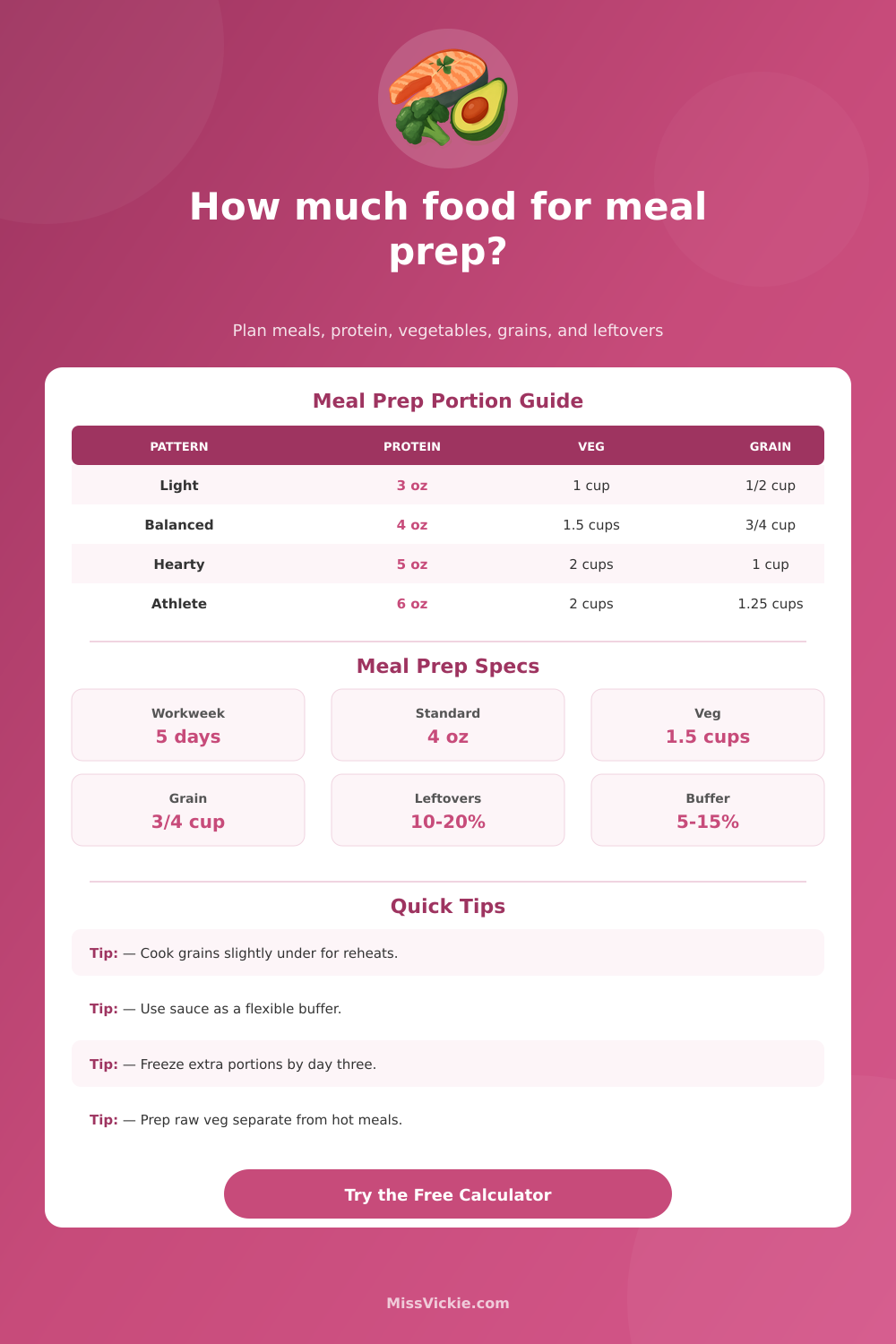
| Light lunch | 3 oz per meal | 1 to 1.25 cups | 1/2 cup | Desk lunches, soup sides, smaller appetites |
| Balanced bowl | 4 oz per meal | 1.5 cups | 3/4 cup | Most weekly lunches and dinners |
| Hearty dinner | 5 oz per meal | 1.5 to 2 cups | 1 cup | Active adults, fewer snacks, dinner prep |
| Athlete meal | 6 oz per meal | 2 cups | 1 to 1.25 cups | Training weeks and high-calorie plans |
| Family mixed | 3.5 to 4.5 oz | 1 to 1.5 cups | 1/2 to 1 cup | Mixed kid and adult plates |
| Protein | Typical Cooked Yield | Raw For 1 lb Cooked | Planning Note |
|---|---|---|---|
| Chicken breast or thighs | 72 to 78 percent | 1.3 to 1.4 lb | Trim loss and pan juices change yield quickly. |
| Lean beef or steak strips | 70 to 76 percent | 1.3 to 1.45 lb | Use higher buffer for sliced steak bowls. |
| Pork loin or pulled pork | 62 to 72 percent | 1.4 to 1.6 lb | Slow-cooked pork loses more moisture. |
| Fish fillets or shrimp | 78 to 86 percent | 1.15 to 1.3 lb | Best cooked closer to serving day. |
| Tofu, beans, or lentils | 88 to 95 percent | 1.05 to 1.15 lb | Drain well before weighing or portioning. |
| Item | Cooked Cup Weight | Dry To Cooked Yield | Best Storage Style |
|---|---|---|---|
| Rice | 5.6 oz per cup | 1 cup dry makes 3 cups cooked | Cool flat before lidding containers. |
| Quinoa | 6.5 oz per cup | 1 cup dry makes 3 cups cooked | Fluff, cool, and store slightly dry. |
| Pasta | 4.9 oz per cup | 1 cup dry makes about 2.2 cups cooked | Toss lightly with sauce or oil. |
| Roasted vegetables | 5.0 oz per cup | Raw volume often shrinks 25 percent | Store uncovered until steam drops. |
| Leafy greens | 1.2 oz per cup | Raw volume changes after dressing | Keep dressing and hot food separate. |
| Plan Length | Fridge Share | Freeze Share | Prep Buffer | Container Tip |
|---|---|---|---|---|
| 1 to 3 days | Most meals | 0 to 10 percent | 5 percent | Single containers work well. |
| 4 to 5 days | First 3 days | 15 to 30 percent | 8 to 12 percent | Freeze later meals or wet dishes. |
| 6 to 7 days | First 3 to 4 days | 30 to 50 percent | 10 to 15 percent | Separate grains, sauces, and greens. |
| 8 or more days | Rotating meals | 50 percent or more | 15 percent | Label portions by meal and date. |
A meal plan calculator involve the use of specific number and the inputs of an individual to calculate the proper amount of food that needs to be bought for the individual or individuals in the household. If an individual dont use a meal plan calculator prior to enter the kitchen to prepare food for the household, they may end up either buying too much food for the household, or they may not buy enough food to last all of the individuals in the household for the number of days that the food is to be prepared. The meal plan calculator helps to transform general ideas regarding the meals that will be prepared into specific numbers that indicates the amount of food that should be bought.
Each of the inputs that an individual requires to use the meal plan calculator relate to one of the variables in the kitchen. For instance, the days covered calculates for how many days the food that is purchased will need to last. Similarly, the number of people that will eat the meals will determine how much food will be needed to provide for each individual.
How to Use a Meal Plan Calculator
Additionally, the number of meals that will be prepared each day will indicate if the meals will contain only dinners, or if breakfast and lunch will also be prepared. Other variables that is considered include the appetite levels of the individuals in the household, the types of protein that will be used in the meals, the types of vegetables that will be used in the meals, the types of grains that will be prepared, the percentage of meals that may contain leftovers, and the prep-buffer for the meals. Additionally, the container sizes in which the meals will be prepared and the portion of the meals that will be frozen in advance are also entered into the meal plan calculator.
Each of the settings that the individual adjusts will allow the meal plan calculator to provide the total number of meals that will be prepared, the total amount of protein that will be contained in the meals, the total amount of vegetables that will be used in the meals, and the total amount of grains that will be prepared for the meals. Each of these numbers are not the goal for the meals that will be prepared, but they do provide a map of the food that will be needed. Additionally, the portion patterns for the meals will determine the specific total amount for each of these food groups.
For instance, if the meals that are prepared will be light lunches, the portions of protein, vegetables, and grains will be less than meals that are to be consumed by individuals who eat snacks between meals. Additionally, meals that are to be prepared in portions that are to be eaten by individuals at even intervals will have different amounts of protein, vegetables, and grains then meals that are prepared in portions that are to contain more protein or vegetables to increase the amount of food that is prepared but that contain the same number of calories. The storage of the prepared meals will also impact the numbers that the meal plan calculator provides.
For instance, meals that are prepared for three days will last in the refrigerator for the majority of the meals, but meals that are prepared for seven days will require a portion of the meals to be prepared for freezing so that the texture of the meals is not significantly affected by storage in the refrigerator for more than four days. Additionally, meals prepared in individual containers can be used for those that are to be transported to work, but meals prepared in larger containers will allow for meals that are reheated for entire households. Additionally, the volume of each meal that will be prepared can help to determine the types of containers in which the meals will be prepared so as to not crush the top layer of each container of food with the other containers of food.
Many individuals may make mistakes when ignoring the meal plan calculator. For instance, many individuals may calculate the portions of food for the meals only during the base portion of the meals, but they may ignore the fact that food will be lost during the prep portion of the meals. Additionally, individuals may store meals that contain grains with meals that contain sauces, which may cause the grains to become watery.
Additionally, individuals may choose to place all of the meals in the freezer on the first day that the meals are prepared, which will significantly reduce the texture of meals that contain vegetables that are to be frozen. The meal plan calculator will help individuals understand these various mistakes so that they can make appropriate decisions regarding the meals that will be prepared in the kitchen. There are a variety of events in the lives of the individuals that may prevent the meals from matching to the meal plan that was created with the meal plan calculator.
For instance, an individual may be invited to dinner, the meetings may be late, or the children may not want to eat certain vegetables. The prep buffer allows for some of the meals to be prepared in advance in case of these types of events. Additionally, the consideration of the likelihood of meals being eaten as leftovers will allow for the meals to be portioned accordingly at the beginning of the meal plan.
The meal plan calculator can be used to compare the number of meals, portions, and types of meals that are prepared within the kitchen. The meal plan calculator can be used to determine the number and portions of meals that may result if there were to be a decrease in the number of meals that are prepared each day, or if the type of protein for the meals changed from one type to another. The ability to compare meals to see the impact that various changes will have upon the meals that are prepared within the kitchen can help individuals to understand the adjustments that may need to be made over time to the meals that are prepared in the kitchen.
The meal plan calculator can help individuals to adjust their meals to the life that they live, and the meals that their life may require during the week.