
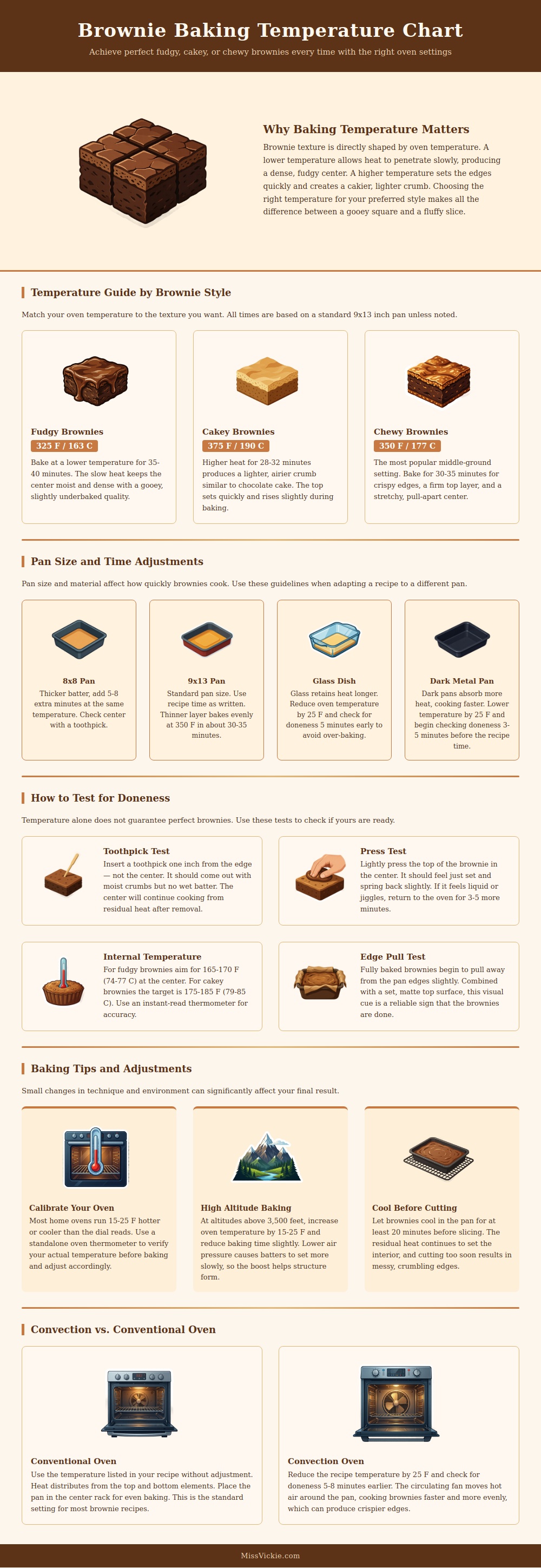
Temperature is another factor that will play a significant role in determining the textures of your brownies. The temperature will play a significant role in determining whether the brownies will turn out fudgy or cakey. If the temperature is too low, the brownies may not have time to fully cook through.
At the same time, if the temperature is too high, the brownies may cook too quickly. The chart demonstrates the different textures the brownies will take based off the oven settings. This chart will assist you in understanding the relationship between the oven temperature and the texture that the brownies will possess when you take them out of an oven.
How Oven Temperature Affects Brownie Texture
Many people chooses the temperature of 350 degrees for there brownies. This is considered a standard oven temperature for most recipes. At this temperature, many people find the texture of the brownies to be chewy.
The edges of the brownies will be crisp, while the center of the brownies will be more stretchily. For a different texture, you can use a lower oven temperature. A lower oven temperature allows the brownies to remain soft in the middle of the brownies for a longer period.
Additionally, this will allow the surface of the brownies to set. A higher oven temperature will allow the structure of the brownies to set quickly. The higher the oven temperature, the more the eggs will trap the air within.
This will create a texture for the brownies that is more cake like in texture. The size of the pan that the brownies are cooked in will also play a significant role in how the brownies cook. If you use a smaller pan, the thickness of the brownie batter will be greater.
Brownie batter that is thick will take longer for the heat to reach the center of the brownie. If you use a larger pan, the batter will be thinner, and the brownies will cook faster. The material that the pan is made out of can also play a significant role in the setting of the brownie.
For instance, brownie pans made out of glass or dark metal will absorb heat differently than those made out of light aluminum. To compensate for this difference in heat absorption, you can lower the oven temperature for brownies that is prepared in glass or dark metal pans. To test the doneness of the brownies, you can use a toothpick or press on the surface of the brownies.
Insert the toothpick into the side of the brownie. The crumbs on the toothpick should be moist, but there should be no wet batter on the toothpick. Remove the brownies from the oven slightly early.
This is because the pan will continue to cook the brownies after they are removed from the oven. Use the same strategy with the toothpick to test the brownies. Additionally, you can press on the surface of the brownies.
If the surface spring back when you press on it, the brownies are done baking. Finally, use an instant-read thermometer to measure the internal temperature of the brownies. The numbers on the thermometer will tell you the texture of the brownie.
The temperature of the oven may not always be accurate. Most home ovens dont match the settings that is displayed on the oven. To account for this, you can place a separate thermometer inside the oven to determine the accurate temperature of the oven.
If you live at a high altitude, you may have to make additional adjustments to the oven temperature. This is because at high altitudes, the air pressure within the area is lower. This will allow the brownie batter to set more slow.
To combat this, you may have to increase the oven temperature to assist the brownie’s structure in setting. Another adjustment that must be made is to convection ovens. Convection ovens use moving air to cook the food.
This cooking process will cook the brownies faster. Convection ovens can also dry the brownie batter. To combat this, you should lower the oven temperature if you use a convection oven.
Additionally, you will have to watch the clock more closely to ensure the correct cooking time for your brownies. Finally, you must allow the brownies to cool. The pan will still release heat into the brownies after the brownies are removed from the pan.
If you slice into the brownies while they are still hot, the center of the brownies will be too soft for your liking. Allow the brownies to cool to room temperature for approximately twenty minute. By following these steps, you should of be able to achieve the texture of brownies that you prepared for.