
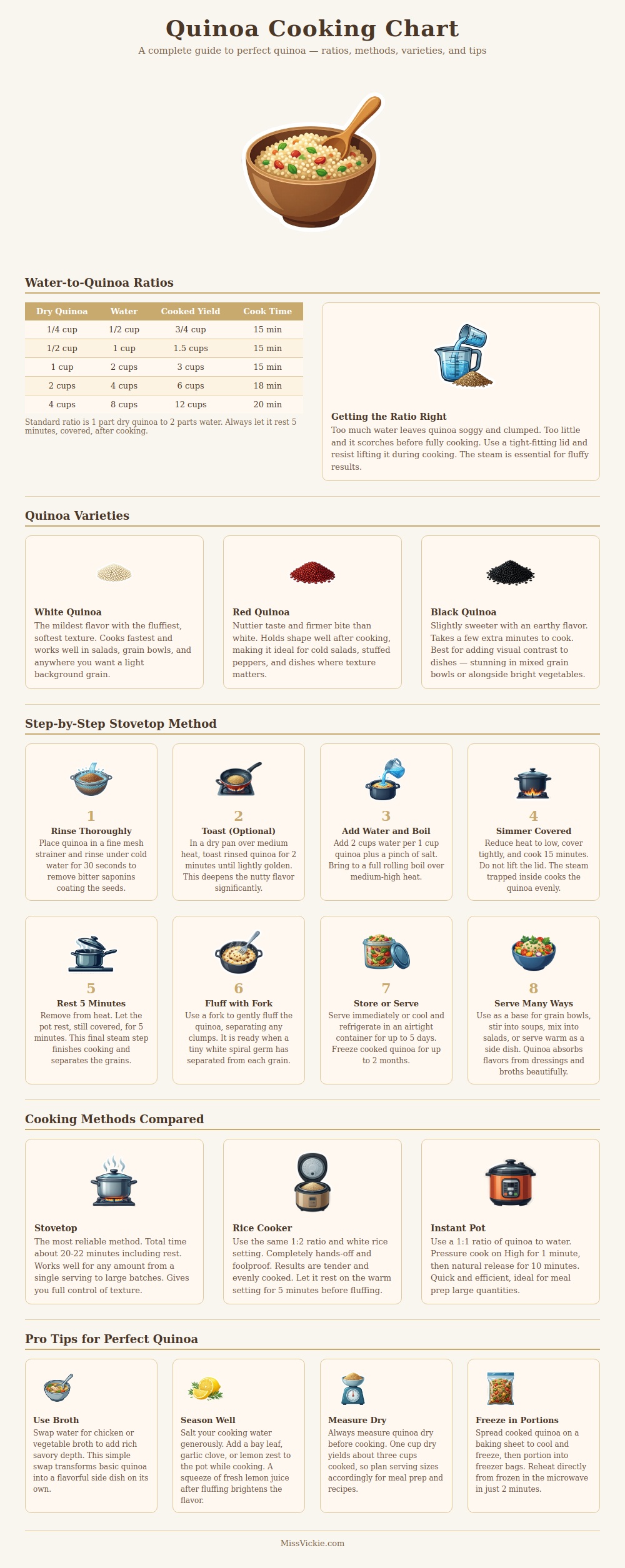
Quinoa is a grain that can be used as a food staple, and quinoa are a grain that requires specific cooking method to achieve the desired texture of the cooked quinoa. The ratio of water to the quinoa must be understood because the ratio of water to the quinoa will determine whether the quinoa will be too soft or too dry once cooked. If too many water is added to the quinoa, the quinoa will become soft and clump together.
Too little water will cause the quinoa to scorch on the bottom of the pot before the entire portion of quinoa is cooked. Specific proportions of water to be added to quinoa should be followed based off the amount of quinoa to be cooked. Furthermore, after the quinoa has been cooked, it must be covered and allowed to rest for five minute.
How to Cook Quinoa
Allowing the cooked quinoa to rest allows the steam to continue to cook the quinoa, as well as to allow the quinoa to separate from each other to avoid the quinoa sticking to each other. The different varieties of quinoa will have different textures once cooked, but the ratio of water to the quinoa will be the same, regardless of the variety of quinoa that is to be cooked. White quinoa is the fastest to cook and will provide a soft texture once cooked.
Red quinoa will contain more bite than white quinoa, making it a good choice for cold salad. Black quinoa will take more time to cook than white or red quinoa, yet has a sweeter flavor than black quinoa. Additionally, the firmer the variety of quinoa, the longer it can be stored in the refrigerator before it begin to become soggy.
In order to cook the quinoa on the stovetop, a few specific step must be followed in order to properly cook the quinoa. First, you should rinse the quinoa in order to remove the bitter-tasting natural coating that naturaly adheres to the quinoa. Second, you can toast the quinoa in a pan to add flavor to the quinoa.
Third, the amount of liquid to be used in cooking the quinoa should be added to the quinoa, followed by bringing the quinoa and liquid to a boil. Fourth, the cook should reduce the heat, and the lid should be placed onto the pot. During the cooking process, the lid should never be lifted from the pot, as the steam released from the pot is what cooks the quinoa.
Finally, once the quinoa has been cooked, you should fluff it with a fork. By fluffing the quinoa with a fork, the clumps will be broken apart, and the quinoa will be able to be properly see to ensure that the spiral germ has separated from the quinoa grains. There are several different methods for cooking quinoa.
For instance, the rice cooker will produce the same results as cooking the quinoa on the stove, as the rice cooker use the same ratio of water to quinoa as the stove. Another method includes the use of an Instant Pot, which uses a different ratio of water to the quinoa, yet reduces the amount of time required to cook the quinoa. The different methods will be used based upon the amount of attention that is to be provided to the quinoa, as well as the amount of quinoa that is to be cooked.
By changing the liquid used in which the quinoa is cooked, the flavor of the cooked quinoa can be changed. For instance, broth may be used instead of water to add flavor to the quinoa. Additionally, ingredients that contain flavor, such as bay leaf or lemon zest, may be added to the pot of quinoa while the quinoa simmers.
Furthermore, enough salt should be added to the quinoa during the simmering process to provide flavor to the quinoa. Cooked quinoa can be stored in the refrigerator for several days, as well as frozen. If quinoa is to be frozen, it should first be spread out to allow the cooked quinoa to cool, prior to placing it into bag.
Portions of cooked quinoa can be reheated without thawing the cooked quinoa that is stored in the bags. By understanding the process by which quinoa is cooked, individuals can use different cooking equipment and varieties of quinoa without making mistake during the cooking process. Youll find that its alot easier once you practice.