
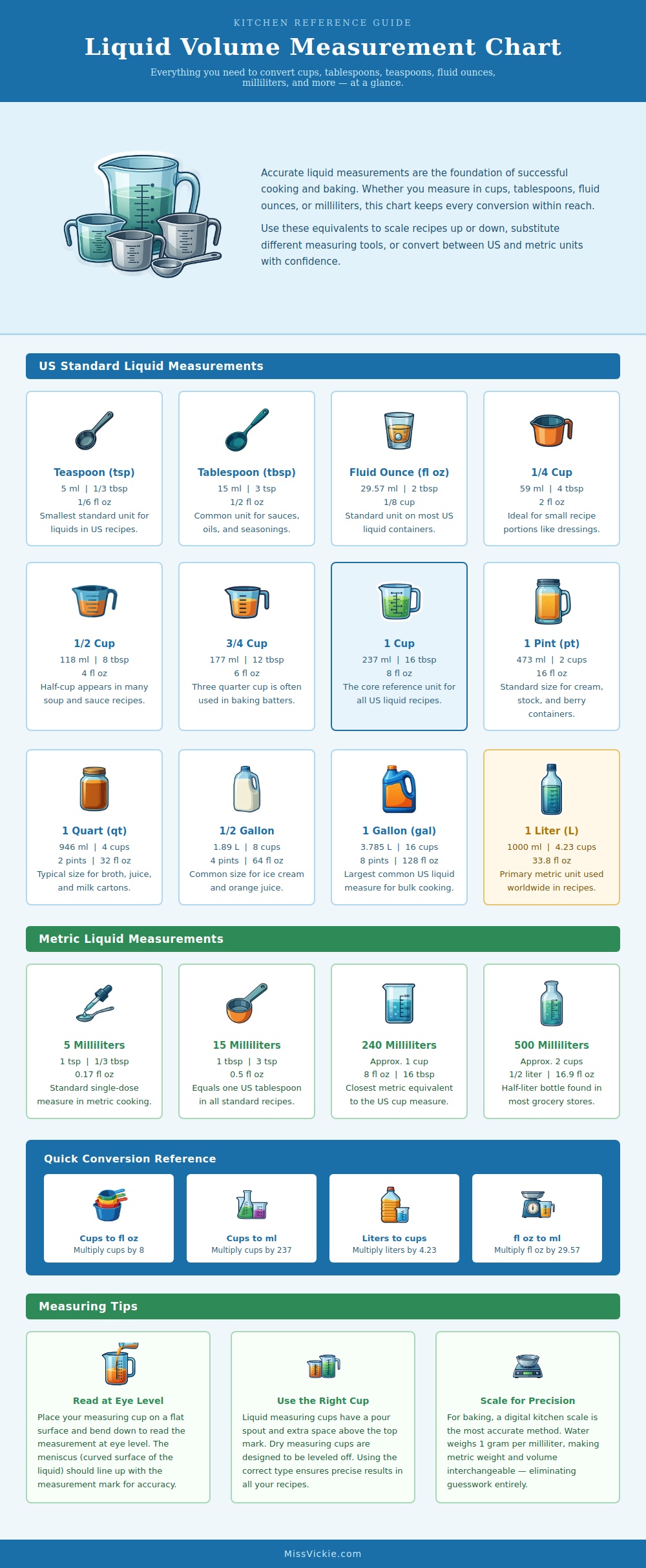
Measuring liquid in volume is a necesary skill for every cook. The volume of liquid in a recipe is essential to the final outcome of that recipe. However, there are situations in which cook dont have the appropriate tool to measure the amount of liquid that a recipe require.
For instance, a recipe may require three quarter of a cup of broth, but there is only a tablespoon available. Without an understanding of the measurements of different volume of liquids, cooks are likely to make an error with the recipe. A measurement chart will allow cooks to make a quick decision on the volume of liquids rather than having to make an educated guess.
How to Measure Liquids for Cooking
The volume of liquids is often part of the recipe for every dish. However, cooks often do not pay close attention to the volume of the liquids until they make an error with the recipe. For instance, if someone makes a cake, it may spread too thin if the volume of the liquids in the cake was measured incorrect.
Similarly, a soup may become too thin if the cook use a tablespoon of soup instead of a cup. These types of error occur because cooks often do not pay close attention to the fact that measuring tools are not all the same. However, a measurement chart can show cooks the relationship between the different units of volume for liquids.
Understanding the relationship between the different unit of volume for liquids can assist cooks in avoiding errors in the kitchen. For instance, if cooks understand the relationship between a tablespoon and a teaspoon, cooks will be less likely to reach for the wrong spoon. Furthermore, understanding the relationship between larger units of volume can create the same effect.
For instance, cooks may understand that a pint contain two cups of liquid. Such knowledge of the relationship between the units of volume for liquids can assist cooks in making larger adjustments to recipes. For instance, cooks may be able to adjust the amount of stock in a pot for a large meal.
Measuring liquids by volume is much more fast than measuring the weight of the liquids. However, because of the properties of liquids, cooks are likely to make an error when measuring the volume of the liquid. For instance, the phenomenon of a meniscus can cause errors in the measured volume of the liquids.
By knowing the volume of the liquids that a recipe requires, cooks will be able to confirm the accuracy of their measured liquids. This process of confirming the volume of the liquids will take only a second, but ensure that cooks do not ruin a sauce that they has prepared. Moddern cooks use two different units for measuring liquids.
The measurement chart account for both the metric and the standard units for measuring the volume of liquids. For instance, a cook reading a European cookbook might see 240 milliliters of broth listed as an ingredient. American cookbooks, by contrast, might list one cup of broth.
These two units of volume are similar but not the same. Cooks need to be able to convert metric units to standard units to prepare recipes from different part of the world. This type of knowledge is especially important in baking.
One of the most common mistakes cooks make is using a dry measuring tool for measuring liquids. Dry measuring cups are often used to measure dry ingredients and are flat when the ingredient is add to the cup. However, measuring cups for liquids have a spout and allow for more head space for the liquid.
Using the dry measuring cup to measure liquids can cause an error. A half cup of oil measured in a dry measuring cup might not be the same as the same amount of oil in a liquid cup. Using the correct measuring tool is necessary to prepare a recipe correctly.
Many cooks become familiar with the liquid volume units of measurements when they read the milk cartons on the dairy product. It is likely that most cooks are aware of the relationship between the volume units that are found on the cartons, such as pints and quarts. However, the relationship between those two units of measurement can become confusing for cooks when they are required to use one for another.
A measurement chart can help cooks to easily find the relationship between these two units of measurement. For instance, the chart may make clear that four cup make a quart while eight cups make a half gallon. Precision is required when measuring the volume of certain liquids.
For instance, the volume of milk in the eggs for scrambled eggs can be approximated. However, the same precision is required when measuring the amount of liquid for a custard recipe or a cake batter. If cooks are exact with the measurement of the volume of the liquids, they are likely to create the same success with their baked goods as cooks who successfully follow the recipe.
A measurement chart will give cooks a place to check the volume of the liquids they are measuring. This will allow cooks to avoid having to memorize the relationship between each unit of measurement for liquids. Using a measurement chart will change how cooks interact with recipes over time.
Eventually, volume measurements of liquids will become a natural part of the cooking process. With the tools and the chart always within reach, cooks will find that the decisions they must make regarding the volume of the liquids will take place at a faster rate. One of the main value of a measurement chart is that it makes clear the relationship between the units of volume for liquids.
This will allow cooks to avoid any friction in the cooking process.