
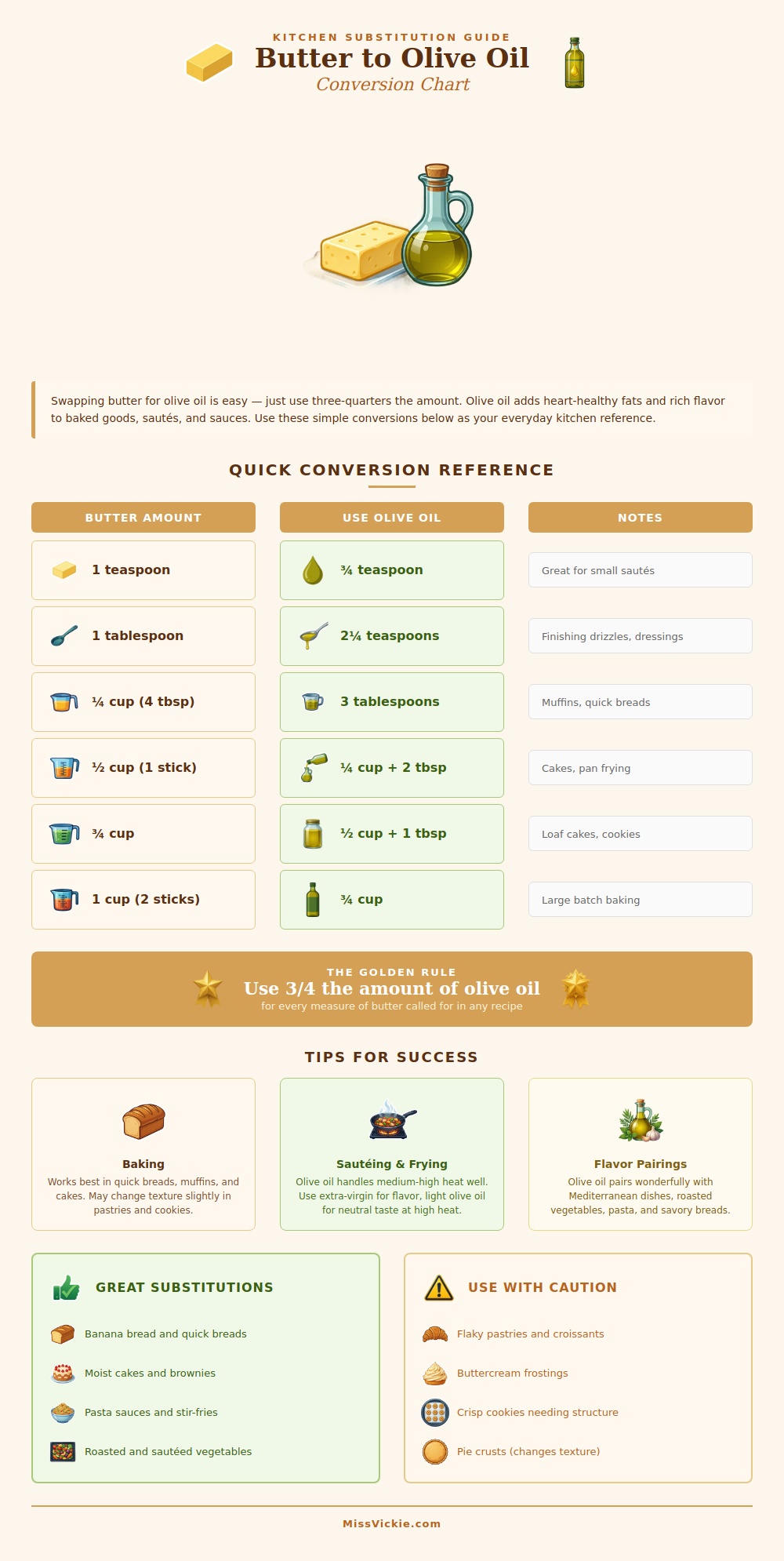
When using olive oil as a replacement for butter in a recipe, it is important to adjust the amount of olive oil that are used. Olive oil and butter isnt composed of the same ingredient; olive oil contain 100% fat while butter contains water and milk solid. The water in butter create steam while baking, which add to the tenderness of the baked good.
Because olive oil does not contain the same amount of moisture as butter, using the same amount of olive oil as butter will create denser food. To avoid this issue, use three-quarters of the amount of olive oil that the recipe call for in relation to the amount of butter that is required. Using three quarters the amount of olive oil will allow the recipe to retain the correct amount of fat and moisture for the recipe.
Using Olive Oil Instead of Butter
The flavor of the fat in the recipe will change when using olive oil in place of butter. Butter feature a sweet flavor and is used in recipes like shortbread and frostings. Olive oil has a peppery flavor and is often used in recipes like roasted vegetable and tomato sauce.
Using olive oil in a recipe that require a neutral flavor will create flavor competition between the oil and other ingredients. Therefore, cook must decide whether the flavor of the fat in the recipe should be subtle or prominent. Another consideration when replacing butter with olive oil is the heat tolerance of the two ingredient.
Olive oil can withstand more heat than butter, butter breaks down at high temperatures. The milk solid in butter can burn if exposed to high heat. If the recipe dont require a specific flavor of olive oil, refined olive oil is preferable to extra-virgin olive oil.
Many cooks make mistake when substituting olive oil for butter. One of the most common are using the same amount of olive oil as butter in a recipe. This cause issues in recipes like brownie or cookie.
Other mistake include using olive oil in pastry recipes where the crust will not flake correctly. A conversion chart can be used to avoid these mistakes. Olive oil should be treated as a different tool in the kitchen than butter.
Olive oil work well in place of butter in recipes for muffins, quick bread, and cake as it retains moisture in the food for several days. However, care should be taken in recipes that require lamination or frosting. For instance, buttercream frosting require the solid fat in butter to hold air.
The same cannot be said for olive oil. To understand how well olive oil will work in a specific recipe, cooks can prepare two batch of the same recipe; one with butter and one with olive oil. By tasting and touching the baked good, cooks will be able to recognize the differences in texture and flavor caused by the substitution of olive oil for butter.