MissVickie kitchen gravity math
Specific Gravity to Sugar Calculator
Convert a hydrometer reading into Brix, correct warm or cool samples, compare target SG or target Brix, and estimate how much sugar, honey, syrup, or juice concentrate to add.
Choose a starting point, then fine tune the batch volume, temperature, liquid type, and target sweetness.
Calculation breakdown
What the estimate means
- Temperature correction appears here.
- Brix conversion appears here.
- Sugar addition appears here.
- Kitchen handling note appears here.
This calculator estimates sugar from density and Brix formulas. Alcohol, salt, pulp, starch, pectin, dissolved minerals, and very hot samples can move hydrometer readings away from pure sucrose-water behavior, so recheck after mixing.
Hydrometer reading habits
Temperature correction cues
Sugar ingredient notes
Liquid type cautions
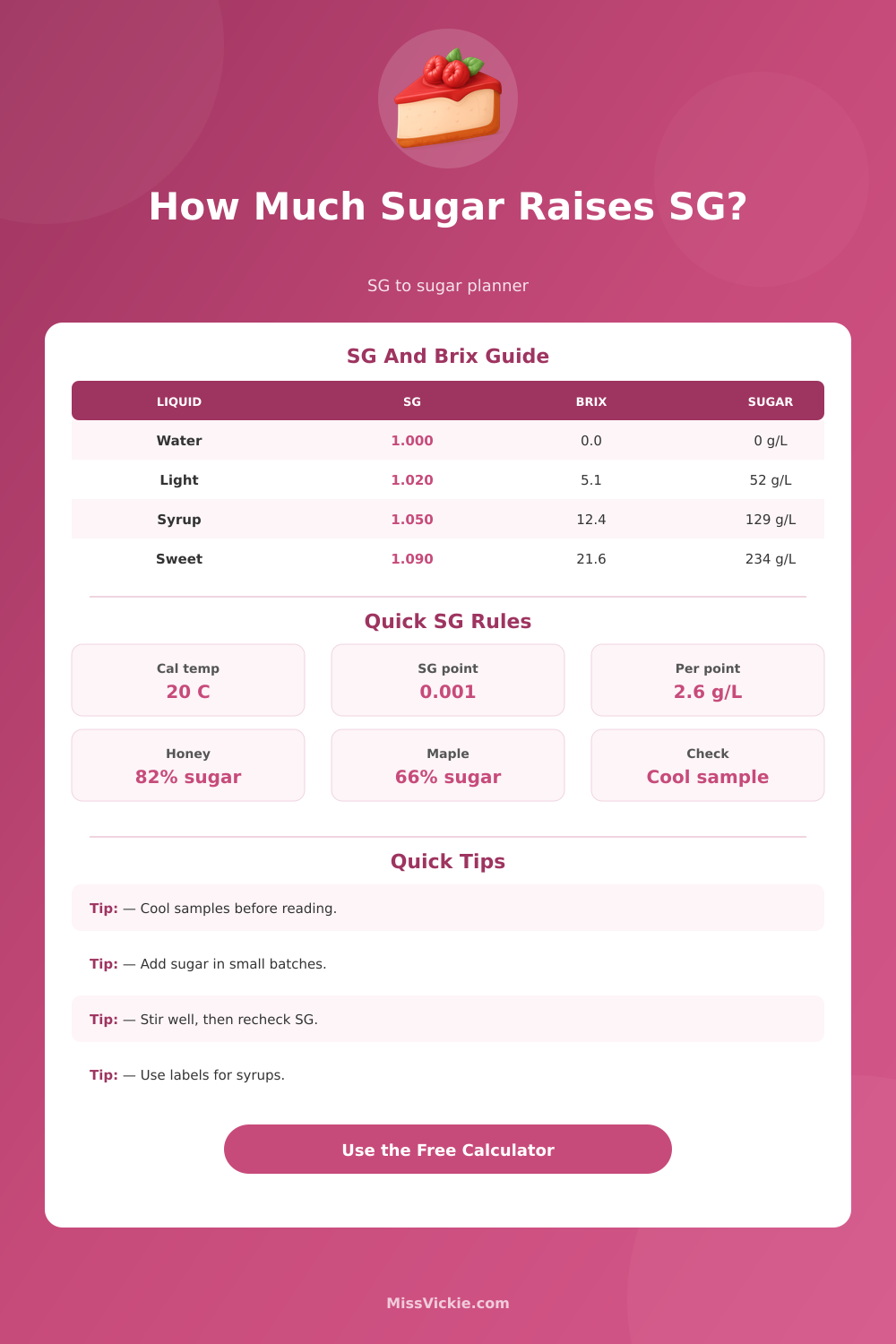
A hydrometer measure the density of a liquid. However, the density reading isnt the same as a measurement of sweetness. In order to determine the sweetness of a liquid using a hydrometer, it is first necesary to convert the density to the weight of the sugar, honey, or syrups in the liquid.
This tool allow you to determine the exact weight of the sugar needed for your recipe. Specific gravity is a measurement of density. Because specific gravity take into account the dissolved solids in a liquid, the density of a liquid will be more higher than water with dissolved solids.
How to use a hydrometer to find the sugar in a liquid
For example, a specific gravity reading of 1.040 means that the liquid is four percent denser than water. A specific gravity reading of 1.040 usually means that the liquid is ten percent sugar by weight on the Brix scale. The calculator automatically calculates these conversions using polynomial equation.
The calculator also corrects for the effect of temperature on the hydrometer reading. Warm liquid will expand and have a lower density than cold liquids. Thus, if the temperature of the liquid is higher than the calibration point of a hydrometer (20 degrees Celsius), the specific gravity reading will be lower.
The math for the calculator account for this by applying a positive correction value to the specific gravity reading for warm temperatures. For colder temperatures, a different correction is made. Specific gravity readings must be corrected for temperature to ensure the accuracy of the density and sweetness measurements.
The volume of the liquid must also be considered. For example, five liter of liquid will require less sugar than twenty liters of liquid. The calculator converts all units of measure (other than liters) to liters so that the calculated weight of the sugar will be accurate and consistant.
The type of liquid being measured will also effect the accuracy of the hydrometer. For example, liquids that contain pulp (like fruit juices) and pectin will make the hydrometer display a higher specific gravity than the sugar content of the liquid alone would cause. The same is true for liquids that contain dextrins, like malted grain product.
Finally, liquids that contain salt or protein, like brines or dairy products will also effect the accuracy of the hydrometer. In order to account for these effect, the calculator allows you to select the type of liquid being measured. This ensures that you understand that the specific gravity and density measurement is only an estimate of the true sweetness of the product being measured.
In order to determine the target specific gravity reading of your liquid, you will have to make a decision. Specific gravity is a common measurement to use because it is what a hydrometer will display. However, another common reading to use is the Brix scale, which describe the percentage of sugar in a liquid by weight.
This calculator accepts both settings, as are both scales, and the calculator automatically converts one reading to the other. The specific type of sugar that will be used will also effect the weight of that sugar that must be measured. For instance, white sugar will have a similar weight to the calculated weight of the sugar needed for the specific gravity reading.
However, if honey or maple syrup is used, an additional weight of that product must be measured to account for the water content in those liquid. In addition to the calculated amount of sugar, it is a common practice to include an allowance for the sugar that may be left in the utensils used to add the sugar to the product. This allowance is small by comparison to the total amount of sugar needed, but it ensure that the product will contain the amount of sugar calculated.
Before adding the sugar to the product, you should first determine the procedure for adding the sugar. If the product is expensive or contains pulp (like fruit), then you should only add ninety percent of the calculated weight of the sugar to the product. This will allow the remaining five percent of the sugar to be measured and added later after the bubbles created when the sugar was added have had time to dissipate.
The calculator allows you to enter the total weight of the sugar to be added. This number can then be used to determine how much sugar should be added at one time. There are a few common mistake that can be made when measuring the specific gravity of a product.
For example, the specific gravity reading of a product will not be accurate if the hydrometer is still spinning when the specific gravity is taken. In addition, if the hydrometer touches the side of the container in which the product is contained, it may introduce an error into the specific gravity reading. Finally, it is not recommended to take specific gravity readings of liquids that are hot to the touch, and it is not recommended to add sugar to a large volume of liquid without first dissolving the sugar in that liquid.
In order to achieve repeatability in your cooking, it is essential to keep accurate records of each batch of products that you prepare. You can record any information about the specific gravity reading of the product, the temperature of the product, the weight of the sugar that was added, and how long the product was stored. By keeping track of these products, you will be able to replicate these recipes in your future recipes.
Using this calculator will help you to recognize any trend in the products that you cook and to develop a thorough understanding of the effect that different ingredients and volume can have on the outcome of your products. A hydrometer measures the density of a liquid. However, the calculator allows you to convert that measurement into the weight of the sugar in the product.
This allows you to use the weight of the sugar rather than the specific gravity of the product as an initial estimate of the amount of sugar that should be added to your product. You can refine this initial estimate by adding the sugar to the product and tasting to determine whether more sugar should be added to reach your goal.