Brix to Sugar Calculator
Convert a refractometer or hydrometer Brix reading into sugar weight, correct warm or cool samples, estimate batch size by weight or volume, and see how much sugar, water, or evaporation is needed to hit a target Brix.
Presets fill in common fruit, juice, syrup, and preserve targets. You can change every field after choosing one.
Your batch sugar adjustment
Corrected Brix, sugar weight, and target adjustment will appear here.
Calculation breakdown
Adjustment guide
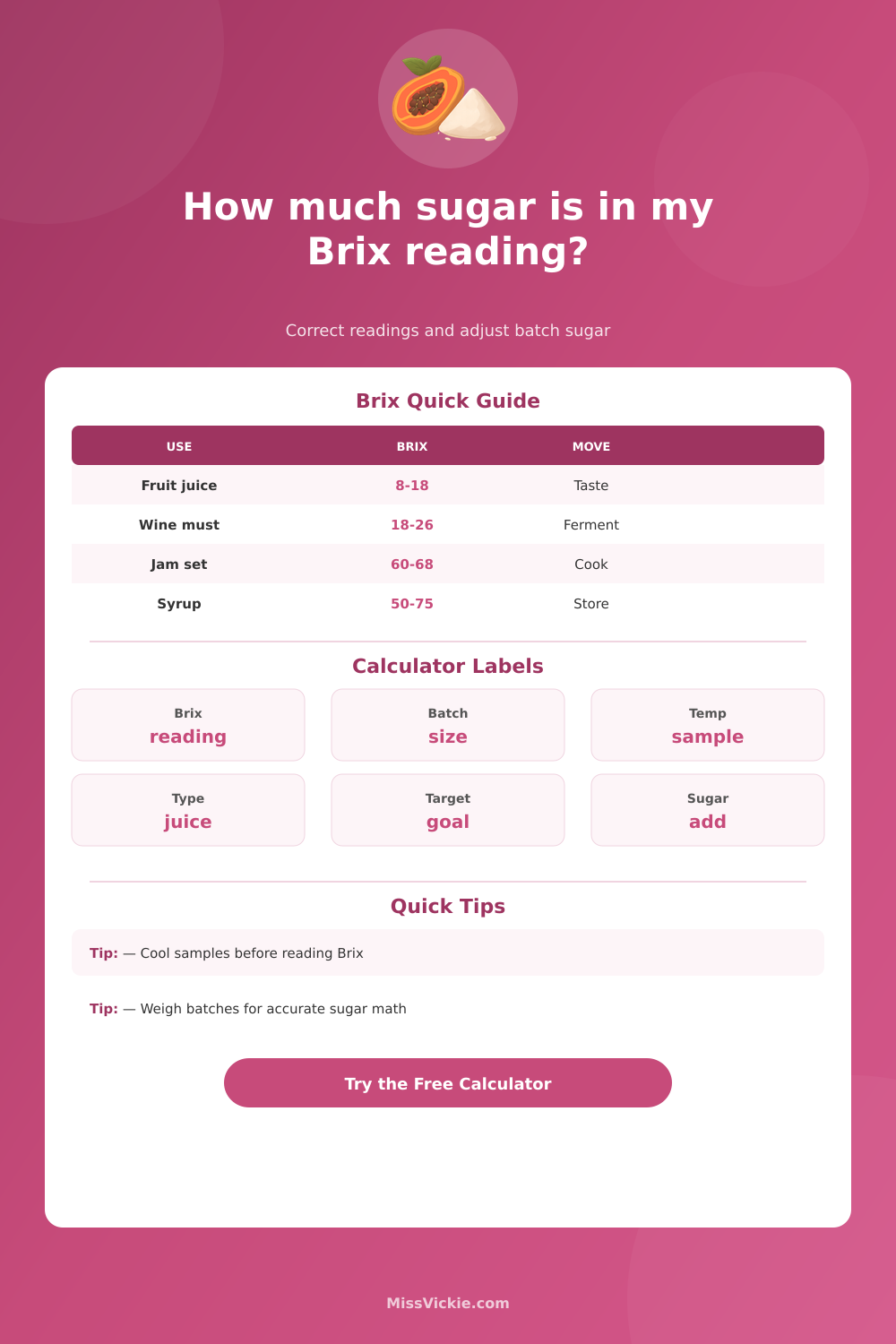
These one-column cards compare common Brix ranges without using a wide reference table.
Kitchen note: Brix is an excellent sugar estimate, but fruit acid, minerals, alcohol, suspended solids, and pectin can shift the reading. Use the calculator as a batch planning tool and verify with your own instrument.
Brix is the measurement of a percentage of sugar that is dissolved in a liquid. A person might use this if they is making wine, jam, or syrup. The Brix measurement will show how much sugar are alredy in the liquid, thus allowing the person to determine how much sugar to add.
The Brix measurement is of the sugar concentration in the liquid at a specific time, but it dont account for the changes that may occur during the cooking or fermentation of the batch of liquid. One factor that may affect the Brix reading is the temperature of the batch. Most Brix instrument are calibrated to twenty degrees Celsius.
Using Brix to Measure Sugar in Juice, Wine, and Jam
If the batch is warmer than this temperature, the sugar concentration may be measured inaccurately. You must provide the temperature of the batch to the calculator to adjust the Brix reading to account for the warmer temperature. The calculator make this adjustment so that the Brix reading is accurate even with hot samples.
Another factor that may influence the use of Brix is batch size. Small batches of juice will have different amount of sugar then large batches of must. The calculator will convert the batch size to weight.
Volumes may be difficult to use for sugar measurements because adding sugar will increase the density of the liquid. In order to avoid this error, it is best to weigh fruit base off. The type of fruit that is used may also influence the Brix reading.
Clear juices will have a Brix reading that follow the standard model. Juices that contain pulp or fibrous material may interfere with the Brix reading. The pulp will scatter the light that passes through the liquid.
Use the solids factor field on the calculator to adjust for this factor. Must used to make wine will eventually contain alcohol. The calculator cannot determine how much alcohol will be present in the batch.
However, the calculator will remind the user that the Brix reading should be taken prior to the presence of alcohol in the batch. A Brix reading can help individuals decide what steps to take with the batch. For instance, they can use the Brix reading to determine if they will need to add sugar, water, or use evaporation to reach the desired Brix level.
Adding sugar will raise the Brix level of the batch. The calculator can help determine the amount of dry sugar that must be added. Adding water or juice will lower the Brix level.
Evaporation is another method that can be used to raise the Brix level by removing some of the liquid from the batch. Each method will change the weight of the batch. The calculator will help the user determine the estimated final weight of the batch.
Using the reference ranges for Brix measurements, individuals can ensure that the Brix reading is within the normal range of that type of batch. For instance, light drinks will contain a Brix reading between the lower teens, while wine batches will have a reading between the low twenties. Jam and syrup will have Brix reading above sixty.
While these ranges are not exact, they can help individuals to see if the Brix reading is within the expected range for the batch. If the Brix reading is outside of these ranges, then the batch should be checked for its temperature or if it was mixed well prior to taking the Brix reading. There are many variable in the batch that may differ from the model of Brix.
Acid, pectin, and minerals can all play a role in the Brix reading. Honey contains a range of different sugars and water, so the sugar purity in honey will be an estimate. Sugar does not dissolve immediately in liquid; it take time.
Additionally, batches that are cooked will need to cool before the Brix reading is taken. A second Brix reading should be taken once the sugar has dissolved or the batch has cooled. Taking a second reading will allow individuals to make decisions based on the correct Brix reading.
Small error in the Brix reading will have a greater impact on the total batch size. Small errors in the amount of sugar for a batch of jam may not have a significant impact on the end product. However, small errors in the sugar content for commercial batches will have an impact on the total cost of producing the jam.
Additionally, small errors in the Brix reading will impact the texture of the jam. The Brix calculator accounts for these small factors. Brix calculators allow the user to take a Brix reading, interpret the result, and use the information to make plans for the batch.