MissVickie kitchen calculator
Vegetable Oil to Butter Conversion Calculator
Turn a vegetable-oil recipe into a butter version with fat equivalence, butter water, recipe type, liquid reduction, salt correction, chilling time, and spread-risk guidance.
Presets fill the calculator with common oil-to-butter swaps. Use them as a starting point, then adjust the oil amount, butter style, recipe type, salt, added water, and chilling plan.
Calculation breakdown
Texture readout
Run the calculator to see butter amount, liquid reduction, salt, chill time, and spread guidance.
Total vegetable oil after recipe scaling.
Vegetable oil is treated as all fat for kitchen math.
Fat delivered by the calculated butter amount.
Water introduced by butter that may need liquid reduction.
Regular unsalted butter
Salted butter
European-style butter
Clarified butter or ghee
Melt, cool, then mix
For recipes written around vegetable oil, melted and cooled butter usually keeps the method closest to the original. Hot butter can cook eggs, loosen dough, or increase spread.
Reduce liquid in stages
Use the calculator's liquid reduction as a target, but hold back part of the liquid first. Flour brand, cocoa, fruit, eggs, and sugar can change how much butter water the recipe can absorb.
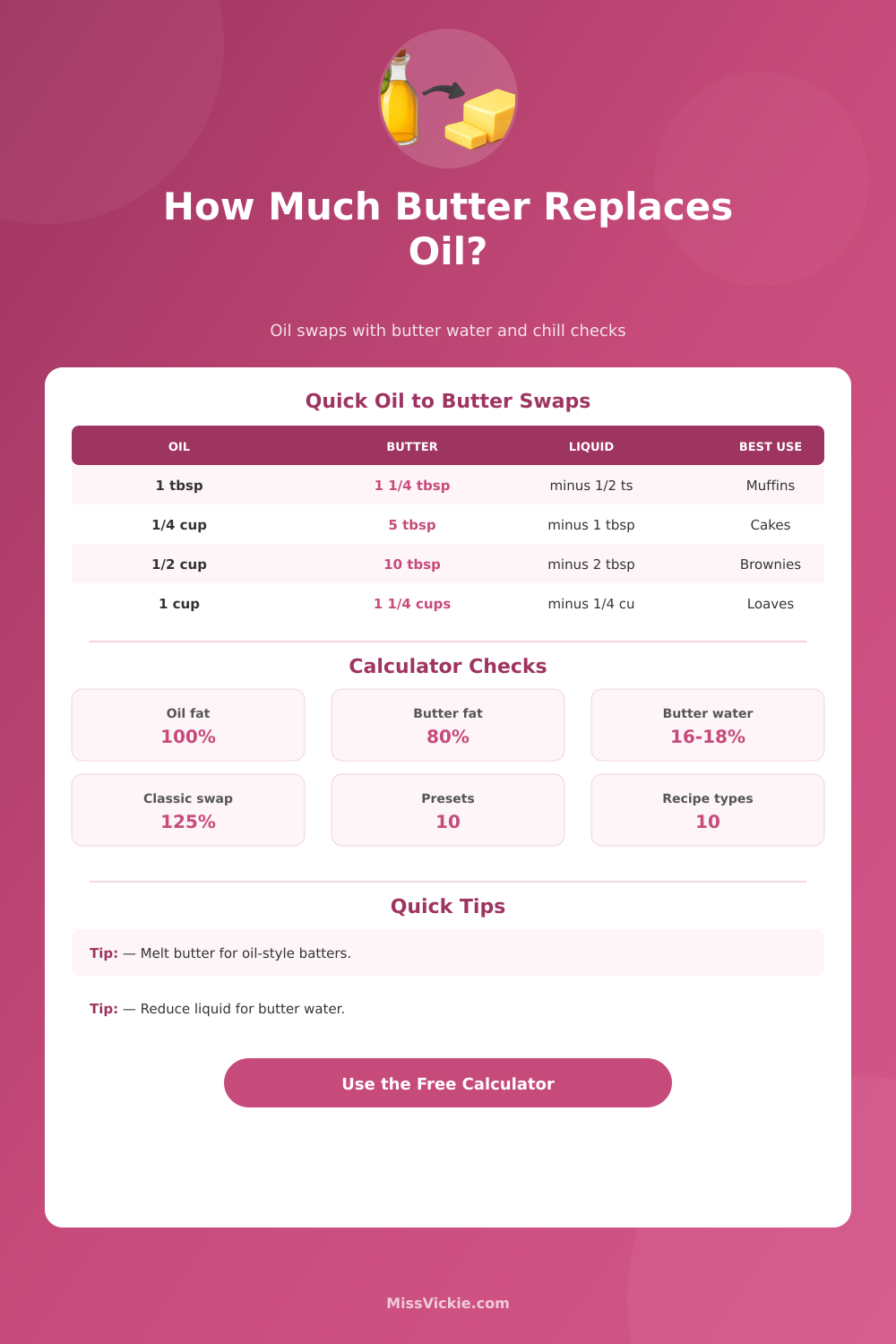
This vegetable oil to butter conversion calculator treats the swap as more than a simple volume change. Vegetable oil is essentially all fat, while butter is a mixture of fat, water, milk solids, and sometimes salt. That is why 1 cup oil often needs about 1 1/4 cups regular butter to deliver similar fat.
Use the butter amount as the primary replacement, then check whether the recipe has enough other liquid to reduce. Baked batters may need liquid adjustment, while roasting and sauteing often need heat guidance more than water math. The chill and spread readout is especially useful for cookies, bars, cornbread, and any recipe where warm butter can change shape.
When you replace vegetable oils with butter in a recipe, you need to understand that vegetable oil and butter are not the same. Vegetable oil contain pure fat, but butter contains fat, water, and milk solids. Because of the presence of water and milk solids in butter, using butter instead of vegetable oil will change the texture of the foods.
The calculator on this page will help you to find the amount of butter that will replace vegetable oil so that you dont have to guess at the correct amounts of butter to use. The first thing that you will have to decide when you use this calculator is the amount of fat that you want in your recipe. Some recipes calls for the same amount of fat as the original recipe that used vegetable oil.
How to Use Butter Instead of Vegetable Oil
In other instances, people want either a richer flavor or a light result. The amount of fat in butter can change depending on the type of butter that is use. For instance, European style butter contains more fat than standard butter sticks.
Furthermore, clarified butter contains almost no water. Hence, your goal for the fat content of the recipe will impact the amount of liquid that you will have to remove from your recipe. The type of recipe that you are making will also affect the amount of butter that you use.
Some recipes, like muffins and quick breads, can handle less liquid than other recipes. Baking brownies and bar cookies requires more liquid in the batter, however. The recipe category that you select will allow the calculator to determine the amount of liquid that the butter should remove from your recipe.
The calculator will also place a cap on the amount of liquid that the butter will remove. This will prevent you from removing too much liquid from your recipe. Another factor that will impact the amount of butter that you need is the form that you will use the butter in your recipe.
Butter that is melted and cooled will behave similar to vegetable oil when you use it in your recipe. Cold cubes of butter will create pockets of fat in your recipe that will alter the texture of the finished food. Furthermore, recipes that use browning butter will differ from recipes that use regular butter since browning butter will lose some of its water content and will have a toasted flavor.
The type of butter that you use will be reflected in the risk score that is displayed from this calculator since the risk score determine how likely your cookies are to flatten on the baking sheet. Another ingredient that you should consider before using butter in place of vegetable oil in your recipe is the amount of salt that is contained in the butter. Recipes that use vegetable oil do not contain salt.
However, salted butter contains 1/4 of a teaspoon of salt per stick of butter. Using salted butter in a recipe that also contains salt will give the final product a taste that is to salty. The calculator will note this variable so that you can decide whether to reduce the amount of salt in your recipe.
Another step that will need to be taken in your recipe is to chill your dough. Butter solidifies at room temperature. Warm butter spread faster than vegetable oil.
The type of recipe that you are preparing, the form of the butter that you are using, and the length of time that you would like to chill your dough will be accounted for by the calculator. A high risk score by the calculator will suggest that you allow your dough to rest for a longer period of time to allow the butter to solidify. This will ensure that your cookies will not become puddles and bar cookies will not slump at the edges of the cookies.
One area in which people tend to make mistakes in the replacement of vegetable oil with butter is in the step of removing liquid from the recipe. Using butter will require the removal of some of the liquid from your recipe. However, removing too much liquid from your recipe will create a crumb in your recipe that is too tight.
The amount of liquid in your recipe, the amount of water that will remain after using butter, and how much liquid you should remove will be displayed for your review. This will let you decide whether to add more milk to your recipe to replace the amount of water that using butter in your recipe will lose. The environment in which you are cooking and the quality of the ingredients can impact the interaction between butter and water in your recipe.
For instance, the protein content of the flour that you use can impact how much water your recipe’s batter will absorb. Furthermore, if your chocolate contains a high percentage of cocoa, it will absorb more water than chocolate with a lower percentage of cocoa. If you are cooking in a humid kitchen, the dough will be more soft.
In a dry kitchen, the dough may be firmer. These variables mean that the amount of time that the calculator recommends that you chill your dough is only a starting point for the chilling period. High heat applications to your food will require a different type of butter from the type that is use at room temperature.
Butter contains milk solids that will burn if you apply high heat to butter while cooking. For this reason, clarified butter or ghee is used when roasting or sautéing food. If you select the type of recipe that uses roasting or sautéing in the category for your recipe, the calculator will suggest the use of clarified butter or ghee.
Clarified butter and ghee contain almost no water like vegetable oil does. One of the most common mistakes that people make when using butter in place of vegetable oil is to ignore the water content in butter. One cup of vegetable oil will not be replaced by one cup of butter due to the water content of butter.
Using butter instead of vegetable oil will require adjustments to the amount of water in your recipe so that the texture of your recipe is maintained. Another common mistake is to skip the step of chilling the dough when making cookies with butter. The dough must be chilled to allow the butter to solidify.
Another reason to use butter instead of vegetable oil is to enhance the flavor of the food that is prepared. Butter contains dairy that enhances the flavor of chocolate, nuts, and cornbread. If you understand each of the variables in the recipe and how each variable can impact your recipe, the calculator will assist you in your replacement of vegetable oil with butter.
You will have to make the final decision about the texture of the food that you are preparing, but the calculator will ensure that the math are accurate.