Flour Protein Calculator
Blend flours by percentage, estimate current protein, adjust up with vital wheat gluten, adjust down with cornstarch, and see how the change affects water for bread, pizza, pastry, cake, and enriched dough.
Pick a starting point, then edit the protein percentages from your flour labels when you have them.
Your Flour Adjustment
Results keep the final flour batch mass fixed, so gluten or starch replaces part of the base blend rather than simply increasing the recipe size.
Cake Flour
Lowest gluten potential, softest crumb, and best for delicate cakes. It is usually lowered with starch rather than strengthened with gluten.
Pastry Flour
A gentle middle ground for biscuits, pie dough, scones, muffins, and cookies that should be tender but not fragile.
All-Purpose Flour
The practical baseline. Its protein varies by brand, so label protein is more useful than the name on the bag.
Bread Flour
Higher protein and stronger gluten development for yeast breads, pizza, rolls, and formulas that need chew or height.
Whole Wheat Flour
Often high in protein, but bran can cut gluten strands. It may need more water and time even when the protein number looks strong.
Rye Flour
Protein percentage does not translate to wheat-like gluten strength. Pair rye with wheat flour when you need elasticity.
Vital Wheat Gluten
A concentrated wheat protein booster. Use small calculated amounts because it can toughen dough when overused.
Cornstarch
A low-protein diluter that lowers blend protein and interrupts gluten formation for softer bakes.
Durum and Semolina
Can be high in protein but behave differently from bread flour. Use protein math, then judge texture by dough feel.
This comparison grid avoids broad table layouts so the reference stays readable on mobile and narrow recipe pages.
Flour proteins is one of the central factor to consider in the baking world. Flour protein determine the texture of the baked good you will create. All-purpose flour might work in the recipe, but it might result in bread that spreads on the baking surface or cakes that is too tight to slice.
This is likely due to the fact that the amount of flour protein contained within the bowl of flour dont meet the protein requirements of the recipe. Flour protein will dictate the amount of gluten that form once you add water to the flour and mix the two ingredient together. The percentage of protein contained within the flour will determine the amount of gluten that form.
How to Adjust Flour Protein for Baking
Flours with a higher percentage of protein will contain more stretch within the dough, making it ideal for recipes like bread and pizza. Flours with a lower percentage of protein will create a more gentler structure within the bake, making them suitable for cakes and pastries. However, two flours can contain the same percentage of protein but have slightly different properties due to the type of wheat from which the flour was milled.
Using a calculator to determine the protein content that you require will be more accurate than relying on the name of the flour on the bag. When blanding flours, the percentages of each flour do not have to add up to a hundred percent. The math within the calculator will provide for the proper amount of each flour when the percentages does not amount to a hundred percent.
Use the calculator to find the protein content of your blend of flours. Based off the protein content of your blend, you can make an adjustment to the flour blend. For example, if the protein content of the blend is below the target, you can add vital wheat gluten to the flour blend.
If the protein content of the blend is too high, you can add cornstarch to the flour blend. Because flour is the essential ingredient for recipes and the total mass cannot change, adding vital wheat gluten or cornstarch will not alter the total amount of flour for the recipe. Vital wheat gluten contains approximately seventy-five percent protein.
Therefore, adding vital gluten to a flour blend will increase its protein percentage. Vital wheat gluten can help if using all-purpose flour to create a recipe that requires bread flour. However, using too much vital wheat gluten will create dough that is too tight and potential rubbery.
Cornstarch will work to create the opposite of vital wheat gluten. Cornstarch can be used to create cake flour substitute. However, using too much cornstarch will weaken the structure of the bake and prevent it from browning proper.
Another factor to consider when adjusting the protein percentage of a flour blend is the hydration of the flour. Using vital wheat gluten will make the hydration of the flour blend feel dryter. Using cornstarch will also make the flour feel less elastic due to the softening of the flour.
Both adjustments can be made via the protein percentage calculator, but you will make the final decision when you begin to mix the ingredient. Reserving some of the water for later in the recipe will give you more control over the hydration of the flour blend. Choosing the target protein percentage for your flour blend will determine the style of the bake that will be created.
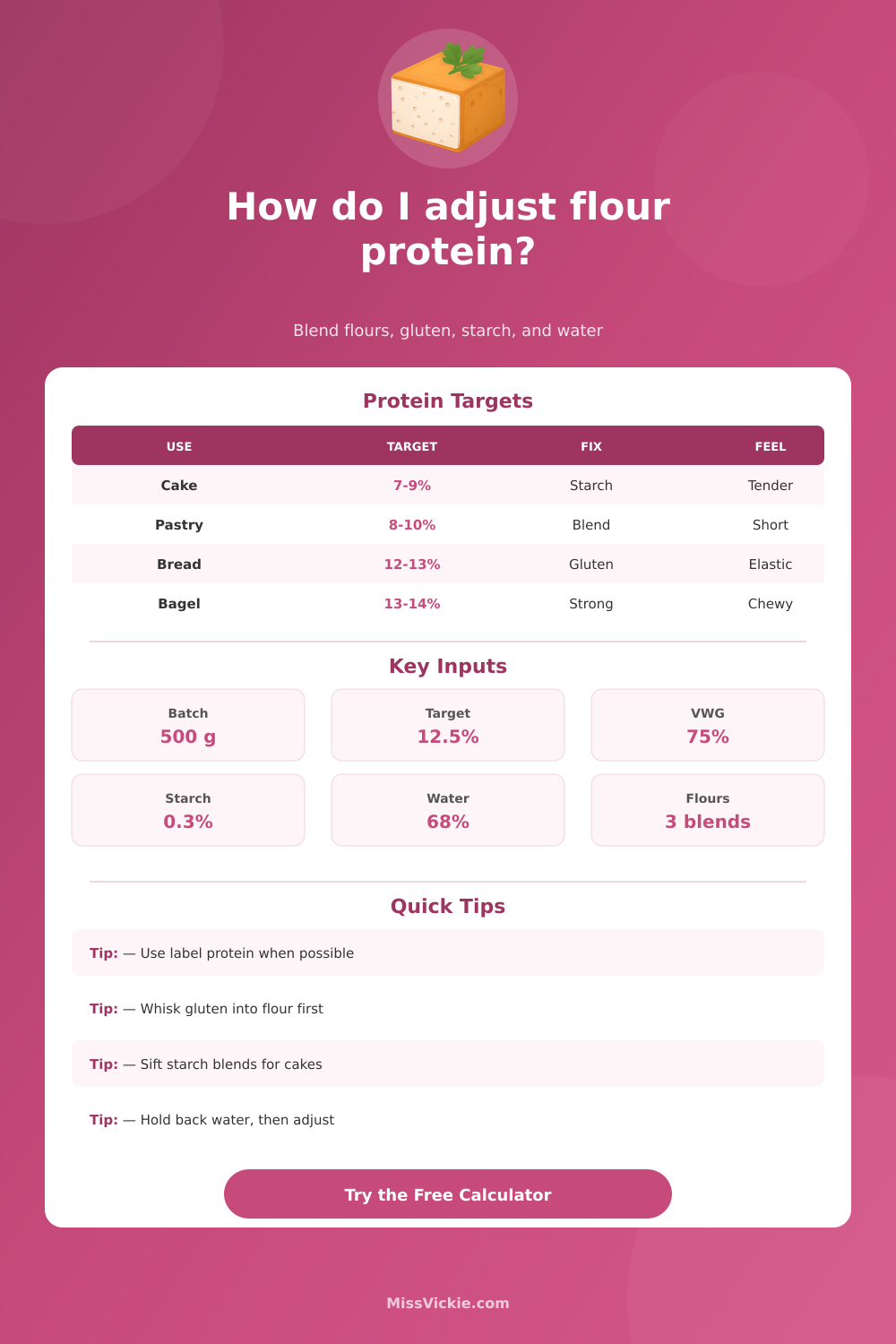
For example, tender cakes will have a lower percentage of protein in the flour blend. Pastries will have a slightly higher percentage of protein than cakes but will not require as much protein as bread or pizza. All-purpose flour will have a medium percentage of protein.
However, bread and pizza will require a higher percentage of protein to provide the dough with the strength required to create these baked goods. Bagels and crusty breads will have the highest percentage of protein in the flour blend. However, these percentages are only a starting point to create your bake.
Using whole wheat flour and rye flour will add another level of complexity to your bake. The percentage of protein for both of these flours will be high. However, the bran within the whole wheat flour will physically cut the gluten strand within the flour blend.
Rye flour will not create the same elastic network as the flour that contains the protein necessary to create such structure. The protein percentage calculator can assist in creating a target protein percentage with whole wheat and rye flour. However, you may find that these flours require additional water and more gentle handling than the protein percentage suggest.
To adjust the flour protein percentage of your baked goods, you first must weigh out the total amount of flour that the recipe require. Next, enter the protein percentages of the flours into the calculator. Once you have entered the protein percentages, select the target protein percentage for your bake.
The calculator will tell you the amount of vital wheat gluten or cornstarch to add to reach the target protein percentage. Weigh out the amount of vital wheat gluten or cornstarch indicated by the calculator. Mix the ingredients well together.
Finally, begin the recipe. If you are creating dough, set aside some of the water until you have hydrated your flour blend. Using the protein percentage calculator for your baked goods will eventually allow you to troubleshoot your baking world.
For instance, you might remember that the sandwich loaf recipe that you make require you to add vital wheat gluten to the all-purpose flour to create the proper protein percentage. Additionally, you might find that your cake recipe is more reliable when you use a measured amount of cornstarch to soften the flour blend. Therefore, the protein percentage calculator will allow you to easily repeat these successful recipe.
The calculator is a tool that allows you to adjust the protein percentage of your flour blend on paper so that you can begin the recipe with confidence and without guessing at the amount of any ingredient.