🦌 MissVickie venison roast math
Venison Roast Cooking Temperature Calculator
Dial in cut-based internal targets, lean-game overcook risk, sear-then-roast timing, and the rest-loss offset that makes venison feel forgiving instead of fragile.
Each preset loads a real venison roast scenario with a cut, finish goal, heat path, and protective handling style so the calculator starts close to the meat you actually have.
Use the cut, finish goal, path, and protection together. Venison is lean, so the calculator keeps a separate eye on carryover, rest-loss, and the chance that a big sear pushes you past the sweet spot.
These four summaries keep the lean-game picture simple: quick roast cuts want delicate handling, while shoulder, neck, and shank reward patience and moisture.
Fast, rosy, and best with a light sear or reverse sear.
A little more body and a slightly longer rest before slicing.
Tougher game cuts that want braise-level tenderness.
Deep collagen payoff when you cook until it softens.
Use the tables below to compare cut targets, heat paths, risk factors, and roast size planning in one glance.
| Cut | Target | Pull | Best fit |
|---|---|---|---|
| Backstrap | 120-126F | 114-122F | Reverse sear |
| Loin roast | 120-128F | 115-124F | Oven only |
| Hind leg | 125-132F | 118-126F | Sear then roast |
| Sirloin tip | 128-134F | 121-129F | Reverse sear |
| Path | Carry | Time | Risk note |
|---|---|---|---|
| Oven only | Low | Steady | Easiest to watch |
| Sear then roast | Higher | Faster | Crust can overshoot |
| Reverse sear | Lower | Longer | Best for pink centers |
| Braise | Gentle | Longest | Tenderness beats pink |
| Risk factor | Lean cut | Effect | What helps |
|---|---|---|---|
| High oven heat | Very high | Dry edges | Lower the set temp |
| Hot sear | High | Rapid rise | Shorter sear, more rest |
| Long bench delay | Medium | Temp fade | Slice sooner |
| Thin roast | High | Fast overshoot | Watch the probe |
| Weight | Depth | Time cue | Note |
|---|---|---|---|
| 2-3 lb | 1.5-2.0 in | Quick | Backstrap territory |
| 3-5 lb | 2.0-3.0 in | Middle | Leg and sirloin tip |
| 5-7 lb | 3.0-4.0 in | Slow | Shoulder and neck |
| 7 lb+ | 4.0 in+ | Very slow | Needs a long, calm cook |
Think in cut bands first, then subtract the carryover that your path and protection add back.
Use the serve temp when timing plates, because venison can lose a little more than beef after the rest.
Venison is lean and dont contain the same amounts of internal fat as beef does. Because venison does not contain as much internal fat as beef, it is more sensitive to heat. If you cooks venison for too long or at too highly of a temperature, the protein in the meat will contract and the meat will become dry and tough.
However, venison will continue to cook after being removed from the heat source due to carryover cooking. Carryover cooking occurs when the heat from the outer areas of the venison continues to travel toward the center of the venison. During this time, the internal temperature of the venison will continue to rise while the venison rests.
How to Cook Venison So It Stays Juicy
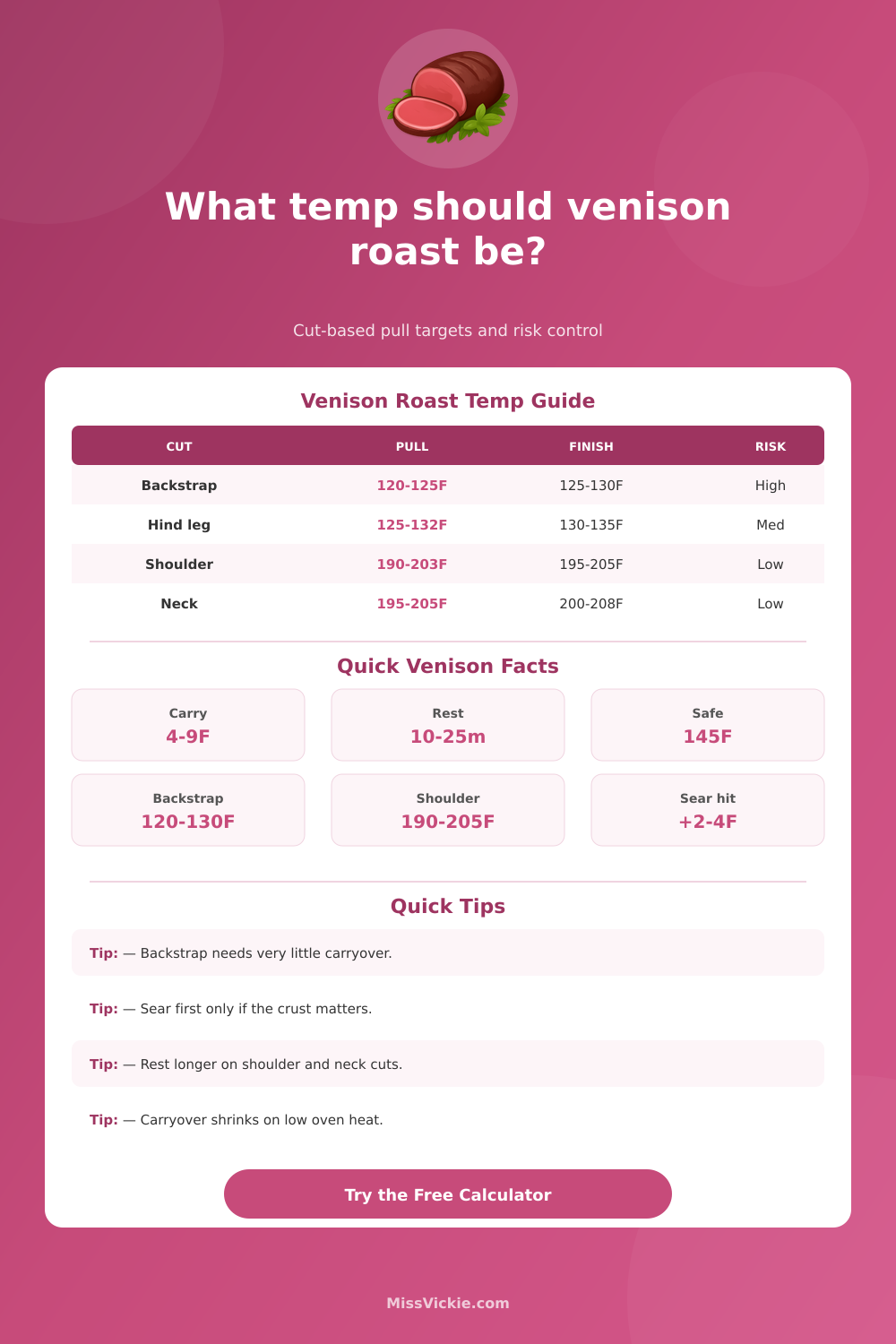
Therefore, if the venison is allowed to reach the target internal temperature, the carryover cooking will cause the venison to cook past the target temperature. To avoid this, the cook should remove the venison from the heat source before it reach the target internal temperature. The amount of carryover cooking that will occur is not a constant number and can vary depending on the cooking method that is used.
For instance, roasting the venison at a low temperature will result in a different carryover cooking rate then if the venison is roasted at high heat. High heat results in a large difference in temperature between the outside of the venison and the inside of the venison which results in more carryover cooking. A reverse-sear roasting method of cooking first slow roasting the venison and then searing the venison at the end is a safer cooking method for lean cut of venison like venison because the slow cooking method will result in a more gradual rise in the internal temperature of the venison.
A sear-then-roast method will result in more carryover cooking than a roast-then-sear method since the initial searing of the venison will increase the amount of carryover cooking. Different cuts of venison will require different cooking temperatures due to the different amounts of connective tissue that is in each cut. For instance, cuts like backstraps or loins are the leanness cuts and contain very little fat therefore they should be cooked to a lower temperature so that the meat remain pink.
However, cuts like shoulder, neck or shank roasts contain high amounts of connective tissue which requires higher cooking temperatures to break down the connective tissue which will enable the meat to become tender when cooked. If the shoulder roast is cooked to a low internal temperature, the roast will be tough due to the connective tissue not breaking down enough during cooking. Another factor to consider is how to insulate the venison.
If the venison is roasted without insulation, the venison will be exposed to dry air which will lead to the venison losing moisture. If an oil rub is used on the venison or if you wraps the venison in bacon prior to roasting the venison, the meat will be insulated which will reduce the amount of heat that is transferred to the venison. This will allow more control over the venison and more time to monitor the internal temperature of the venison while it is roasting.
Additionally, another factor to consider is the resting period of the venison. If the venison is sliced, the internal temperature of the venison will drop. Therefore, it is necessary to find a balance between allowing the venison to cook to the target internal temperature due to carryover cooking and allowing the venison to rest without dropping the internal temperature of the venison too low.
Finally, you can use reference tables to determine the different risk categories associated with each cut of venison. For instance, a thin roast will pose a higher risk of cooking past the target internal temperature than a thick, bone-in roast. This is due to the fact that a roast that contains bone will have more thermal mass than a thin cut of venison which will allow the bone-in roast to retain more heat and cook to a higher internal temperature than the thinner cut of venison.
Considering the weight, thickness and different cooking methods for venison will allow for better management of the energy in the venison. By managing the energy in the venison the internal temperature can be more better controlled to ensure it doesnt become overcooked.