🌾 MissVickie bulgur ratio
Bulgur to Water Ratio Converter
Compare fine, medium, coarse, and extra coarse bulgur with soak, simmer, pilaf, and tabbouleh methods, then scale every batch with a texture-aware ratio.
Each preset fills a real bulgur use case, from herb salad to pilaf and hearty meal prep, then calculates the batch automatically.
Choose a bulgur grade, cooking approach, texture target, and batch size. The calculator balances soak versus simmer logic and shows the final water ratio.
This quick reference keeps the dry cup weight and water ratio visible before you switch into a full batch calculation.
| Grade | Dry cup | Water ratio | Best use |
|---|---|---|---|
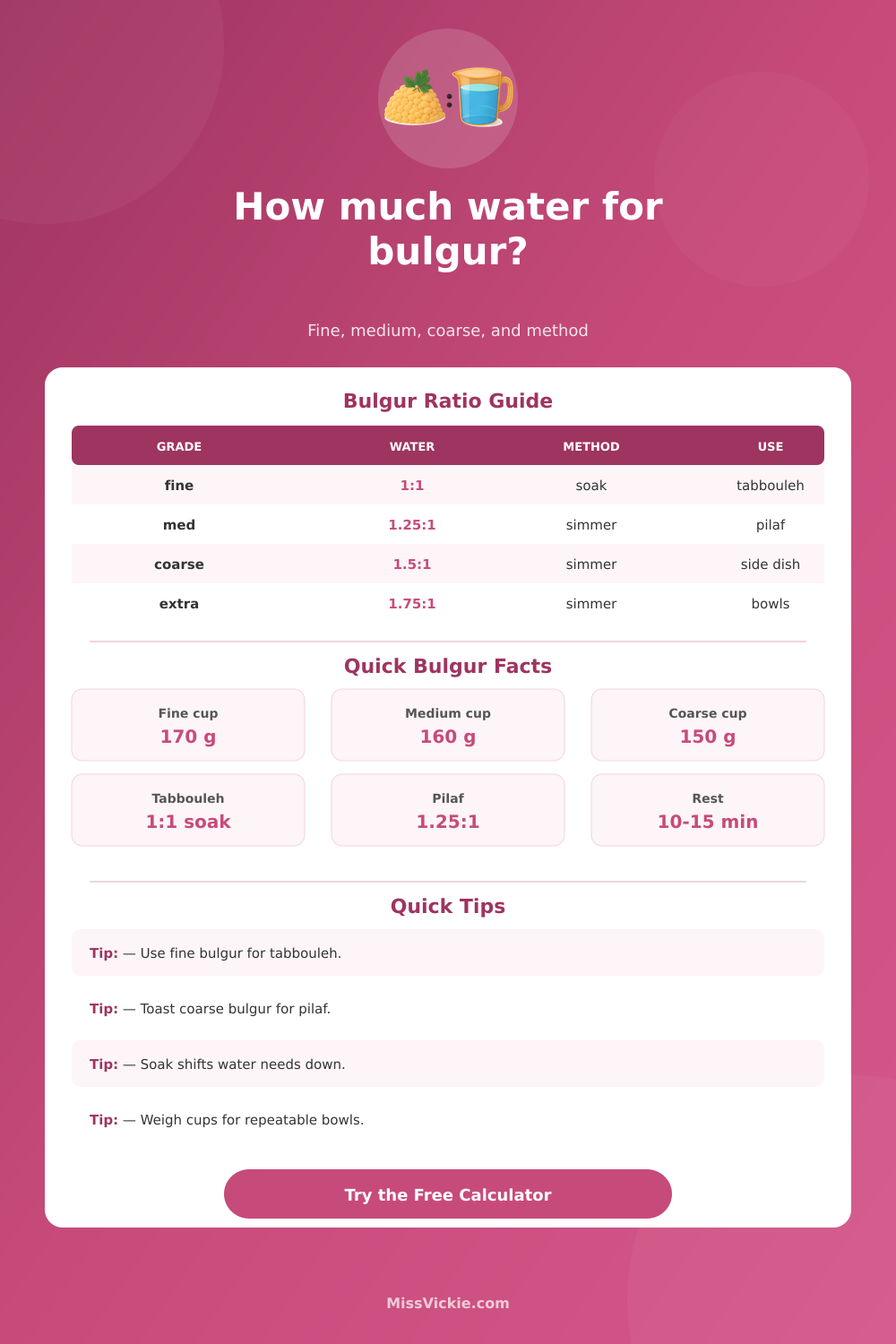
| Fine | 170 g | 1.0:1 | tabbouleh |
| Medium | 160 g | 1.25:1 | pilaf |
| Coarse | 150 g | 1.5:1 | side dish |
| Extra coarse | 145 g | 1.75:1 | hearty bowls |
Soak, simmer, pilaf, and tabbouleh all change the feel of bulgur. Use this table to match the method to the texture you want.
| Method | Time | Liquid cue | Texture |
|---|---|---|---|
| Soak | 10-15 min | boiling water | fine or medium |
| Simmer | 12-18 min | covered pot | steady texture |
| Pilaf | 15-20 min | toast first | fluffy finish |
| Tabbouleh | 5-10 min | barely enough | fresh and light |
Use these common batch sizes when you want a fast visual check for family dinner, meal prep, or a large serving tray.
| Batch | Dry bulgur | Water | Yield |
|---|---|---|---|
| 2 bowls | 80 g | 120-160 g | 1.5 cups |
| 4 bowls | 160 g | 260-340 g | 3 cups |
| 6 bowls | 240 g | 390-510 g | 4.5 cups |
| 12 bowls | 480 g | 780-1020 g | 9 cups |
This table helps you translate common bulgur measuring tools into a dry weight check before the water step starts.
| Measure | Fine | Medium | Note |
|---|---|---|---|
| 1 cup | 170 g | 5.99 oz | fine grade |
| 1 tbsp | 10.6 g | 0.37 oz | small scoop |
| 1 tsp | 3.5 g | 0.12 oz | tiny measure |
| 1 oz | 28.35 g | about 2 tbsp | quick check |
Bright and loose for herbs.
Fluffy grains with more bite.
Heartier and more filling.
Best for lunches and trays.
Bulgur is an par-cooked wheat product, and the amount of water that you use to prepare bulgur will depend on the size of the bulgur grain. Because bulgur is par-cooked wheat, the texture of the bulgur will change depending upon how much water you adds when cooking the bulgur. If you add too much water to the bulgur, the bulgur will become mushy.
If you add too little water to the bulgur, the bulgur will be hard to chew. Thus, you must select the proper ratio of water to bulgur depending upon the grade of bulgur that you are using. Bulgur can be fine, medium, coarse or extra coarse bulgur.
How Much Water for Bulgur
Fine bulgur contain the smallest sized bulgur grains, and fine bulgur require the least amount of water to rehydrate the bulgur. To prepare fine bulgur, pour hot water over the fine bulgur and cover the bulgur with a towel. Because fine bulgur contains small grains, the hot water will steam the bulgur.
Typicaly, you use a one to one ratio of water to fine bulgur for this cooking process. A one to one ratio will allow the fine bulgur to remain light and bouncy. Medium bulgur contains grains that is larger than fine bulgur.
Consequently, medium bulgur require more water than fine bulgur. One and a quarter parts water to one part medium bulgur is typicaly used. Simmer the medium bulgur on low heat until fluffy and no longer raw to the bite.
Coarse bulgur contains even larger grains than medium bulgur. Coarse bulgur requires approximately one and a half parts water to one part coarse bulgur. Extra coarse bulgur contains the largest sized grain.
Extra coarse bulgur requires the most water. Up to one and three quarters parts water to one part extra coarse bulgur may be needed because extra coarse bulgur hold its shape when cooking. There are different methods for preparing bulgur.
Each method may be used for each type of bulgur. Soaking works well for both fine and medium bulgur. To soak the bulgur, simply pour boiling water over the bulgur and allow it to sit for ten to fifteen minute.
Simmering works well for coarse bulgur. Place the coarse bulgur in a covered pot with liquid and maintain steady heat for twelve to eighteen minutes. You can also use the pilaf method to prepare bulgur.
This method requires to toast the dry bulgur in oil before adding the liquid to the bulgur. Toasting the bulgur will allow the grain to separate from one another, preventing them from clumping together when cooking. Many people makes mistakes when preparing bulgur.
For example, all types of bulgur are not prepared the same. People use the same ratio of water to bulgur for all type of bulgur. Bulgur comes in different grades with different weight.
Fine bulgur will weigh 170 gram in a cup. Coarse bulgur will weigh 150 grams in a cup. It is a common practice to measure bulgur with a measuring cup.
However, using a digital scale to weigh the bulgur will ensure that you use the proper amount of water for the amount of bulgur. The humidity in your kitchen may also affect the bulgur. Bulgur will absorb moisture from the air.
In dry climate, you may have to add a small amount of extra water to the bulgur. The recipe for bulgur can be scaled to match the number of people that are to be served. For example, 80 grams of dry bulgur and between 120 and 160 grams of water will provide enough bulgur for a small group of individual.
To provide bulgur for a large group of individuals, you can multiply the measurement to the number of serving that are desired. It is a good idea to track your output of bulgur in grams or in cups. There are different ways to improve the texture of bulgur once it has been cooked.
Allow the bulgur to rest for ten to fifteen minutes once it has been cooked. This allow the steam to fully hydrate the bulgur. Do not stir the bulgur until after it rest.
Stirring the bulgur may cause the bulgur to become sticky. Use a fork to fluff the bulgur once rested. Ensure that you have the appropriate kitchen tool to prepare bulgur.
For instance, use a digital scale to measure the bulgur and a saucepan with a tight fitting lid when simmering the bulgur.