
Beef tenderloins comes from the interior of the cow. Beef tenderloin is known for being tender due to the fact that the muscles of that area of the cow dont require much work. Because beef tenderloin are lean, though, it has less moisture than other types of beef.
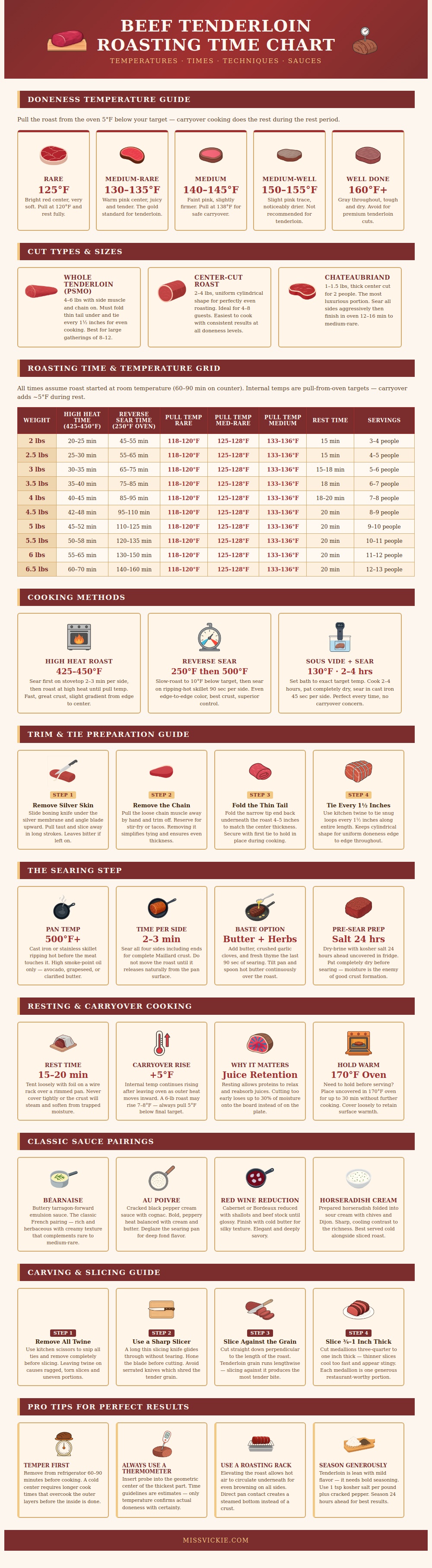
Therefore, if beef tenderloin is overcook, it can become dry. To avoid this drying of the beef tenderloin, the cook should cook it to a medium rare temperature. Medium-rare beef tenderloin should reach 130 to 135 degrees F. Additionally, you should remove the beef tenderloin from the oven when it is five degrees F below the target temperature of 130 to 135 degrees F because the meat will continue to cook after it is removed from the oven (carryover cooking).
How to Cook Beef Tenderloin
Preparation of the beef tenderloin should occur before cooking. You should remove the beef tenderloin from the refrigerator approximately one hour before cooking. If the beef tenderloin is to cold in the center of the cut before cooking, the exterior will cook much more faster than the center of the tenderloin, resulting in uneven cooking of the cut.
Additionally, you should remove the silvery membrane that covers the beef tenderloin using a sharp knife. The membrane is bitter in taste and chewily when eating it raw. If the beef tenderloin will be cooked as a whole roast, the cook should tie the beef tenderloin with kitchen twine to ensure that it cook evenly.
Seasoning the beef tenderloin is necessary to enhance its flavor. You should season the beef tenderloin with kosher salt at a rate of one teaspoon of salt for every pound of beef tenderloin. Additionally, you can season the beef tenderloin with cracked black pepper for flavor.
For best results, seasoning the beef tenderloin at least 24 hours prior to cooking allow the salt to penetrate the beef tenderloin, but if you season the beef tenderloin 24 hours in advance and cover it with foil, it may become dry due to evaporation of the natural juices from the cut. The beef tenderloin must be patted dry with paper towels prior to cooking to enable the formation of a crust. Several cooking methods can be employed for beef tenderloin.
High-heat roasting requires the beef tenderloin to be roasted at 425 to 450 degrees F. High heat allows for a crust to form on the roast but creates a temperature gradient between the center of the beef tenderloin and the exterior of the cut. The reverse sear method heats the beef tenderloin to 250 degrees F until the beef tenderloin reaches 10 degrees F below the target temperature of 130 to 135 degrees F, then sears the beef tenderloin. The sous vide method involve placing the beef tenderloin into a cooking liquid of precise temperature for several hours to allow for even cooking of the beef tenderloin.
Cooking time will vary with the weight of the beef tenderloin; the longer the beef tenderloin is, the more longer it will require to roast to the target temperature. Searing beef tenderloin is essential to develop the flavor of the beef tenderloin. Searing occur in a cast iron skillet using an oil with a high smoke point (avocado oil or grapeseed oil).
The cook should sear the beef tenderloin for two to three minutes on each side (including the ends of the beef tenderloin). You can add butter, garlic, and thyme to the pan to baste the beef tenderloin. Basting with beef tenderloin butter will create additional flavor in the beef tenderloin.
After the beef tenderloin is removed from the oven, it should be rested for 15 to 20 minutes covered in foil. Beef tenderloin rest to allow the juices to distribute throughout the cut of meat. If the beef tenderloin is cut too soon, the juices will exit the muscle group of the beef tenderloin and the beef tenderloin will be dry.
Finally, you can carve the beef tenderloin into medallions using a sharp knife. Carve the beef tenderloin into three quarter inch slices. Ensure that the cut is perpendicular to the grain of the beef tenderloin.
Thick medallions will retain the heat of the beef tenderloin for a longer period of time. Finally, serve the beef tenderloin with sauces such as Béarnaise, au poivre, or red wine reduction for addition flavor. It should of been more delicius.