MissVickie Breakfast Lab
Oatmeal to Water Ratio Converter
Dial in steel-cut, rolled, quick, instant, and overnight oats with precision adjustments for texture, milk split, soak time, altitude, evaporation, and batch scaling.
Pick a Preset
Ten preset profiles prefill the calculator so you can build creamy bowls, thick meal-prep jars, or nutty steel-cut batches in one click.
Input Controls
Use 12 control inputs to tune your exact batch. The converter calculates liquid need, yield, cook timing, and a full calculation breakdown.
Unit System
Full Breakdown
Reference Tables
These references are baked into the formula so you can see exactly how each factor changes your oatmeal hydration and timing.
| Oat Type | Creamy | Balanced | Thick | Default Notes |
|---|---|---|---|---|
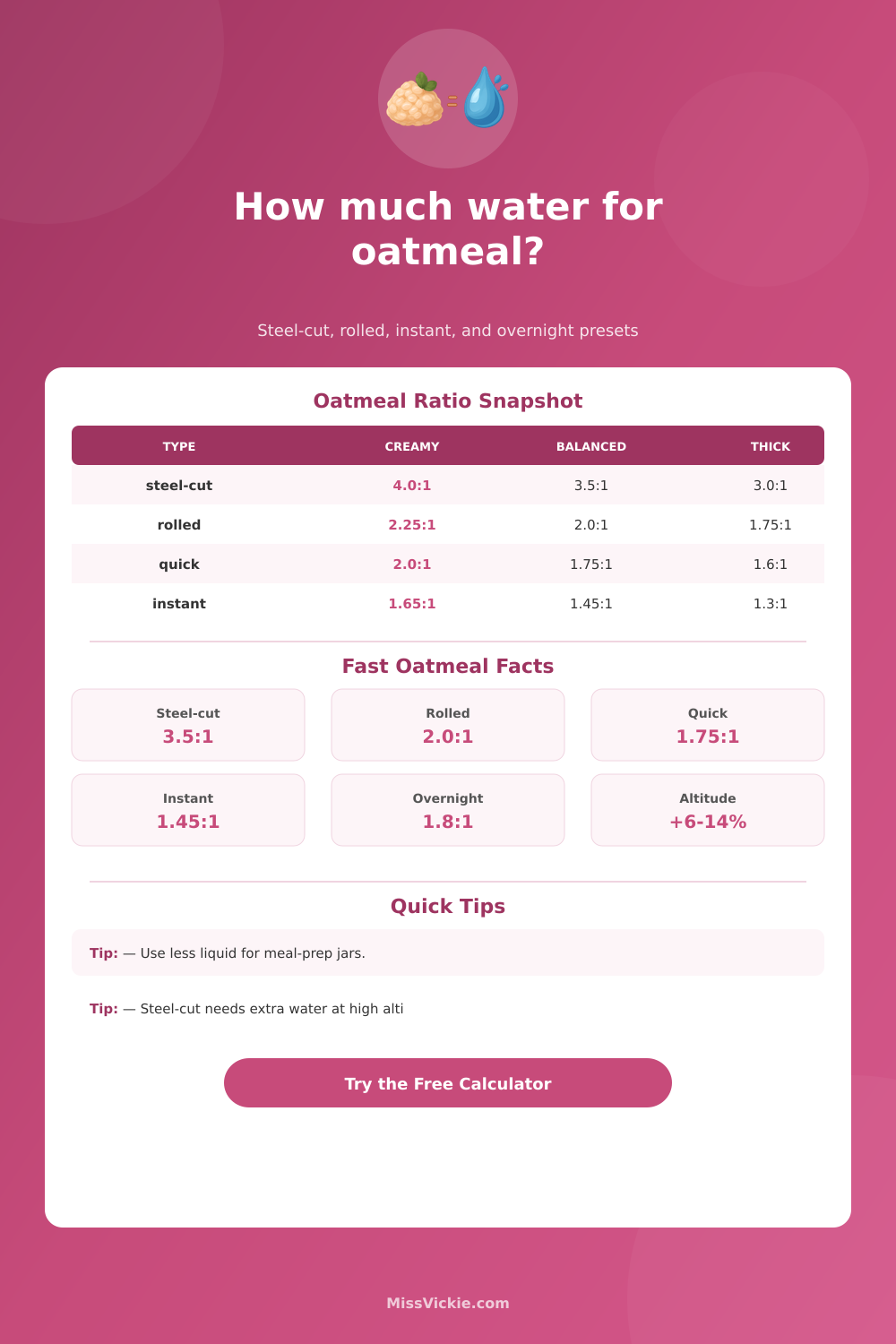
| Steel-cut | 4.00:1 | 3.50:1 | 3.00:1 | Nutty chew, longer simmer. |
| Rolled old-fashioned | 2.25:1 | 2.00:1 | 1.75:1 | Classic creamy stove bowl. |
| Quick oats | 2.00:1 | 1.75:1 | 1.60:1 | Fast and soft texture. |
| Instant oats | 1.65:1 | 1.45:1 | 1.30:1 | Hydrates rapidly, minimal heat. |
| Overnight rolled | 2.00:1 | 1.80:1 | 1.65:1 | No-cook jar method. |
| Overnight steel-cut | 3.00:1 | 2.75:1 | 2.50:1 | Chewier cold prep texture. |
| Scottish oats | 3.40:1 | 3.00:1 | 2.70:1 | Fine cut, creamy body. |
| Oat bran | 2.50:1 | 2.25:1 | 2.00:1 | Very fast thickening. |
| Whole oat groats | 4.60:1 | 4.25:1 | 3.90:1 | Rustic grains, longest cook. |
| Method | Time Factor | Water Factor | Typical Range | When to Use |
|---|---|---|---|---|
| Stovetop simmer | 1.00x | 1.00x | 3-45 min | Best control and stirring. |
| Microwave bowl | 0.72x | 1.05x | 1-8 min | Quick single servings. |
| Rice cooker | 1.20x | 1.08x | 12-50 min | Hands-off family batches. |
| Instant Pot | 0.85x | 1.10x | 4-30 min | Steel-cut and groat friendly. |
| Overnight cold soak | 0.00x heat | 0.95x | 6-12 hr soak | No-cook prep jars. |
| Baked oatmeal | 1.40x | 1.12x | 25-55 min | Casserole style slices. |
| Absorption Driver | Default | Low End | High End | Formula Role |
|---|---|---|---|---|
| Oat cut absorption coefficient | 2.35 | 1.70 | 3.00 | Main hydration anchor. |
| Texture factor | 1.00x | 0.84x | 1.12x | Creamy vs thick target. |
| Altitude factor (per 1000 ft) | +2.5% | +0% | +30% | Offsets boil loss. |
| Soak reduction (max) | -10% | 0% | -10% | Long soak needs less simmer. |
| Rest thickening factor | -0.8%/min | 0% | -16% | Post-cook carry absorption. |
| Milk share impact | +0.0% | -1.5% | +1.5% | Slight viscosity correction. |
| Altitude Zone | Extra Water | Extra Time | Best Oat Choices | Practical Note |
|---|---|---|---|---|
| 0-1,999 ft | 0-3% | 0-4% | All styles | Standard ratios hold well. |
| 2,000-3,999 ft | 4-7% | 6-10% | Rolled, steel-cut | Add splash at final simmer. |
| 4,000-5,999 ft | 8-11% | 11-16% | Steel-cut, groats | Cover pot during midpoint. |
| 6,000-7,999 ft | 12-15% | 17-23% | Steel-cut, Scottish | Use wide pot to avoid boilover. |
| 8,000+ ft | 16-22% | 24-32% | Steel-cut, groats | Stage liquid in two additions. |
Preset Comparison Grid
Quick-glance flavor and hydration personality for each featured preset.
Steel-Cut Classic
3.5:1 balance with gentle chew and deep oat aroma.
Stovetop 28 minSteel-Cut Soaked
Overnight soak trims cook time and softens edges.
Soak + 18 minRolled Creamy
Comfort texture with a glossy spoon-coating finish.
2.2:1 creamyRolled Thick
Meal-prep dense bowl that reheats without thinning.
1.75:1 thickQuick Smooth
Fast weekday profile with light body and low chew.
3-4 minQuick Firm
Lower liquid keeps shape for fruit and nut toppings.
1.6:1 firmInstant Cup Style
Mug-ready hydration tuned for no-stir convenience.
90 secOvernight Rolled
Cold jar breakfast with creamy structure by morning.
8 hr chillOvernight Steel-Cut
Chewier cold oats with higher hydration reserve.
10 hr chillRustic Oat Groats
Whole-grain bite and longest simmer curve.
45+ minTwo Practical Tips
Tip 1: Reserve a finishing splash
Hold back 5-8% of the calculated liquid and stir it in during the final minute. This prevents over-thickening and keeps texture glossy, especially for steel-cut and groats.
Tip 2: Batch for tomorrow on purpose
If you plan to refrigerate overnight, start 6-10% looser than your ideal spoon texture. Chilled oats continue absorbing and will settle at a balanced consistency by morning.
MissVickie formula note: this converter estimates practical kitchen hydration, not strict laboratory moisture values. Brand and pot geometry can shift final texture slightly.
To prepare oatmeal, there are a few factors to consider. First, the ratio of oats to liquid are essential. Some oat varieties requires more liquid than others.
Using too little liquid will make the oatmeal too thick. Using too much liquid will make the oatmeal too thin. Depending on the type of oats you’ll be using, you will have to adjust for the correct amounts of liquid to add to the oats.
How Much Liquid to Use for Oatmeal
Steel-cut oats requires the most liquid because they are large chunks of oats. To prepare steel-cut oats, you can use three and a half part liquid to one part steel-cut oats. Rolled oats require less liquid because they are more thinner than steel-cut oats.
For this type of oat, use two parts liquid to one part rolled oats. Quick oats and instant oats requires the least amount of liquid because they have the finest cut of oats. For both these variety, use one and a half parts liquid for every part of oats.
The texture you would like your oatmeal to have will also affect the amount of liquid to use. For oatmeal that is supposed to be creamy when served, use a higher ratio of liquid to oats. For oatmeal that is supposed to be thick, use a lower ratio of liquid.
Because oats continue to absorb liquid after being removed from heat, the carryover cooking will continue to allow the oats to absorb some of the liquid. If you would like your oatmeal to remain creamy after cooking, you may want to add extra liquid to assist the oats in absorbing the liquid after cooking. The cooking method will change the amount of liquid required for the oatmeal.
If you would like to cook the oatmeal on the stove top, you can control how much liquid evaporates from the pot of oats. In the microwave, you will need to add more liquid because the microwave heats the liquid rapid. Pressure cookers also require slightly more liquid because the steam from the water gets trapped inside the pot.
Overnight oats are cooked while sitting at room temperature. No heat are used. For this method, you have to adjust the ratio of liquid to oats.
The altitude where the oatmeal is prepared will also change the liquid requirements. At high altitude, the boiling point of water is lower. At lower boiling point, there is more evaporation of water.
If you live at high altitudes, you will have to use more liquid and cook the oats for longer. At high altitudes, you can use fourteen percent more liquid for the oatmeal. You can also change the amount of liquid to use milk instead of water.
The fat and protein in the milk will change the thickness of the oatmeal. Salt can be added to enhance the flavor of the oatmeal. The salt will not have any effect on the absorption of the oats and the liquid.
When preparing large batches of oatmeal, care must be taken with the measurements. If you are using a large pot, the surface area of the pot will affect the amount of liquid that evaporates from the oatmeal. When preparing large amounts of oatmeal, you must adjust the amount of liquid according to the size of the pot.
Finally, ensure that you taste the oatmeal while cooking. Keep a small amount of extra liquid nearby to assist in the cooking process of the oatmeal.