
Prime rib roasts comes from the rib section of a cow. You may purchase prime rib roasts with the bones or without the bones. Roasts that contains the bones of the ribs will add flavor to the roast as the marrow from the bones melt into the roast.
Roasts without the bones is often easy to carve after cooking. However, roasts without the bones may take longer to cook then those that contain the bones. The type of roast that you purchase should be base off the number of people that you are cooking for.
How to Cook a Prime Rib Roast
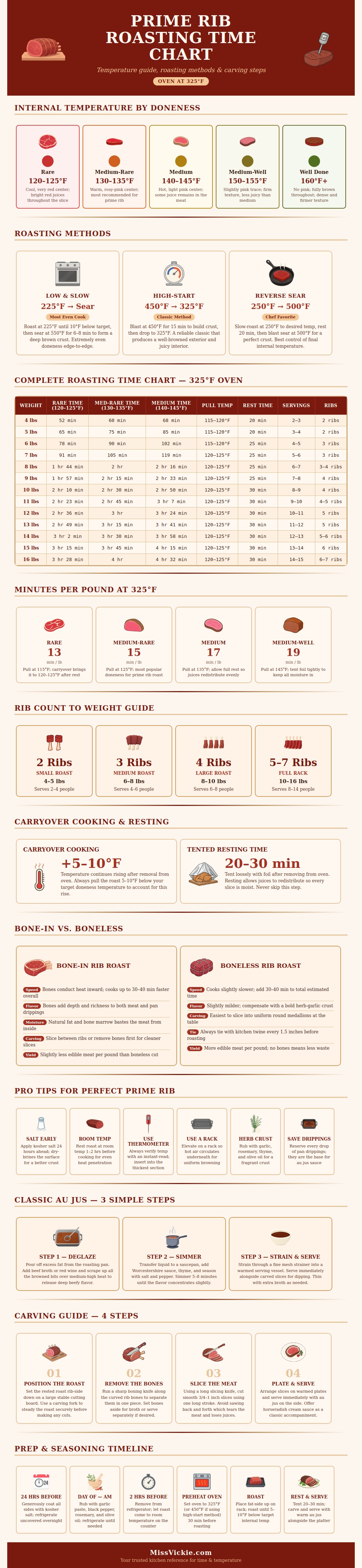
Additionally, you should use a guide to ensure that the roast is of a correct size. Prime rib can be cooked in a number of ways. One method involve cooking the roast at a steady temperature of 325 degrees Fahrenheit.
Another method involves cooking the roast at 450 degrees Fahrenheit for fifteen minutes to create a crust on the roast, and then reduce the temperature to cook the roast to the desired internal temperature. A third method involves cooking the roast at approximately 225 degrees Fahrenheit for the majority of the cooking process, and then sear the roast at a higher temperature. Regardless of the method that you use, you should remove the roast from the oven while the roast is below the target internal temperature for cooking the roast.
This is because roasts continues to cook after they are removed from the oven due to carryover cooking. A digital thermometer is the best way to determine the doneness of the roast. Timings is not an accurate way to determine the doneness of the roast.
Rare roasts will register between 120 and 125 degrees Fahrenheit. Medium-rare roasts will register between 130 and 135 degrees Fahrenheit. This is the preferred level of doneness for most people because the center of the roast will be warm to the touch and pink.
Cook medium roasts to 140 degrees Fahrenheit; cooking beyond this temperature will dry the roast. Insert the thermometer into the thickest portion of the roast. Ensure the thermometer is not touching the bone; this will provide an inaccurately reading of the temperature of the roast.
It is necessary to allow the roast to rest for at least fifteen minutes after removing it from the oven. Allowing the roast to rest will allow the juices settle within the roast. If the roast is cut while hot, the juices will exit the roast and the roast will be dryer.
It is also necessary to salt the roast at least one day prior to cooking. Salting the roast allow the roast to dry brine, which will create a better crust when you cook the roast. Prime rib should be sliced into thick portion.
If the roast contains the bones, the cook should stabilize the roast and the meat separated from the bones with a knife. Use long, smooth stroke when cutting the roast; sawing the roast will tear the meat fibers and result in the loss of juices from the roast. The roast can be served with au jus; au jus is create by deglazing the pan in which the roast was cooked.
Following these steps will ensure that your roast is moist and flavorful.