
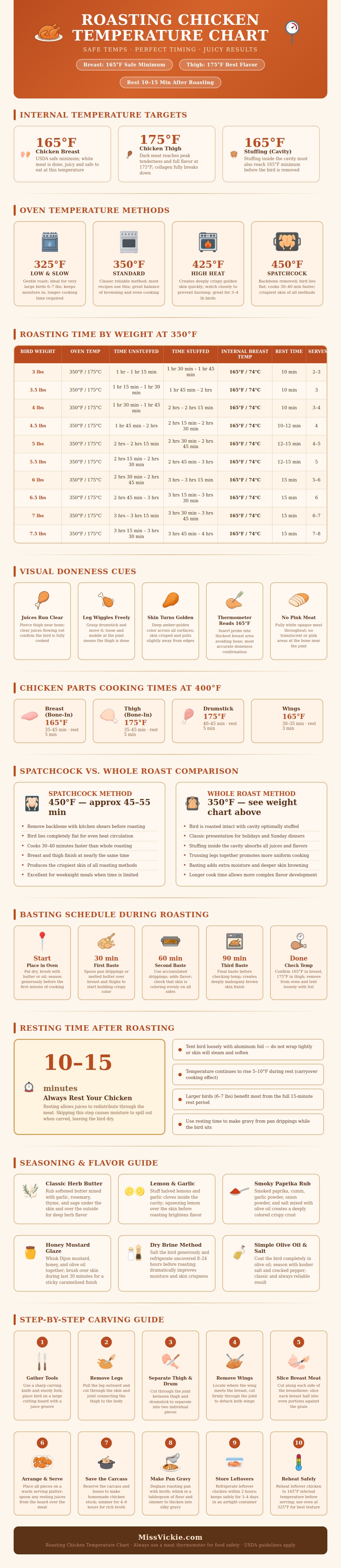
Roasting a chicken require precise temperature control because the temperature will determine if the roasted chicken is juicy or dry. If the chicken is cooked for too long, it will become dry. If the chicken is not cooked for long enough, it will lead to foodborne illness.
Therefore, monitoring the internal temperature of the chicken ensure that the chicken is cooked to be safe to eat and delicious to eat. The oven will cook the chicken with heat. The cold chicken should be taken from a refrigerator.
How to Roast a Chicken
The skin should be patted dry so that the skin will become crisp when roasted. There is a difference between the white meat and the dark meat in the chicken. The white meat can dry out if the chicken is cooked for too long.
The dark meat take longer to cook due to the collagen in the dark meat. You should check the thickest part of the chicken breast with a thermometer to ensure that the chicken is cooked; avoid the bone. Additionally, the cook should also check the dark meat.
The temperature of the oven will play a role in roasting the chicken. A moderate oven will allow the chicken to brown. Using a high temperature will cook the chicken quick and give the skin more crunch.
Using a high temperature will cook the chicken quickly but you should watch it to ensure that the skin is not burned. Using a low temperature will be used for large chickens to allow the moisture to stay in the chicken. Additionally, varying the temperature will change the flavor of the chicken.
Using the weight of the chicken can help prepare the cooking time. Using a small chicken will take less time to cook then a large chicken. Additionally, if the chicken is stuffed it will take longer to cook than if the chicken is not stuffed.
However, the best way to prepare the chicken is by using a thermometer to measure the internal temperature of the chicken. The weight and the position of the chicken in the oven will change the cooking time of the chicken. Additionally, using a larger chicken will take more time to rest after cooking.
Using visual signs can help determine when the chicken is done. However, this should not be the only way to determine when the chicken is cooked. When the skin is golden and taut, the protein in the skin have cooked.
When the legs of the chicken wiggle, the collagen in the chicken thigh has cooked. Additionally, there should be clear juices coming out of the chicken and no pink meat. However, using a thermometer will eliminate doubt about when the chicken is done.
Breaking the chicken into smaller parts will cook the chicken faster. Chicken breasts with the bone or chicken thighs with the bone will cook quickly and take less than an hour to cook. Drumsticks will take longer than chicken breasts but will take less time than thighs.
Roasting the pieces of chicken will require allowing the chicken to rest so that the skin will be crispy. Flat chicken can be prepared by removing the backbone of the chicken. When you remove the backbone the chicken will lie flat allowing both sides of the chicken to cook at the same time.
Additionally, this will reduce the cooking time for the chicken. Alternatively, roasting the whole chicken will maintain its tradition shape. If roasting the whole chicken, baste the chicken every thirty minutes.
Chicken should be allowed to rest while out of the oven for ten to fifteen minutes with foil. This allows the juices in the chicken to redistribute evenly throughout the chicken. If the chicken is not allowed to rest, the juices will leak out of the chicken when it is cut.
Using seasonings enhances the flavor of the chicken. Using dry brine seasonings allows the chicken to retain moisture. Additionally, placing herb butter under the skin of the chicken will enhance the flavor of the chicken.
Using salt and oil to season the chicken is the best method however you should not use too much seasoning so as not to hide the flavor of the chicken. Using the correct method to carve the chicken will improve the eating experience. Using a sharp knife to carve the chicken breast against the grain will help ensure that the texture of the chicken remain the same.
Additionally, you can save the carcass to make chicken stock. Leftover chicken should be reheated using low heat so as not to make the chicken tough.