
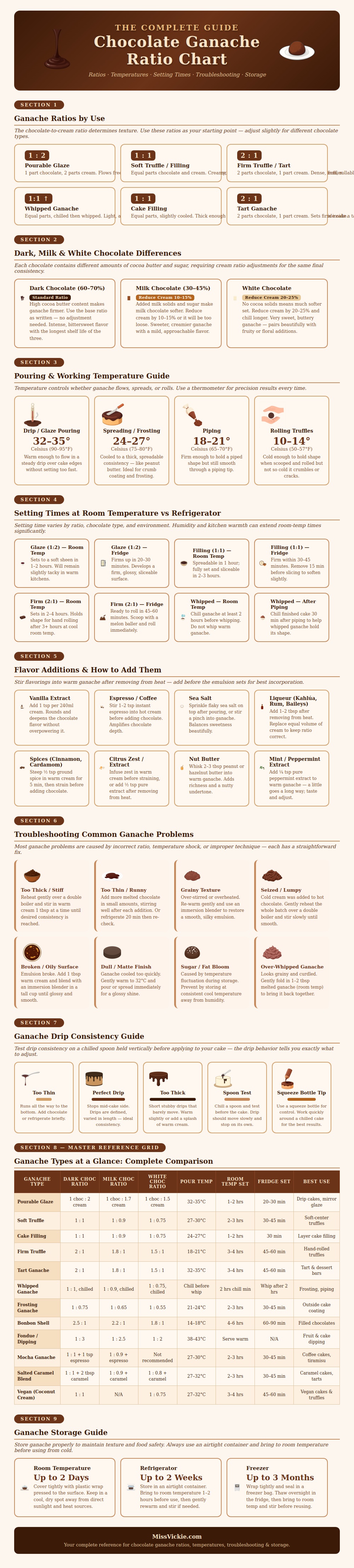
Ganache is a mixture of melted chocolate and hot cream that are emulsifies together. The texture of ganache are determined by the ratio of chocolate to cream within the ganache. The ratio of chocolate to cream will determine whether ganache is to be liquid or firm.
If there is a high amount of cream within the ganache, it will be fluid and can be used as a glaze on cakes. If there is a high amount of chocolate within the ganache, it will be firm and can be used to make truffles. Because the ratio will change the texture of the ganache, you must choose the ratio according to the task that you intend to use the ganache for.
How to Make and Use Ganache
For instance, using equal amounts of chocolate and cream will create a ganache that can be used as a filling for cake layer, while using more chocolate than cream will create a ganache that can be used to make tarts. The type of chocolate that you use in the ganache will also change the texture of the ganache. If dark chocolate is used, the high amount of cocoa butter in the chocolate will lead to the ganache setting firm.
If milk chocolate is used, the additional sugar and milk in that chocolate will lead to the ganache being softer; thus, the cook will need less cream in the ganache. Finally, if white chocolate is used, the least amount of cocoa solids in the chocolate will lead to the need for the most adjustment in the amount of cream that is to be used in the ganache. Thus, the amount of cream that is used will need to be adjusted according to the type of chocolate that is used in the ganache.
The temperature of the ingredients that are used to create ganache is also critical to the recipe. If ganache is too hot, it will flow too quick off of the sides of the cake. If you cool ganache to the proper temperature, it will spread evenly or hold its shape when piped.
Using a thermometer to test the temperature of the ganache will ensure that the ganache reaches the proper temperature before it is piped onto a cake. Additionally, the temperature of the area in which the ganache is allowed to set will also have an impact on the setting of the ganache. For instance, ganache will set faster in a refrigerator than it would at room temperature; however, the ganache should of been removed from the refrigerator for a brief moment while it is setting to allow the ganache to avoid condensation on its surface.
The addition of flavorings to the ganache while it is warm can alter the flavor of ganache. For instance, cream can be replaced with liqueur to add flavor to the ganache, spices can be steeped in the cream before adding it to the chocolate, citrus zest can be added to ganache, or sea salt can be added to ganache to alter the flavor of the ganache. These flavorings should be added to ganache after the emulsification of the ingredients to ensure that they are mixed in with the ganache seamless.
If ganache does not have the proper texture, it can be fixed by the addition of additional ingredient or heat. Ganache that is too thick can be fixed by the addition of warm cream and heat. Ganache that is too runny can be fixed by the addition of more melted chocolate or by placing the ganache in the refrigerator to allow it to firm.
If ganache contains grains that were produced by stirring the ganache too much, it can be fixed by the use of an immersion blender after re-warming the ganache. If the ganache has been emulsified too much such that the ingredients are oily, you can fix ganache by the addition of cream and emulsifying the ganache again. Ganache can be stored to allow for later use.
Ganache can be stored at room temperature for a few days if covered. Ganache can be stored in the refrigerator for several weeks or in the freezer for several months. If stored in the freezer, ganache should thaw slow.
When using stored ganache, it should be re-warmed and stirred until it is in a usable state.