🍛 Curry chicken planning
How Much Chicken Per Person in a Curry
Estimate raw buy weight, cooked chicken per guest, batch size, and sauce-ready yield for Thai, Indian, Japanese, Caribbean, and weeknight chicken curry meals.
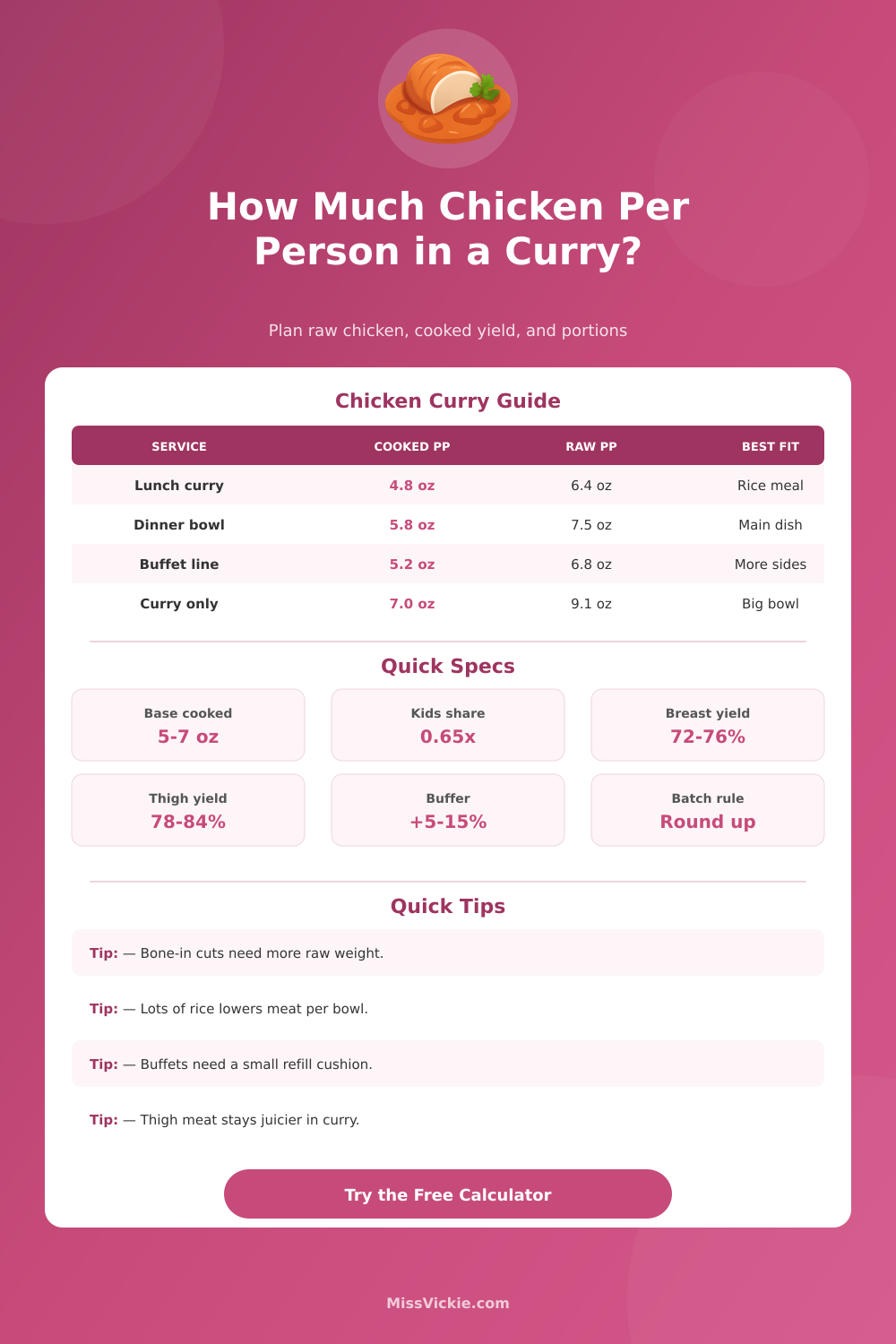
Most chicken curries land around 5 to 7 ounces cooked chicken per adult when served as the main dish. Rice, naan, potatoes, and buffet service usually pull the portion lower.
| Service Style | Adult Cooked Chicken | Raw Buy Range | Best Fit |
|---|---|---|---|
| Lunch Curry Bowl | 4.8 to 5.2 oz | 6.3 to 6.8 oz | Rice-forward lunch service |
| Dinner Main | 5.6 to 6.1 oz | 7.2 to 8.0 oz | Most home curry dinners |
| Buffet Line | 5.0 to 5.5 oz | 6.6 to 7.2 oz | Extra rice and side dishes |
| Party Buffet | 5.3 to 5.8 oz | 6.9 to 7.7 oz | Long service window |
| Curry Only | 6.8 to 7.4 oz | 8.8 to 9.7 oz | Minimal starch on the side |
| Sampler Plate | 4.2 to 4.8 oz | 5.5 to 6.4 oz | Multiple proteins or dishes |
| Chicken Cut | Cooked Yield | Raw for 1 lb Cooked | Planning Note |
|---|---|---|---|
| Boneless Breast | 74% | 1.35 lb raw | Lean, tidy cubes, less forgiving |
| Boneless Thigh | 82% | 1.22 lb raw | Best all-around curry cut |
| Bone-In Thigh | 64% | 1.56 lb raw | More flavor, more waste weight |
| Mixed Pieces | 70% | 1.43 lb raw | Good for big family pots |
| Drumsticks | 61% | 1.64 lb raw | Messier service, bold flavor |
| Whole Cut-Up Chicken | 58% | 1.72 lb raw | Most bone and skin loss |
| Guests | Lunch Curry | Dinner Main | Curry Only |
|---|---|---|---|
| 6 | 2.3 lb raw | 2.8 lb raw | 3.4 lb raw |
| 12 | 4.6 lb raw | 5.6 lb raw | 6.8 lb raw |
| 20 | 7.7 lb raw | 9.3 lb raw | 11.3 lb raw |
| 35 | 13.4 lb raw | 16.2 lb raw | 19.8 lb raw |
Weeknight
5.8 oz
Dinner mains with rice and one vegetable usually stay near this cooked chicken portion.
Buffet
5.2 oz
Buffet lines run a little lighter when naan, rice, and another dish share the plate.
Curry Only
7.0 oz
If the curry is the meal, buy for a larger bowl and stronger leftover cushion.
Meal Prep
5.4 oz
Batch trays work best with boneless thigh meat and a moderate rice portion.
When preparing chicken for a meal, you must calculate the amount of chicken based off the cooked weight of the chicken. Raw chicken will lose weight during the cooking process due to the evaporation of the water and the melting of the fat within the chicken. Because raw chicken lose weight during the cooking process, you will need to purchase more raw chicken than the total weight of the cooked chicken that you would like to serve to your guests.
Such a loss of weight from raw to cooked chicken is known as the “yield loss” and the yield loss will vary depending upon the type of cut of chicken that you use in your recipe. The type of chicken cut that you use will impact the amount of raw chicken that you have to purchase. For instance, cuts of chicken that contain the bones will lose more weight due to the removal of the bones prior to cooking.
How Much Raw Chicken to Buy
Additionally, cuts of chicken that contain fat will also lose some of that weight due to the melting of the fat. Bone-in chicken thighs will lose some of their weight due to the bones melting and the removal of the bones, and the fat melting. Bone-in chicken thighs typically yield only about two-thirds of the weight of the raw, raw chicken thighs.
Boneless chicken thighs will yield approximately eighty percent of the raw weight of the raw chicken thighs. Additionally, because boneless chicken thighs dont contain the bones, they are easy to use in cooking. Finally, chicken breasts will contain less fat than chicken thighs, but will also have less raw weight than boneless chicken thighs.
Chicken breasts will yield approximately seventy-four percent of the raw weight of the raw chicken breasts. Because chicken breasts are leaner than boneless chicken thighs, however, they may become dry if cooked at high temperatures. Finally, the way that you serve the chicken will alter the amount of cooked chicken that you must provide to each person.
For a standard dinner that includes chicken, rice, and vegetables, each person should be served between five and six ounces of cooked chicken. For a buffet-style meal, however, only provide five ounce of cooked chicken per person because each person at the buffet will eat less chicken and more side dishes. For a meal that consists only of curry and no rice or bread, however, you should provide seven ounces of cooked chicken per person because the chicken will be the primary component of the meal.
For a lunch meal, less chicken should be provided because people tend to eat less meat for lunch then dinner. For a lunch meal, less than five ounces of cooked chicken should be provided for each person. The side dishes that are provided with the chicken will also impact the amount of chicken that each person requires.
For instance, if you provide heavy side dishes with the chicken, such as rice or naan bread, the individuals will eat less of the chicken. Side dishes will impact the amount of chicken that each individual will eat; the fewer side dishes that are provided, the more chicken each individual will require to feel full. Additionally, the age of the individuals that will eat the chicken should be considered.
For instance, children will eat approximately sixty-five percent of the amount of chicken that an adult will consume. Thus, you should adjust the total amount of chicken that is to be cooked according to the number of children that are to attend the meal. An additional amount of extra chicken can be purchased to ensure that there is enough chicken for all of those who will attend the meal.
Adding an additional ten percent of chicken to the total amount of raw chicken that is to be purchased will account for any individuals who have large appetites for the chicken, or for any additional guests that may arrive after the shopping trip. Thus, adding a ten percent amount of extra chicken will ensure that there is enough chicken for each guest. When creating the shopping list for the chicken, follow these steps.
First determine the number of individuals that will be eating the meal. Second, determine the amount of cooked chicken that you would like each person to eat. Third, determine the type of cut of chicken that will be used to provide the chicken to the individuals.
Fourth, adjust the amount of raw chicken that must be purchased according to the side dishes and the age of those who will eat the meal. Finally, add a ten percent amount of extra chicken to the shopping list to ensure that there is enough for all guests. When calculating the amount of raw chicken that is to be purchased for the meal, calculate the cooked weight of the chicken that is to be served to each individual first, and purchase the raw weight of the chicken second.
Many people make the mistake of purchasing raw chicken based upon the raw weight that is available in the store. However, purchasing raw chicken based on the raw weight will result in the cooking of the chicken and the loss of the water and fat from the chicken, and may result in not having enough cooked chicken to serve to each guest. Thus, using the cooked weight as the primary weight to measure the amount of raw chicken that is to be purchased will ensure that there is enough cooked chicken for the meal.
You should of checked the weight of the chicken more carefuly. It’s important to recieve the right amount of meat for your dinners. If you dont follow these steps, your meals might feels smaller than expected.
The cooks weight will be different than teh raw weight. Actualy, the process is moddern and simple. Use the weight of the chicken to ensure your guest are happy.
This will make the meal more luxurius and comfortaly.