🥚 How Many Eggs Per Person In an Omelette
Estimate eggs, fillings, butter, finished yield, and pan rounds for brunch tables, omelette stations, diner breakfasts, and buffet service without guessing.
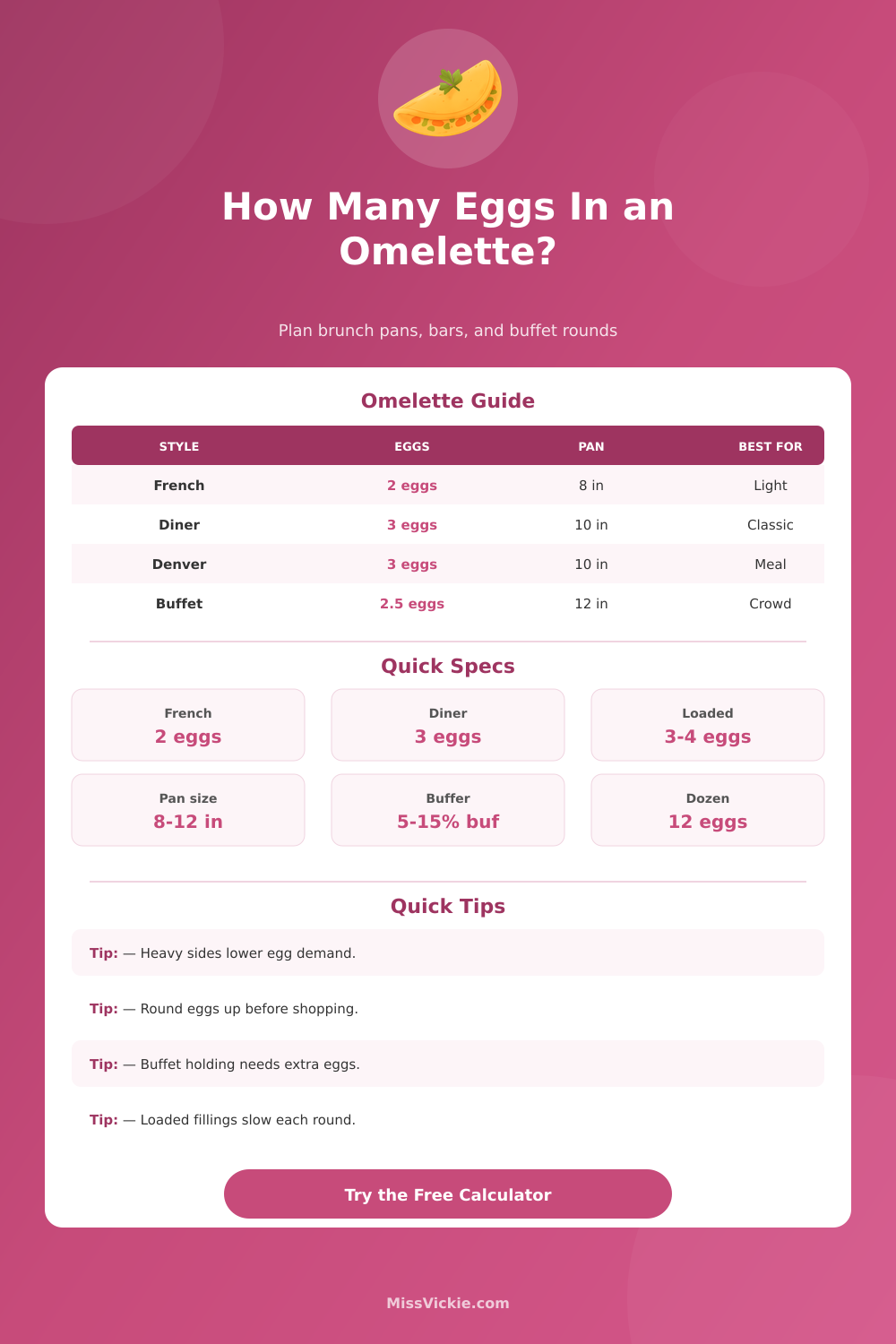
| Omelette Style | Base Eggs | Base Fillings | Best Use |
|---|---|---|---|
| French Fold | 2.0 eggs | 1.5 oz | Light plated breakfast |
| Diner Three-Egg | 2.8 eggs | 2.4 oz | Classic breakfast entree |
| Denver Style | 3.0 eggs | 2.8 oz | Heartier brunch plate |
| Veggie Omelette | 2.5 eggs | 2.6 oz | Produce-forward menu |
| Ham and Cheese | 2.7 eggs | 2.5 oz | Balanced all-around pick |
| Western Omelette | 2.9 eggs | 2.9 oz | Weekend breakfast rush |
| Protein Packed | 3.25 eggs | 3.0 oz | Big appetite service |
| Buffet Fold | 2.35 eggs | 1.8 oz | Held buffet production |
| Pan Setup | Egg Capacity | Rounds / 24 Eggs | Note |
|---|---|---|---|
| 8 inch skillet | 3 eggs | 8 rounds | Single omelette station |
| 10 inch skillet | 4 eggs | 6 rounds | Standard diner pan |
| 12 inch skillet | 6 eggs | 4 rounds | Two smaller folds |
| Flat griddle lane | 9 eggs | 3 rounds | Fast brunch batches |
| Dual station line | 12 eggs | 2 rounds | High-volume service |
| Guests | Light Brunch | Classic Meal | Omelette Bar |
|---|---|---|---|
| 4 guests | 8-9 eggs | 11-12 eggs | 10-11 eggs |
| 8 guests | 16-18 eggs | 22-24 eggs | 20-22 eggs |
| 12 guests | 24-27 eggs | 33-36 eggs | 30-33 eggs |
| 20 guests | 40-45 eggs | 55-60 eggs | 50-55 eggs |
| 40 guests | 80-90 eggs | 110-120 eggs | 100-110 eggs |
| Egg Size | Factor | 3-Egg Yield | Note |
|---|---|---|---|
| Medium | 1.08x eggs | 6.3 oz cooked | Use slightly more eggs |
| Large | 1.00x eggs | 6.9 oz cooked | Standard planning base |
| Extra large | 0.93x eggs | 7.3 oz cooked | Good for buffet holds |
| Jumbo | 0.88x eggs | 7.7 oz cooked | Richest finished fold |
In order to calculate the numbers of eggs that are required to make an omelette, there are several differents variables that must be considered. Variables to consider include the style of the omelette that you will prepare, the appetite of the guest that will be eating the omelette, the type of service that the staff will provide for the guests, and the amount of fillings that will be used within the omelette. Failure to account for these different variables may result in either preparing too many egg or too few egg.
The style of the omelette will dictate the amount of eggs that are necessary to prepare those omelettes. For instance, a French style omelette is typically a light omelette that contains few fillings, and as such, only requires two eggs to prepare each omelette. In contrast, a Denver style omelette is typically heavy with many fillings (like ham, onions, and peppers), and, therefore, contains more egg than the French style omelette to hold the fillings within the omelette.
How Many Eggs Do You Need for Omelettes
The appetite of the guests will impact the number of eggs that you must prepare for those omelettes. For instance, many guest will have large appetites and eat more eggs, but some guests (like young children) may have smaller appetite than adults. In calculating the appetite of the guests, treat young children as a fraction of an eating portion of an adult.
For instance, if there are ten children and two adults that will be eating the omelettes, calculate for only four full portion of omelette. Furthermore, because the appetite of the guests may differ, prepare approximately 10% extra of the number of eggs that you calculated to provide for each guest. The type of service that is provided for the guests can also impact the number of eggs that is required to be prepared in total.
To calculate the number of eggs you will need for your restaurant, you can use the made to order service or the buffet service. The made to order service allows you to cook each omelette individually for a small group of peoples and keeps the waste of eggs low. With the buffet service, many people will serve themself from a large amount of food prepared by the cook.
If you use the buffet service, you will need to prepare extra eggs to accommodate for the fact that many people will take second helping of the food. The size of the pans that you use to cook your omelettes will also affect the number of eggs that you need to prepare. For example, an eight-inch skillet is a small pan that is suitable for preparing only one omelette.
A twelve-inch skillet or a griddle, on the other hand, is a large pan that allows for the preparation of multiple omelettes at once. The types of fillings that you use for your omelettes will also impact the number of eggs that you need to prepare. If you use heavy fillings, such as sausage, mushrooms, and spinach, you will need to use more eggs to hold those heavy ingredient together.
Additionally, if you serve heavy side dish, like hash browns or bacon, your guests will eat fewer egg because the side dishes will fill them. Conversely, if you do not serve any side dishes, your guests will eat more eggs for the omelettes since the omelettes will be the primary source of food for the customers. Finally, if you use jumbo eggs instead of medium eggs, you will need fewer eggs since jumbo eggs contain more volume then medium eggs.
To calculate the number of eggs that you will need for your restaurant, follow a few steps. First, determine the style of omelettes that you will prepare and the amount of fillings that you will use. Second, estimate the appetite of the guests that will come to your restaurant and add 10% to the total of the number of eggs that you calculated.
Third, determine the size of the pans that you will use to cook your omelettes. Finally, round the total number of eggs that you calculated to the nearest whole dozen when you go to the store to purchase the eggs. By following these steps, you can ensure that you have enough egg to cook for each of your guests without wasting any egg.