
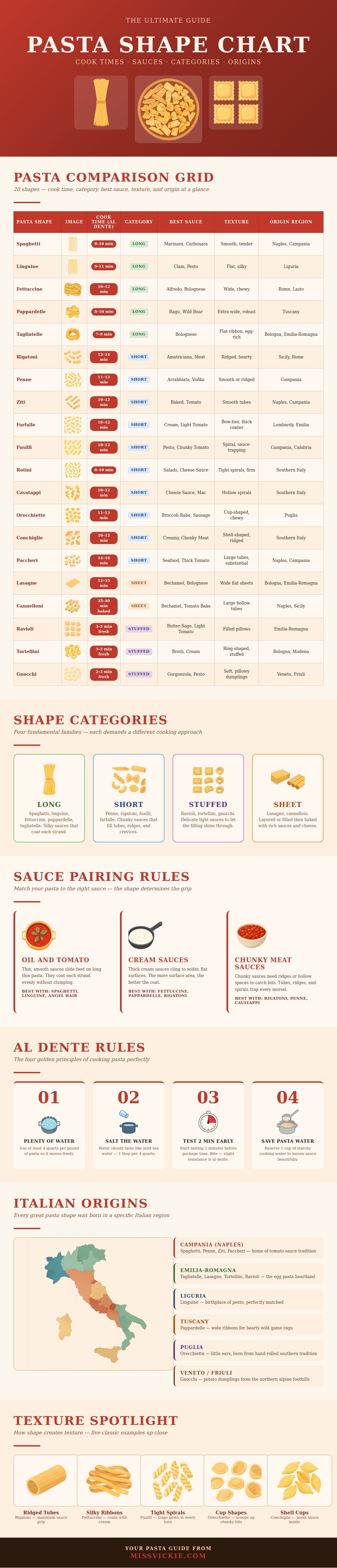
Pasta shape have to be matched with specific sauce because the shape of the pasta will determine the amount of sauce that the pasta can hold. If the shape of the pasta isnt match to the right type of sauce, the sauce will not adhere to the pasta, and the pasta will not have the flavor that is expect from the meal. For instance, pasta shapes that are smooth, like spaghetti, will not hold thick sauce made from meat because the meat sauce will slide off the smooth pasta.
However, pasta shapes that has ridges on the pasta, like rigatoni, will hold the meat sauce due to the drag that the sauce create on the ridges of the pasta. There is different categories of pasta shapes, and each category of pasta shapes require a different category of sauce to be used with the pasta. For instance, pasta shapes that are long and thin, like spaghetti and fettuccine, should be coated with thin sauce because the thin pasta will allow the sauce to coat the pasta easy.
How to Match Pasta with Sauce
Short pasta shapes, like penne and fusilli, is best used with chunky sauces because the sauce can enter the pasta shape and coat the pasta. Stuffed pasta shape, like ravioli and tortellini, should be cooked in light sauce like butter or broth because the sauce should not cover the flavor of the ingredients that is stuffed into the pasta. Finally, pasta shapes like lasagne are flat and are used to create lasagnas because the flat structure of the lasagne sheets allow for the creation of different layer of sauce and pasta when baking.
The cooking time of the pasta shapes is also important. For instance, thin pasta shapes require eight to ten minutes of cooking time. However, thicker pasta shapes, like paccheri, require fourteen to sixteen minutes of cooking time because the thick structure of the paccheri require some additional cooking time to soften the pasta.
Finally, fresh pasta shapes that contain fillings require only three to five minute of cooking time because the fresh pasta will cook to the desired doneness very quick. The cook must monitor the cooking time of the pasta shapes to ensure that the pasta is not overcooked. If the pasta is cooked for too long, it will become mushy.
The physical structure of the pasta shapes will determine how the sauce interact with the pasta. For instance, the ridges on the pasta will create drag that will allow the sauce to remain on the pasta. The hollow center of some pasta shapes will allow the sauce to be contain within the pasta.
Finally, the spirals on some pasta shapes will allow for the same sauce to become trapped within the pasta. Therefore, the pasta shape that you select will determine whether the sauce coats the pasta or if the pasta traps it within itself. To cook pasta shapes correctly, a large amount of water and salt must be use in the boiling of the pasta.
Four quart of water should be used for every pound of pasta shapes to be cooked because the water will prevent the pasta from sticking to itself. Salt should be added to the water so that the pasta is season with salt from the inside of the pasta. Additionally, you should test the pasta two minute before the cooking time indicated by the pasta shape manufacturer.
Finally, a cup of the cooking water should be save because the starchy water can be added to the sauce to help it emulsify and stick to the pasta shapes.