🐟 How Much Tuna Steak Per Person? Calculator
Use this tuna steak calculator to size raw pounds, cooked portions, and guest servings for seared dinners, buffet trays, and tuna platters without guesswork.
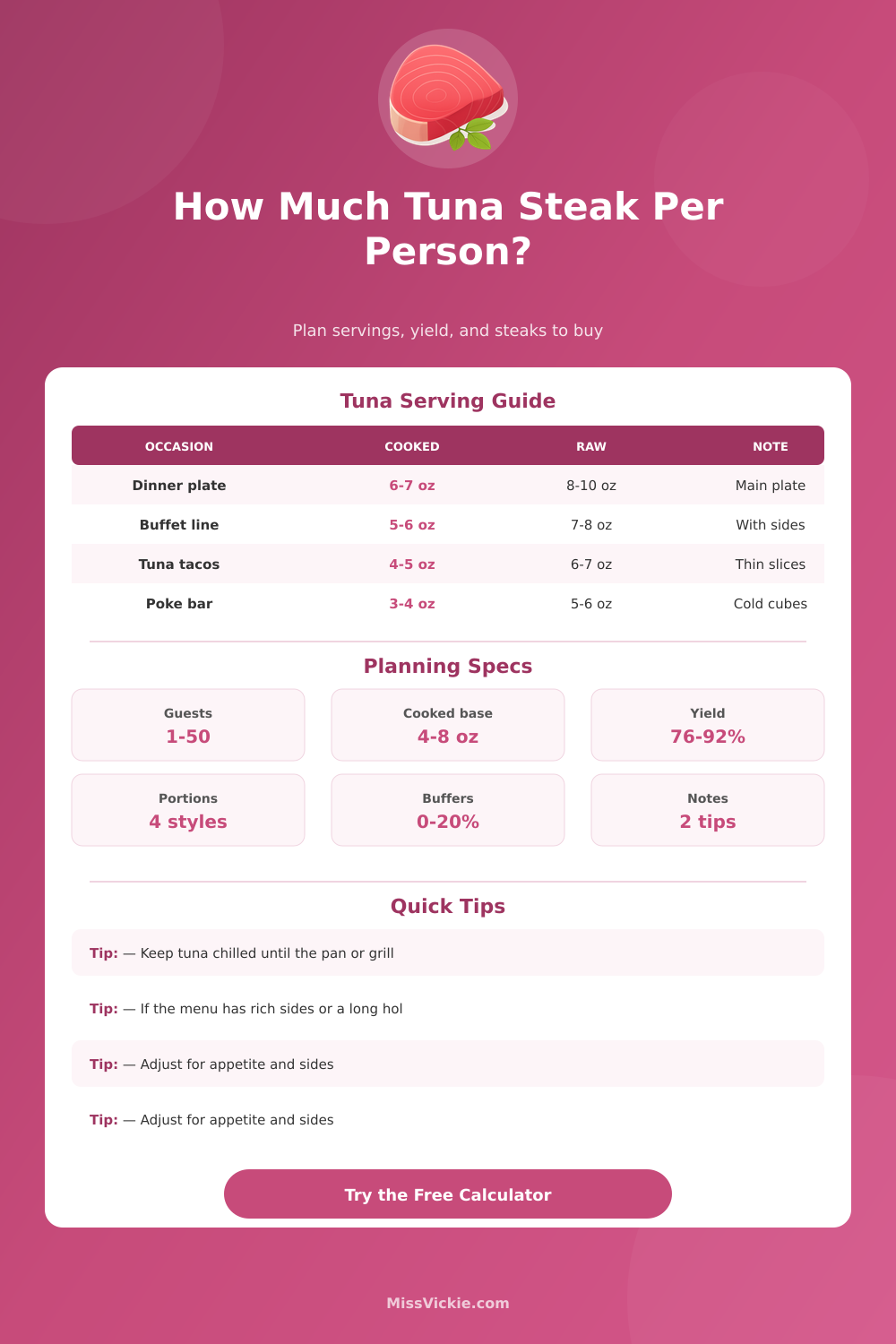
| Occasion | Cooked / Guest | Raw / Guest | Best Fit |
|---|---|---|---|
| Seared dinner | 6-7 oz | 8-10 oz | Main plate |
| Buffet line | 5-6 oz | 7-8 oz | Several sides |
| Tuna tacos | 4-5 oz | 6-7 oz | Thin slices |
| Poke bar | 3-4 oz | 5-6 oz | Cold cubes |
| Target | Cooked Bite | Raw Yield | Use When |
|---|---|---|---|
| Rare | Very juicy | 88-92% | Fast sear |
| Medium-rare | Soft center | 84-88% | Default choice |
| Medium | Firmer bite | 80-84% | Longer finish |
| Seared-through | Most done | 76-80% | Buffet caution |
| Trim Level | Net Yield | Plan Weight | Note |
|---|---|---|---|
| Light trim | 88-92% | 0.70-0.85 lb | Clean steaks |
| Standard trim | 84-88% | 0.85-1.05 lb | Daily buy |
| Heavy trim | 78-82% | 1.05-1.25 lb | Add cushion |
| Sliced after sear | 4-6 oz | 0.35-0.55 lb | Shared bites |
| Menu Load | Hold Time | Portion Multiplier | Use When |
|---|---|---|---|
| Quick plates | 0-10 min | 1.00x | Serve fast |
| Normal line | 10-20 min | 1.03x | Short rests |
| Slow service | 20-40 min | 1.06x | Add buffer |
| Extra seconds | 40+ min | 1.10x | Big crowd |
In order to calculate the proper amount of tuna to purchase for a group of individual, one must understand the various way in which tuna can change during the cooking process. Tuna, for instance, tend to lose some of its weight during the cooking process due to the moisture that evaporate from the fish during cooking. Other factor to consider when calculating the amount of tuna to purchase include the style of service, the type of side dish to be served with the tuna, and the thickness of the tuna steak to be prepared.
The style in which you serves the tuna will help indicate the amount of tuna that a single person will consume. For instance, if the tuna is to be served as a main course, an individual will consume approximately six to seven ounce of cooked tuna. However, if the tuna is to be served as a buffet, the portion size will be smaller for each individual because individuals will only eat a few servings of tuna while dining, and will return for additional portion of tuna after the meal if they are still hungry.
How Much Tuna to Buy for Each Person
In this case, each individual will consume five to six ounce of cooked tuna. While purchasing too much tuna may result in some leftover tuna portion that dry out during storage in the refrigerator, purchasing too little tuna may result in not having enough tuna to provide for each guest. The appetite of the individuals that will be served with the tuna, as well as the side dish that are to be served, will also play a role in the amount of tuna that is required for each individual.
Individuals with larger appetites will eat more tuna then individuals with small appetites. For example, an individual with a large appetite may consume eight ounce of tuna while an individual with a light appetite may only consume four ounce. Additionally, individuals who are served rich side dishes will eat less tuna than those who are served lighter side dishes.
The level of doneness in which the tuna is to be prepared will also impact the amount of tuna that is prepared. For instance, if the tuna is prepared to be rare, it will retain ninety percent of its raw weight. If, however, the cook cooks the tuna to medium doneness, it will only retain eighty percent of its raw weight.
The thickness of the tuna steaks can also impact the weight of tuna that is prepared; thicker tuna steaks will retain their heat longer, but may require more precise cooking to ensure that the outside of the tuna steaks does not overcook while the center of the tuna is undercooked. Other factors to consider in cooking tuna includes trim loss and holding time. When tuna steaks are purchased, they may lose six to ten percent of their weight due to the presence of skin, bloodlines, and edges on the tuna steaks that must be trimmed prior to cooking.
Additionally, tuna may sit on a platter or chafing dish for periods prior to being eaten by the guest. During this time, the moisture content of the tuna may evaporate, thus reducing the weight of the tuna that is provided to each individual. For instance, if the tuna is to sit for forty minutes prior to serving, some of the moisture will evaporate from the tuna; thus, the tuna must be prepared with some buffer for this potential evaporation of moisture from the tuna.
Other factor to consider is the fact that children will eat approximately half the amount of tuna that an adult will consume. Additionally, if the tuna is to be prepared as leftovers to be served in a salad the following day, some additional tuna should be purchased; however, purchasing in excess of the amount that is required may result in the tuna becoming tough after being reheated. To prepare the tuna properly, you should of patted it dry prior to cooking to remove excess moisture, as the presence of moisture will cause the tuna to steam rather than sear.
Additionally, high heat should be used to sear the tuna to the plate, and the tuna should be cooked for two minutes on each side if the center of the tuna is to remain rare. After cooking, the cook should slice the tuna against the grain to create evenly thick slices of tuna that may be fan shaped and presented on the platter. By considering each of these factor, the proper amount of raw tuna can be purchased to provide each individual with the amount of tuna that they will consume during the meal.