🥚 How Many Scrambled Eggs Per Person
Plan breakfast plates, brunch bars, and buffet pans with steady egg counts
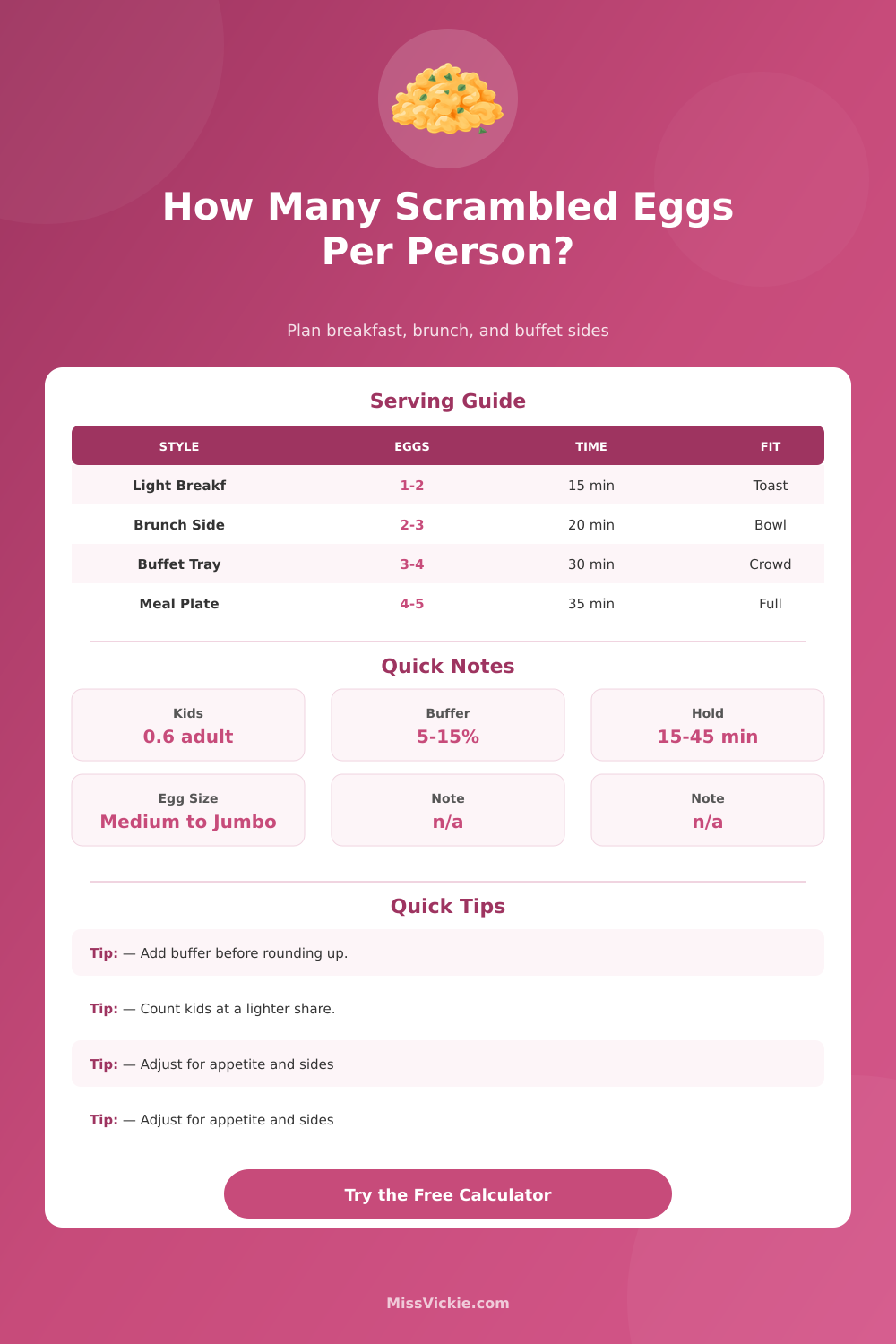
| Style | Eggs / Person | Hold | Fit |
|---|---|---|---|
| Light Breakfast | 1-2 | 15 min | Toast plate |
| Brunch Side | 2-3 | 20 min | Brunch spread |
| Buffet Tray | 3-4 | 30 min | Self-serve |
| Meal Plate | 4-5 | 35 min | Main dish |
| Guests | Kids Ratio | Adult Eq | Note |
|---|---|---|---|
| 4-6 | 0-10% | 3.5-6 | Small table |
| 8-12 | 10-20% | 7-11 | Family meal |
| 15-25 | 5-15% | 14-23 | Brunch line |
| 30-50 | 10-20% | 27-45 | Buffet flow |
| Egg Size | Factor | Pan Yield | Note |
|---|---|---|---|
| Medium | 1.08x | 8 eggs | Smaller eggs |
| Large | 1.00x | 12 eggs | Standard |
| Extra Large | 0.94x | 14 eggs | Bigger eggs |
| Jumbo | 0.88x | 16 eggs | Big yolks |
| Hold Time | Factor | Buffer | Note |
|---|---|---|---|
| 15 min | 1.00x | 5% | Fresh pan |
| 30 min | 1.04x | 8% | Short line |
| 45 min | 1.08x | 10% | Warm holding |
| 60+ min | 1.12x | 12-15% | Long service |
In order to calculate the amount of scrambled egg that a person will eat for brunch, there are several factor that must be considered. The amount of scrambled eggs that a person will eat will vary based off the types of meal that is being served, as well as the size of the egg that will be prepared. The base number of scrambled eggs that a person will eat can vary depending on the type of meal that is being served.
For instance, a person who is having a light breakfast that includes toast and fruit will eat one or two scrambled eggs. However, a person who is having brunch that includes scrambled eggs as the centerpiece of the meal will eat two or three scrambled egg. Additionally, a person who is having brunch at a buffet that allow individuals to serve themselves may eat three or four scrambled eggs, as the buffet style meal encourages individuals to eat seconds.
How Many Scrambled Eggs to Make for Brunch
Finally, a person who is having a meal whose main component is scrambled eggs will eat four or five scrambled eggs. The number of children that will be attending the brunch will alter the number of egg that should of been prepared. Because children eat less than adults, a child will eat sixty percent of the number of scrambled eggs that an adult will eat.
The sides that will be served with the scrambled eggs will also impact the number of scrambled eggs that each person will eat. For instance, if the brunch will include many side, such as potatoes, fruits, or yogurt, the person will eat fewer scrambled eggs. However, if there are very few sides to the scrambled eggs, the individual will eat more of the scrambled eggs.
Finally, the size of the eggs will impact the total number of eggs that is needed for the meal. If medium sized eggs are used, there will be fewer eggs than if large eggs are used. However, if jumbo eggs are used, there will be fewer eggs than if large eggs are used.
You should also consider the richness of the scrambled eggs. If you add butter or cream to the scrambled eggs, they will be more fillingly and people will eat differently due to the richness of the meal. The amount of time that the scrambled eggs sit out is another factor to consider.
If the scrambled eggs will sit out for a long period of time, they have a tendency to dry out. In this case, you should add a buffer of 5-15% to your total number of eggs needed. Additionally, you should also add a buffer for waste; some of the eggs may spill from the serving dish, and some of your guest may desire to eat more scrambled eggs than others.
This waste factor should be added prior to rounding your total number of eggs up to the nearest dozen. To find the total number of eggs that you need for your restaurant, you should consider all of the factor discussed above. To find your total number of eggs, start with the number of eggs that you need for each style of meal.
Multiply that number by the factor for the number of children that will be eating (each child requires fewer eggs), the factor for the side dishes (more sides requires fewer eggs), the factor for the appetite of the individuals that will be eating (hungry crowds require more eggs), the factor for the size of the eggs (large eggs require fewer eggs than small eggs), the factor for the richness of the scrambled eggs (rich scrambled eggs will fill the eaters and they will eat different), the factor for the amount of time that the eggs will be held out (eggs that sit out for long periods require more eggs due to the drying), and the waste buffer factor that you calculated previously. Each of these factors will increase the total number of eggs that are needed for your restaurant to prepare these dish for its customers. Most people will make mistakes when planning the number of scrambled eggs that will be needed for the restaurant’s brunch.
One of the most common is not accounting for the amount of time that the eggs will sit out; scrambled eggs that sit out for long periods of time will dry out. Another of the most common is the overlooking of the side dishes when calculating the number of egg that are needed. People tend to assume that the guests will eat a large number of scrambled eggs even when there are other food on there plates.
Ensure that you calculate the total number of scrambled eggs that you will need to prepare per person. Two or three egg per person is the goal for a balanced meal; however, if there are many people that will be eating or if it is a brunch buffet, three to four eggs per person is the goal.