🍲 Slow Cooker Calculator
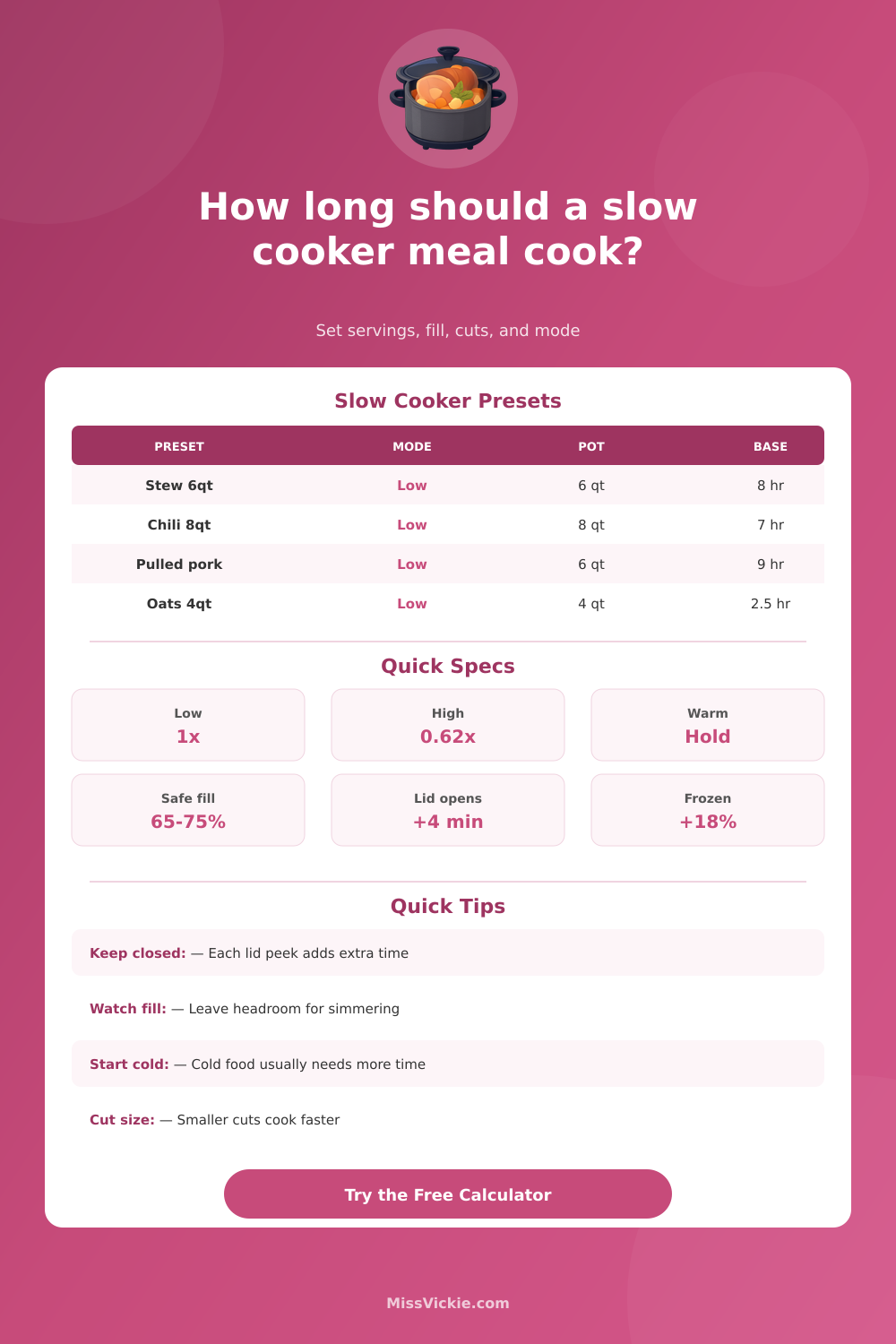
| Preset | Mode | Pot | Use |
|---|---|---|---|
| Stew 6 qt | Low | 6 qt | Family dinner |
| Chili batch | Low | 8 qt | Party pot |
| Pulled pork | Low | 6 qt | Shredding meat |
| Overnight oats | Low | 4 qt | Breakfast prep |
| Mode | Time Rule | Best For | Note |
|---|---|---|---|
| Low | Longest cycle | Roasts and beans | Most forgiving |
| High | About 62% of low | Weeknight meals | Watch liquid |
| Warm | Hold only | Serving buffer | Not a true cook mode |
| Either | Keep lid shut | Every recipe | Each peek adds time |
| Fill | Result | Liquid | Risk |
|---|---|---|---|
| 65-75% | Sweet spot | Recipe normal | Low |
| 76-85% | Tight | Watch boil-over | Medium |
| Over 85% | Too full | Reduce batch | High |
| Under 50% | Small batch | Less evaporation | Uneven heat |
Using a slow cooker require an understanding of several variable that affect how the slow cooker heat the food. If you are not aware of these variable, your slow cooker may undercook or overcook the food. One of the first variable to understand is the size of the slow cooker.
Most slow cooker come in either 6 or 8 quarts. The 6 quart is standard for a family meal, while the 8-quart is used for larger meals. If you have a slow cooker that is too large for the amount of food you are cooking, the food will trap the steam that are released from the food, preventing it from reaching the required state of tenderness for the food.
How to Use Your Slow Cooker
Additionally, slow cookers should not be filled with more than 75% of the slow cooker with food. If the slow cooker is too full with food, the food may boil over the slow cooker. The size of the pieces of food also impact the cooking time.
If you chop the food into smaller pieces, the heat will penetrate the food more quick and it will soften more quickly. If the food is in larger pieces, like in a pot roast, it will take longer for the meat to become tender. If the food is added to the slow cooker while it is in a frozen state it will slow the heating process of the food because the heat is pull from the food to melt the ice that is in the food.
Thawing the food prior to add it to the slow cooker will avoid this problem. The setting that you choose will determine how long the slow cooker will cook the food. The low setting is use for meats that require long cooking period.
The high setting will cook the same food in two-thirds of the time than the low setting but will remove more liquid from the food. The warm setting is used to keep food warm once it has been cooked, but should not be used to cook food. Additionally, never lift the lid of the slow cooker as this will release the heat from the slow cooker and take longer to cook the food.
The amount of liquid in the slow cooker should be sufficient to coat the food by approximately one inch of the food. If there is too little liquid, the food may burn at the edge of the slow cooker. Additionally, if there is too much liquid it will dilute the flavor of the food.
The amount of liquid that you use will vary with the amount of food that you are cooking. Additionally, more liquid will be released from the food if the food is frozen so you will need to account for that as well. Some common mistake include using more than 85% of the slow cooker with food as this will cause the liquid to bubble out of the slow cooker and cook on the edges of the slow cooker.
Additionally, do not fill the slow cooker with less than 50% of the slow cooker with food as this will cause the bottom of the food in the slow cooker to burn. Additionally, avoid look into the slow cooker too often as this will lower the temperature in the slow cooker and take longer to cook the food. Another variable is the material of the insert of the slow cooker.
Ceramic insert are beneficial for slow cooking because it distribute the heat more evenly to the food and prevents hot spot. Nonstick insert are beneficial for cooking foods like oats or macaroni and cheese as it make it easier to clean the slow cooker after cooking the food. Finally, to achieve the best result with your slow cooker you should monitor the food and adjust the variable to ensure the best cooking result for the recipe.