🍖 BBQ Per Person Calculator
Estimate meat, sides, and serving amounts for your cookout menu
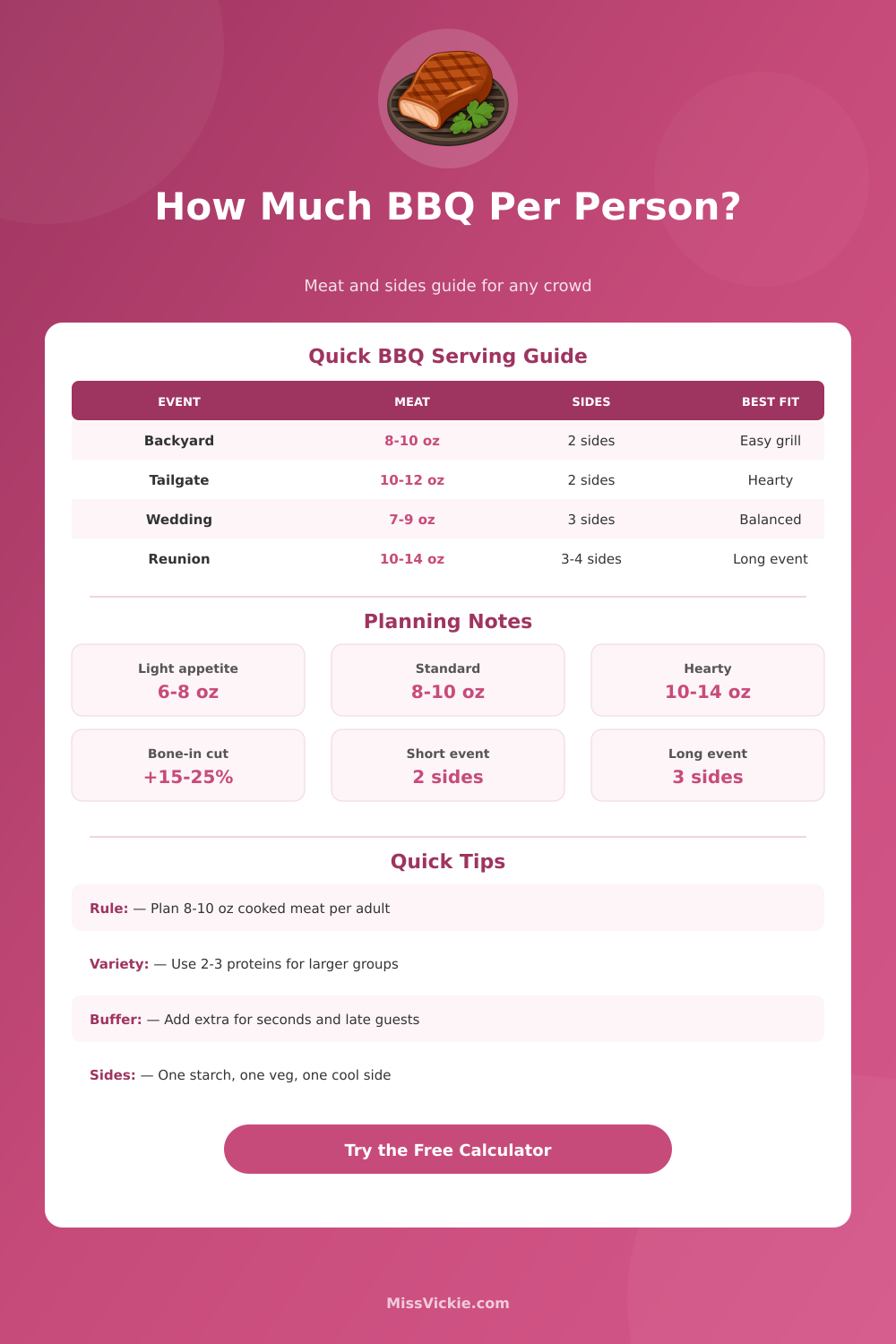
| Event Length | Light Appetite | Standard Appetite | Hearty Appetite |
|---|---|---|---|
| 1 Hour | 6-7 oz cooked | 7-8 oz cooked | 9-10 oz cooked |
| 2 Hours | 7-8 oz cooked | 8-10 oz cooked | 10-12 oz cooked |
| 3 Hours | 8-9 oz cooked | 9-11 oz cooked | 11-13 oz cooked |
| 4+ Hours | 9-10 oz cooked | 10-12 oz cooked | 12-14 oz cooked |
| Cut | Typical Cooked Yield | Planning Note | When to Use |
|---|---|---|---|
| Pulled Pork | About 65% | Stable, crowd-friendly, easy to stretch | Sandwich bars and casual gatherings |
| Brisket | About 55% | Higher trim loss, rich flavor, best with buffer | Upscale events and long smokes |
| Chicken | About 70% | Lighter and usually cheaper on the pit | Mixed menus and buffet service |
| Ribs | About 45% | Bone-heavy, count extra when serving bones | Tailgates and flavor-forward spreads |
| Guest Count | 2 Sides | 3 Sides | 4-5 Sides |
|---|---|---|---|
| Up to 20 | About 18-22 servings each | About 12-15 servings each | About 9-12 servings each |
| 21-50 | About 22-28 servings each | About 15-18 servings each | About 11-14 servings each |
| 51-100 | About 30-40 servings each | About 20-26 servings each | About 15-20 servings each |
| 100+ | About 45+ servings each | About 30+ servings each | About 20+ servings each |
Planning a barbecue require calculating an amount of food you will need to purchase. If you plan for the wrong amount of food, you may either not have enough meat for all of you guests or waste your money buying too much meat. There are many factor to consider when planning a barbecue, such as the number of guests, the type of meat you will use, and the length of the barbecue.
One of the first factors to consider is the number of guest who will attend the barbecue. Not all guests will eat the same amount of food. Children typically eat half of what an adult eat, but not always exactly half of an adults portion.
How Much Meat to Buy for a Barbecue
Including children in your total number of guests mean using an adult’s portion size to calculate how much meat you need for the children. You will also have to account for a buffer of meat to provide for any unexpected guest who come to the barbecue. The type of meat that you use will also affect the amount of meat you must purchase.
Some meats will shrink in size during the barbecue cooking process. The shrinkage that occur is due to the melted fat and the evaporated moisture from the cooked meat. Brisket will lose nearly half of its weight during the cooking process.
Pulled pork will lose some of its weight as well but not as much than brisket. Pulled pork will yield about two-thirds of the weight of the raw pulled pork after the cooking process are complete. Another factor to consider when using meat like ribs is that the bone in the meat are not edible so you must account for them when estimating the total amount of meat needed for the barbecue.
Due to the fact that bones adds weight to meats that people do not eat, you must buy more weight of ribs than the number of people that you are expecting to ensure that each person receive at least some edible meat. The length of the parties are another factor to consider when purchasing meat. For shorter events, people will eat less meat than they will at a longer event.
At a one-hour party, for instance, people may eat between seven and nine ounces of cooked meat. However, at a four-hour event, people will eat twelve ounces of cooked meat or more due to the fact that they will eat the food during longly parties. Thus, the length of the event is a factor in the amount of meat that will be required to feed the guests.
The number of side dishes that you will serve is another factor in the amount of meat that should be purchased. If there are few side dishes, people will eat more meat to fill there plates. Conversely, if there are many side dishes, people will eat less meat.
Providing a variety of side dishes will ensure that guests has a balanced meal. Examples of side dishes can include beans, potatoes, and coleslaw. One tool that you can use to calculate the amount of meat that should be purchased for a BBQ is a calculator.
A calculator allow you to determine the number of pounds of raw meat that you need based on the number of guest that will attend your party. Additionally, calculators allows you to calculate the number of serving of each side dish that you need to serve your guests. By using a calculator to determine the amount of meat and side that are needed for your party, you can avoid the mistake of attempting to eyeball how much meat you need, and instead ensure that you have enough meat for each guest.