☕ Latte Calculator
Calculate calories, caffeine, espresso oz, steamed milk oz, and foam for your perfect latte
| Milk Type | Calories/oz | Small (8oz) | Medium (12oz) | Large (16oz) |
|---|---|---|---|---|
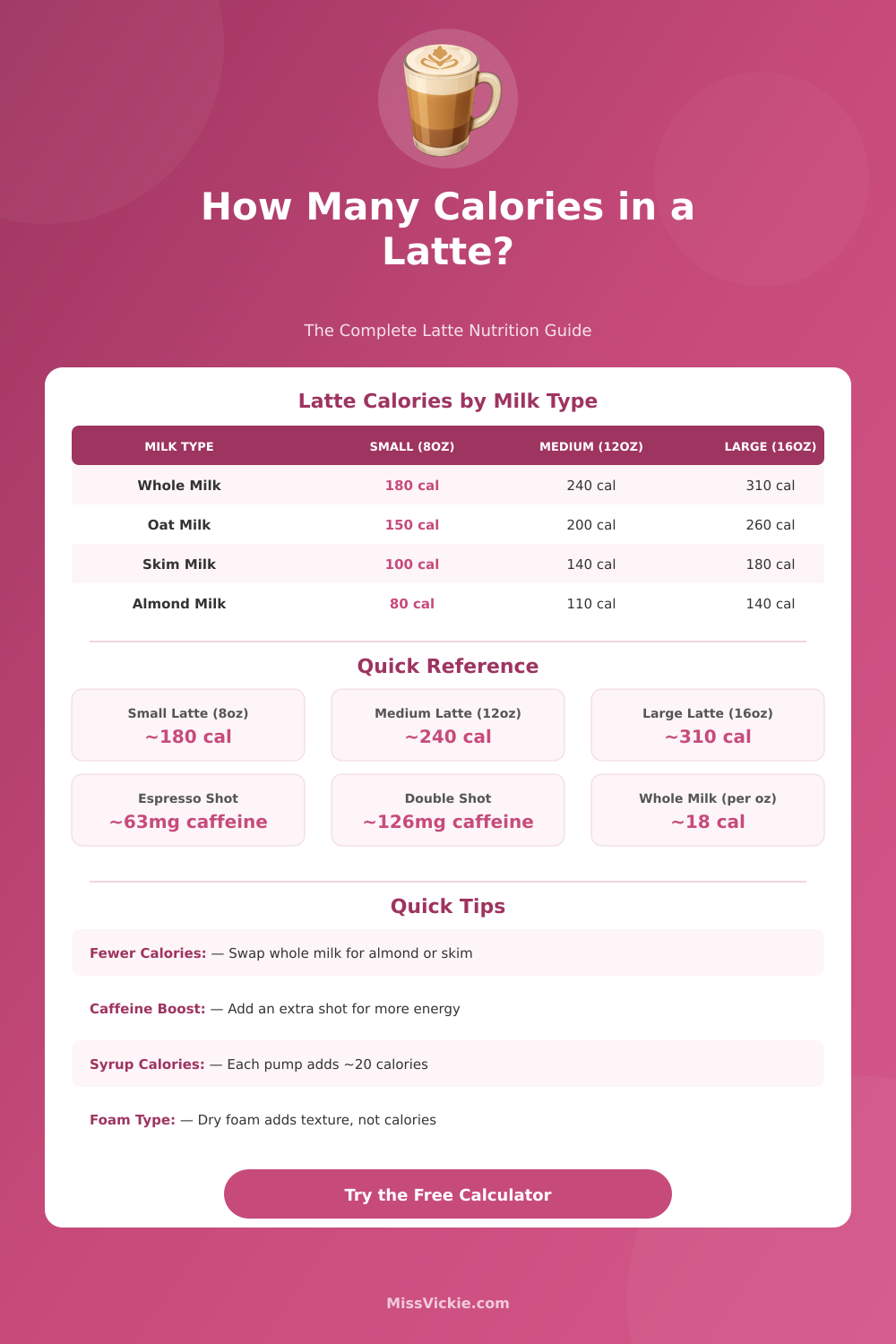
| Whole Milk | 18 cal | 180 cal | 240 cal | 310 cal |
| 2% Reduced-Fat | 15 cal | 155 cal | 205 cal | 260 cal |
| Skim (Non-Fat) | 10 cal | 100 cal | 140 cal | 180 cal |
| Oat Milk | 13 cal | 150 cal | 200 cal | 260 cal |
| Almond Milk | 7 cal | 80 cal | 110 cal | 140 cal |
| Soy Milk | 12 cal | 130 cal | 170 cal | 220 cal |
| Coconut Milk | 16 cal | 165 cal | 215 cal | 270 cal |
| Size | Total Volume | Espresso | Steamed Milk |
|---|---|---|---|
| Cortado | 4 fl oz / 120ml | 2 oz (double) | 2 oz |
| Flat White | 6 fl oz / 180ml | 2 oz (double) | 4 oz |
| Small | 8 fl oz / 240ml | 1–2 oz | 6–7 oz |
| Medium / Tall | 12 fl oz / 355ml | 2 oz (double) | 9–10 oz |
| Large / Grande | 16 fl oz / 473ml | 2 oz (double) | 13–14 oz |
| Venti | 20 fl oz / 591ml | 2–3 oz | 16–18 oz |
| Drink | Size | Espresso Shots | Calories (whole milk) |
|---|---|---|---|
| Espresso | 1 oz | 1 shot | 5 cal |
| Macchiato | 2–3 oz | 1 shot | 30–40 cal |
| Cortado | 4 oz | 2 shots | 60–70 cal |
| Cappuccino | 6 oz | 2 shots | 120–140 cal |
| Flat White | 6 oz | 2 shots | 130–150 cal |
| Latte (small) | 8 oz | 1–2 shots | 150–180 cal |
| Latte (medium) | 12 oz | 2 shots | 200–240 cal |
| Latte (large) | 16 oz | 2–3 shots | 260–310 cal |
A latte consist of espresso and steamed milk and foam. The ingredient in a latte have an impact on the calorie count and caffeine content of that latte. In order to understand how the latte’s component impact its nutritional value, it is first important to understand the components of a latte.
Espresso is the base coffee of a latte and contain the caffeine. One shot of espresso contain approximately 63 milligrams of caffeine. Should one add a second shot to the latte, the latte will contain approximately 126 milligrams of caffeine.
How Latte Ingredients Affect Calories and Caffeine
Adding espresso shots will increase the caffeine content of the latte. However, adding espresso will reduce the amount of milk that can be added to the latte. As the espresso take up the space within the latte, adding more espresso will reduce the volume of milk that may be include in the latte.
Milk is the main ingredient that is include in the latte. Milk is the ingredient that contribute to the majority of the calories in the latte. Whole milk contain approximately 18 calories per ounce.
For this reason, adding whole milk to the latte will increase the latte’s calorie count. Skim milk, on the other hand, contain approximately 10 calories per ounce, which will decrease the calorie count of the latte if you use that type of milk. Almond milk contain approximately 7 calories per ounce, which make it a low calorie alternative for the latte.
Other alternatives to milk include oat milk. Oat milk has a texture similar to dairy milk. Other plant-based milks, such as almond milk or oat milk, as well as coconut milk and soy milk, each alter the flavor and texture of the latte.
The amount of foam that is include in the latte will impact the amount of liquid milk that is contain within the latte. For a dry latte, there is more foam and less liquid milk than is contained in wet lattes. Because the foam contain air, the more foam that is added to the latte, the fewer calories the latte will contain.
Wet lattes will contain more liquid milk than foam, which will result in the wet latte having more calories than a dry latte. Finally, the size of the latte will impact the total calories and caffeine content of the drink. Small lattes, such as a four ounce cortado, contain less milk and less espresso than large lattes, such as a 12 ounce latte.
Because the large latte contain more milk, it will have more calories than a small latte. Syrup can be added to a latte to impart flavor to the latte. Syrup, however, contain sugar and calories.
One pump of syrup contain approximately 20 calories and five gram of sugar. Adding syrup to a latte will significantly increase the sugar and calorie count of the latte. By selecting different ingredient for a latte, it is possible to tailor a latte to one’s nutritional requirement.
Using skim milk will decrease the calorie count of the latte. Using more espresso will increase the caffeine and decrease the volume of milk that can be included in the latte. Using more foam will increase the total volume of the latte without add more liquid milk.
By adjusting the amount and type of milk, espresso, foam, and syrup that are use in the latte, it is possible to create a latte that fit the nutritional requirements of the individual that prepare and consume the drink.