☕ Espresso Calculator
Calculate dose, yield, brew ratio, extraction time, and caffeine for any espresso shot
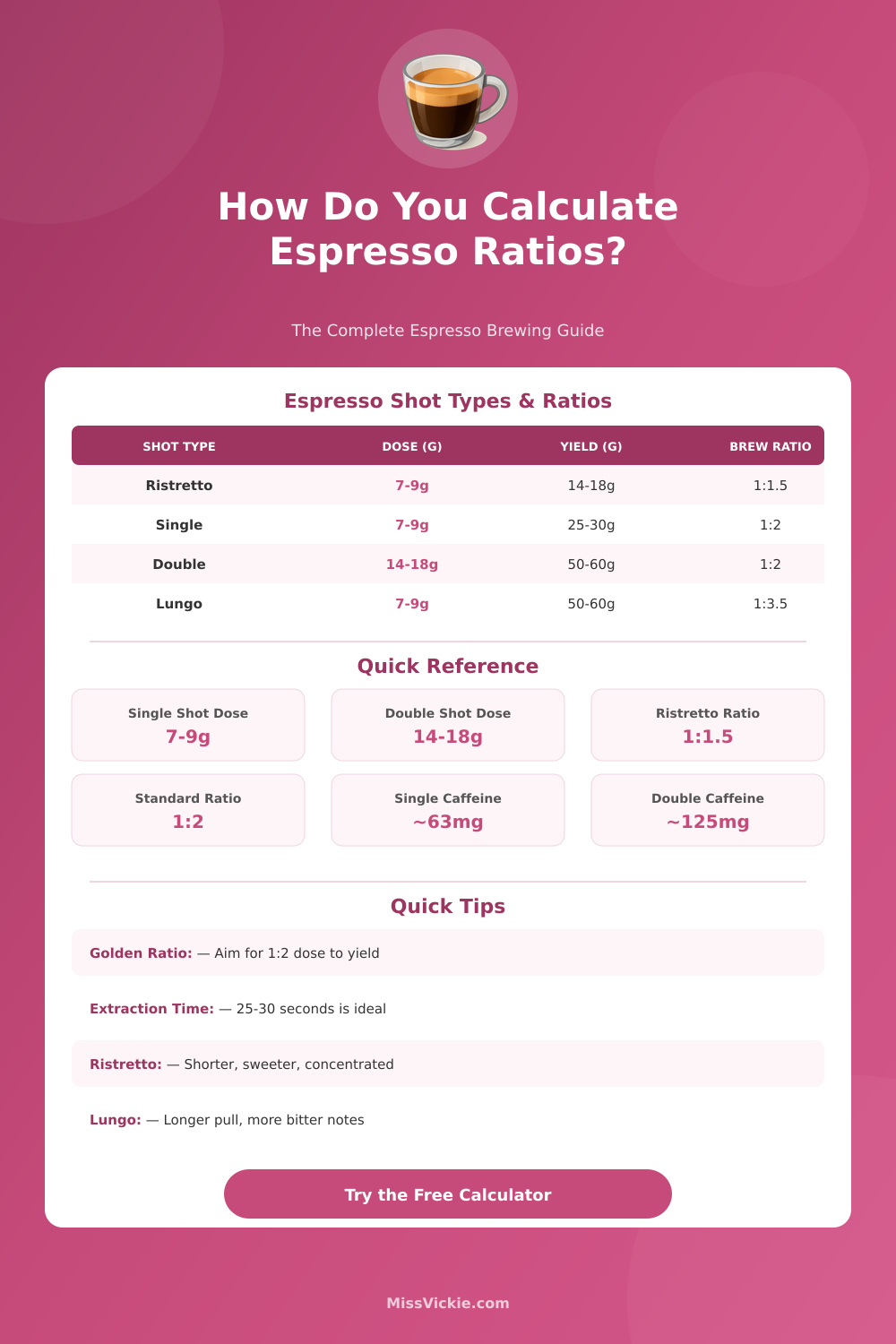
| Shot Type | Typical Dose | Yield (g) | Brew Ratio |
|---|---|---|---|
| Ristretto | 7-9g | 10-14g | 1:1 to 1:1.5 |
| Single | 7-9g | 25-30g | 1:2 to 1:2.5 |
| Double | 14-18g | 28-36g | 1:2 |
| Lungo | 7-9g | 50-60g | 1:3 to 1:4 |
| Double Ristretto | 14-18g | 21-27g | 1:1.5 |
| Triple | 21g | 42-63g | 1:2 to 1:3 |
| Drink | Espresso Base | Dose Needed | Approx. Caffeine |
|---|---|---|---|
| Espresso (single) | 1 single shot | 7-9g | 60-75mg |
| Espresso (double) | 1 double shot | 14-18g | 120-150mg |
| Cappuccino | 1 double shot | 14-18g | 120-150mg |
| Latte (small) | 1 double shot | 14-18g | 120-150mg |
| Latte (large) | 2 double shots | 28-36g | 240-300mg |
| Flat White | 1 ristretto double | 14-18g | 120-150mg |
| Americano | 1-2 double shots | 14-36g | 120-300mg |
| Macchiato | 1 double shot | 14-18g | 120-150mg |
| Drink | Shots | Milk / Water | Notes |
|---|---|---|---|
| Espresso | 1-2 shots | None | Serve immediately in demitasse |
| Americano | 2 shots | 90-120ml hot water | Add water after espresso |
| Cappuccino | 1 double | 120ml steamed + foam | Equal thirds: esp, milk, foam |
| Latte | 1-2 doubles | 180-240ml steamed | Thin microfoam layer on top |
| Flat White | 2 ristrettos | 120ml steamed | Velvety microfoam, no thick foam |
| Macchiato | 1 double | 30ml milk foam | Espresso "stained" with foam |
| Cortado | 1 double | 60ml steamed milk | Equal parts espresso and milk |
| Mocha | 1 double | 180ml steamed + syrup | Add 15ml chocolate syrup |
Espresso is an beverage that is made by placing a dose of ground coffee into a portafilter and forcing hot water through the dose of ground coffee, which extract the flavors from the coffee dose and create espresso that is poured into a cup. The dose of coffee are the weight of the ground coffee that is placed into the portafilter, and the liquid yield is the weight of the espresso liquid that is extracted and collected into a cup. The ratio of the dose to the liquid yield will determine the flavor of the espresso, so it is importance for a person to understand this relationship.
For instance, espresso shots commonly contain a ratio of 1:2 between the dose and the yield, meaning that if the dose is 18 gram of ground coffee, the yield will contain 36 grams of espresso liquid. If the yield of espresso contains significantly less coffee than the dose of ground coffee, the espresso will have an intensely flavor. However, if the ratio of yield to dose is significantly higher than 1:2, the resulting espresso will be thinner.
How Dose, Yield and Time Change the Taste of Espresso
Different types of espresso shots can be prepared by altering the ratio of coffee dose to liquid yield of the espresso. For instance, a ristretto shot has a ratio of around 1:1.5 between the dose and yield of the espresso. Consequently, there is a highly concentration of the solids from the coffee in a ristretto shot, giving it an intense flavor.
Standard espresso shots has a ratio of 1:2 between the dose and yield of espresso. A standard espresso shot is balance in its flavor. Finally, a lungo shot uses a ratio of 1:3 between the dose and the yield of espresso.
Because more water pass through the coffee dose in a lungo shot than in a standard espresso shot, lungo shots contain more liquid than standard espresso shots. Additionally, because more of the coffee solids is extracted in a lungo shot, lungo shots contain more caffeine than standard espresso shots. The extraction time of an espresso shot is the length of time that the water takes to pass through the coffee dose.
The extraction time should be between 25 and 30 seconds for a double espresso shot. If the extraction time is too short, the coffee dose contains too much ground coffee for the amount of water to extract the flavor, resulting in an espresso shot that is sour in flavor. If the extraction time is too long, the coffee dose is over-extracted, and the resulting espresso shot will be bitter in flavor.
The extraction time can be alter by changing the coffee dose to have a different grind size. The dose of coffee that is used to create the espresso shot can influence the amount of caffeine in an espresso shot. For instance, approximately 7 milligrams of caffeine is contained in every 1 gram of coffee.
Therefore, the more coffee that is used in an espresso shot, the more caffeine that will be in the shot. Consequently, a person who drink lungo shots will consume more caffeine than a person who drinks ristretto shots. The roast level of the coffee beans can also influence the caffeine and flavor of the espresso shots.
When preparing milk-based espresso drinks, it is important to ensure that the strength of the espresso shot match the amount of milk in the drink. For instance, cappuccinos contain a standard espresso shot and equal part steamed milk and milk foam. However, lattes contain more milk than cappuccinos, so more espresso is require in a latte to ensure that the flavor of the espresso is easily tasted in the milk-based drink.
Finally, flat whites contain a ristretto shot of espresso to balance with the microfoam that is mix with the espresso to create the drink. In order to prepare espresso successfully, it is important to avoid some mistake when preparing espresso. For instance, it is important to use filtered water in the preparation of espresso.
Water that contains minerals can leave scale in the machine that are used to prepare espresso, which may change the water temperature. The water temperature that should be used in espresso preparation is between 92 and 96 degrees Celsius. Finally, it is important to taste the espresso that is prepared to ensure that the flavor is balance and to recognize the flavors of each type of espresso shot, which can aid in the preparation of other espresso shots.