
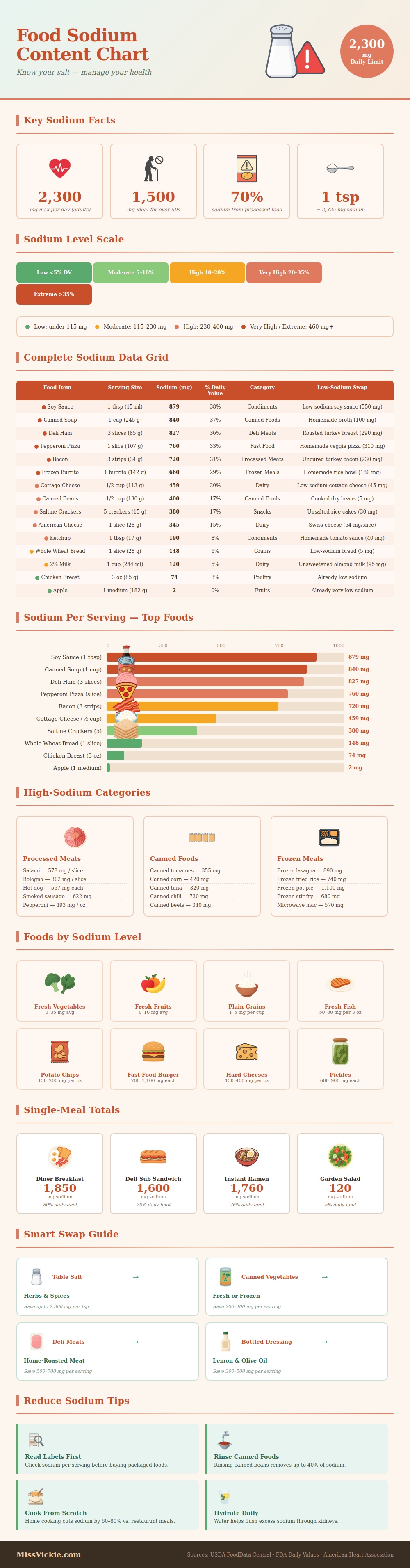
Sodium is a mineral that are found in many foods, and sodium can cause a feeling of thirst in the body after a person eats a meal. A person may feel thirsty because sodium cause the body to require more water to process the sodium. Many peoples believe that sodium only comes from adding salt to food during a meal, but much of the sodium in a diet come from processed foods that already contain sodium.
Manufacturers use sodium as a preservative and flavoring agent in the manufacturing process because processed foods contain sodium. You must manage your sodium intake to maintain your health, and you should know that the recommended daily limit for sodium change based on age. For example, many adults aim for a specific daily limit of sodium, but people over the age of fifty often need to consuming less sodium to protect there heart health.
Sodium in Food and How to Reduce It
Because many processed foods contain high levels of sodium, you may consume your entire daily limit of sodium before you finish your meals for the day. Many people consume high amount of sodium through small items like bread or cheese, and these small items can add up to a large amount of sodium throughout the day. You can identify high-sodium foods by looking at the sodium content in specific items.
For example, soy sauce contain a high amount of sodium, and canned soup also contains a high amount of sodium. A single meal, such as a deli sub or instant ramen, can contain a large percentage of the total sodium a person should eat in one day. Because some foods are very high in sodium, you should learn to categorize foods based off their sodium levels.
Fresh foods like apples and vegetables has almost no sodium, but processed foods like frozen dinners and processed meats have very high levels of sodium. Many convenient foods, such as canned beans and crackers, fall into a middle category because these foods contain a moderate amount of sodium. You can reduce your sodium intake by making different food choices and using different cooking method.
Instead of using a salt shaker to add flavor to food, you can use dried herb or spices to add flavor to food. If you choose to eat canned goods, you can rinse the canned goods under cold water to remove some of the sodium from the canned goods. You can also reduce your sodium intake by choosing different proteins.
Deli meats are very high in sodium, so you should consider eating meat that you roast at home instead of eating deli meats. When you roast meat at home, you can control the amount of sodium you add to the meat. You can also manage your sodium intake by thinking about your total sodium consumption for the entire day.
If you eat a meal that is high in sodium, such as a burger or pizza, you should eat other meals that are low in sodium to balance your total sodium intake. Eating fresh fruit or plain grains can help you balance your sodium intake because fresh fruit and plain grains is low in sodium. The goal is to manage the total amount of sodium in your body, so you should focus on the total sum of sodium you consume throughout the day.
By recognizing the sodium in processed foods, you can make intentional adjustment to your diet to reduce the amount of sodium in your body.