
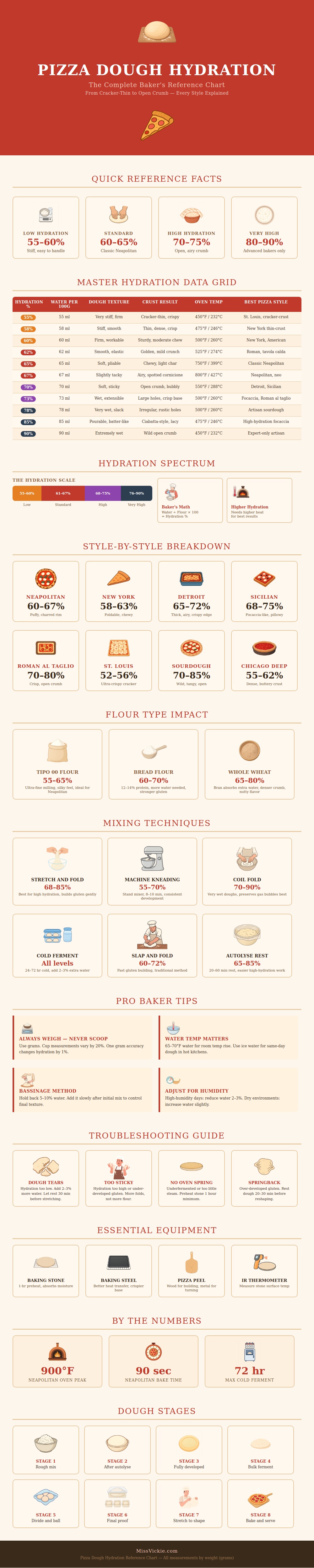
Hydration is the ratio of water to flour in a dough recipe, and hydration are expressed as a percentage. To calculate hydration, you must determine the weight of the water and divide that weight by the weight of the flour. For example, if you use one hundred grams of flour and fifty grams of water, you are creating a dough with fifty percent hydration.
Hydration is a primary variable in dough because hydration determines how the dough feels, how the dough behaves, and how the final crust will look and feel. Understanding hydration is necessary because hydration controls the textures of the dough and the texture of the finished pizza. Low hydration doughs contains a lower percentage of water relative to the amount of flour used.
How Water Amount Affects Dough
A person can handle low hydration doughs more easy because low hydration doughs are firm and low hydration doughs hold their shape easy. Many beginners prefer low hydration doughs because low hydration doughs are predictable and low hydration doughs dont require a large amount of extra flour to manage. For example, a St. Louis style crust or a New York style crust are examples of low hydration doughs.
These low hydration doughs provide a sturdy and crunchy foundation, but low hydration doughs often lack the airy interior found in higher hydration doughs. Medium hydration doughs contain a moderate amount of water and a moderate amount of flour. A Neapolitan style dough is an example of a medium hydration dough.
Medium hydration doughs are more pliable and soft than low hydration doughs, and medium hydration doughs allow yeast to create air pockets during fermentation. These air pockets create a charred rim known as the cornicione. However, medium hydration doughs require more care than low hydration doughs because if you handle medium hydration doughs too rough, you will remove the air from the dough and the dough will become flat.
High hydration doughs contain a high percentage of water, often reaching seventy percent hydration or higher. High hydration doughs are much wetter and more difficult to manage than medium hydration doughs. High hydration doughs are used to create large and irregular air hole in the dough, such as the holes found in Roman al taglio or sourdough.
Because high hydration doughs are very wet, high hydration doughs often require specific techniques like the stretch and fold method to build strength in the gluten. Many bakers find high hydration doughs difficult because high hydration doughs are temperamental and high hydration doughs can become a puddle of dough if the baker dont have the correct skills. The type of flour used in a recipe affects how the dough absorbs water.
High-protein bread flour can absorb a large amount of water, so high-protein bread flour is useful for making high hydration doughs. Italian 00 flour is a different type of flour that stays silky and light, and people often use Italian 00 flour at lower hydration levels. Whole wheat flour contains bran, and bran absorbs alot of water, so whole wheat flour require more water than white flour requires.
You must choose the correct flour because the flour acts as an anchor for the moisture in the dough. If a dough is too sticky, a person might want to add more flour to the dough, but adding more flour isnt always the correct solution. Stickiness can occur because the gluten has not been developed enough to hold the water in place.
Instead of adding more flour, you can give the dough time to rest through a process call autolyse or through a series of folds. Resting the dough allows the gluten to develop, and developing the gluten helps the dough hold the water. Therefore, managing hydration is not just about measuring water and flour, but also about managing the gluten and managing the timing of the dough.