
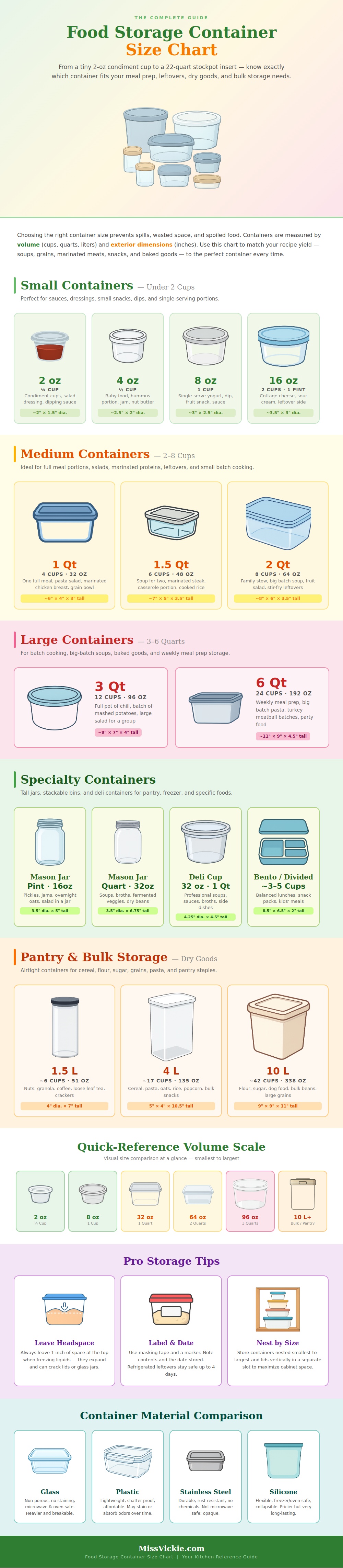
Food storage containers are a must for every professional kitchen. Each of them has different shape, size and material, according to its own use. Important is choosing the right size whether for meal prep, storing leftovers or sorting the pantry
For meal prep, it is good to buy multiples in one or two sizes. Containers of 3.2 cups or 4.7 cups have plenty of space for sandwich with a side, a grain bowl or big amount of soup. 4-cup container gives enough place for meals, without being too big.
Choosing the Right Food Container Sizes
For bigger lunch portions, a big container works well for meals on-the-go. Medium containers work perfectly as portions for packed lunches.
The kind of food that you serve decide the ideal size. Containers of 8 or 12 ounces work well for small amounts like dips or sides. Sizes of 16, 24 and 32 ounces give more space for big portions or whole meals.
Sticking to two or four standard sizes, like 8 ounces for sides, 16 ounces for soups and small meals, 32 ounces for dinners… Is a clear stratgey. Containers with capacity of 2 to 8 quarts work well for sharing, transport and bulk service of foods.
For dry products ingredient bins range from 1 quart to 31 gallons or more. They are made for long storage with easy access to the content. Two square Cambro containers of 22 quarts suffice for a 50-pound bag of rice.
Broad mouths ease scooping, so at least a 4-inch opening works for flower and sugar. Narrow openings suit stuff that you pour, like rice.
If you want to optimize space in the pantry, square containers are a must. They save place and make the cabinet look much better. Stackable containers with lids are useful for every inch.
Most professional containers stack flatly, which helps to maximize space in refrigerators, freezers and dry storage places.
Containers of 30 and 34 ounces differ only by half a cup, so choose the shape that suits you more. Some sets have universal lids that work for every size regardless of depth. Lids must match the size, shape and brand of the container for a good fit.
Start with a basic set and later add containers of various shapes and sizes; that is practical when you know howmuch food you make weekly.